

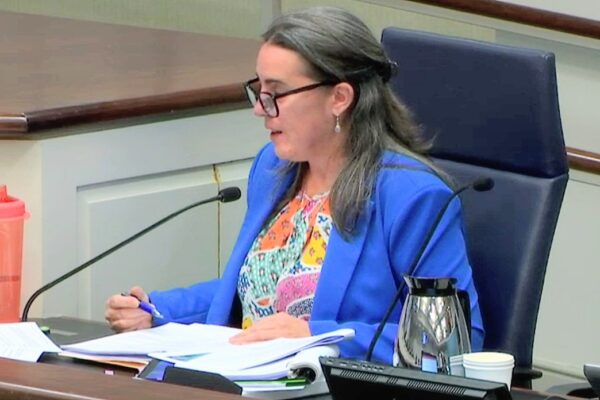
Fairfax City Council members continue to consider what priorities they should focus on in the 2026 General Assembly session, and in what order.
At a Nov. 18 discussion on the city’s legislative package, residents evidently opted not to weigh in, with no speakers attending the scheduled public hearing.
“Well, all right,” Mayor Catherine Read sighed at that lack of public comment.
Unlike the public, Read and the six council members did offer views — albeit sometimes contradictory ones — on what issues should be at the top of the their priority list.
Councilmember Rachel McQuillen said she believes pushing for increases in state aid for educational operating expenses should be at the top of the list.
But others, including Read and Councilmember Anthony Amos, thought the top item should be a proposal to give localities the option of increasing their sales tax rates by 1%, with the funds going toward financing school capital projects.
“If we’re going to lock arms with the rest of the commonwealth on anything, it needs to be the 1% sales tax,” Read said. “We really, really need that to happen.”
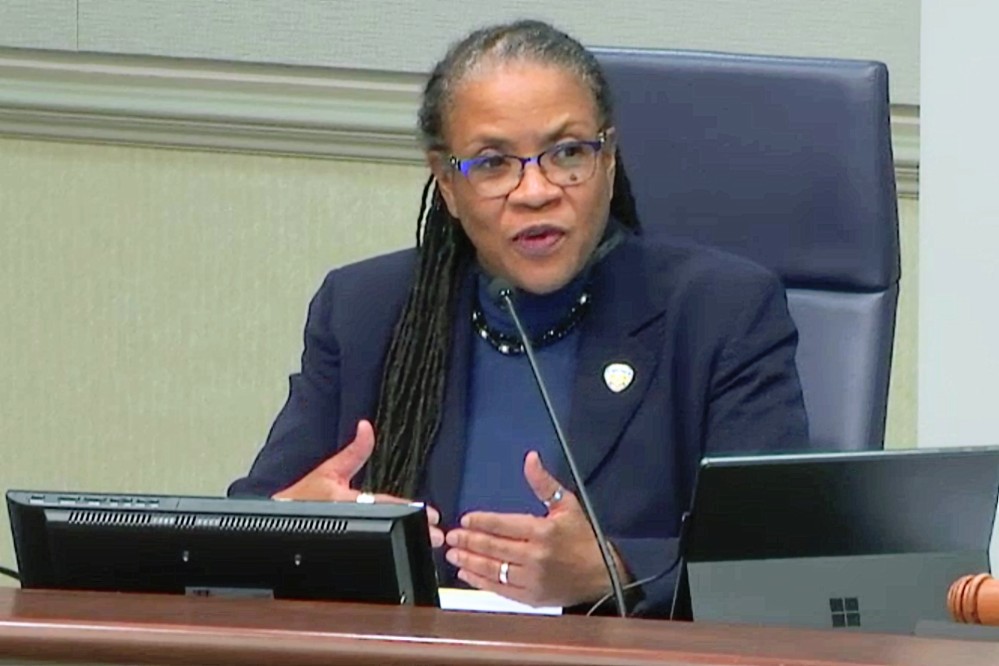
Also jostling for position in the list of priorities was a trio of amendments to the City Charter, including one that would expand the city’s ability to increase its tax rate on hotel stays.
The charter currently caps that rate at 4%, while most other jurisdictions have the ability to levy higher rates. Fairfax County increased its transient occupancy tax rate from 7% to 9%, as of Oct. 1, dividing the revenue between general county operations, tourism promotion and regional transportation.
Fairfax City could similarly allocate some of the additional funding to support tourism promotion, proponents said.
Some of the other topics that the council briefly touched on while discussing the legislative agenda include:
- Additional state funding for invasive-species removal
- More requirements that data center developers consider the impact on parks, historic sites, agricultural land, water resources and more prior to approval
- Authorizing local taxation of medically necessary cannabis products
- More local autonomy on affordable housing initiatives
- More state funding to support stormwater-mitigation projects
- More tax options for localities, such as a local income tax
“There has got to be another way” beyond reliance on property tax for most tax revenue, Hall said at the meeting.
Melanie Zipp, who was appointed acting city manager last month, advised council members to focus on a manageable list of top priorities that could fit on a single page.
“Your priorities page is really what you want the legislators to understand as the things we need you to pass,” she said.
Zipp will continue to run day-to-day government operations until January, when Daniel Alexander, a deputy county executive in Prince William County, comes on board as city manager.
At the Nov. 18 meeting, council members leaned toward not holding a scheduled work session in advance of final consideration of the 2026 package in December.
The Virginia General Assembly convenes on Jan. 14 for what is expected to be a 60-day session. City officials need to be prepared to lobby legislators extensively on priorities.
“Those in Richmond really keep track of who calls, who shows up, who writes letters,” Councilmember Stacy Hall said.
Fairfax City is represented in the General Assembly by Sen. Saddam Azlan Salim (D-37) and Del. David Bulova (D-11).
