

Officials from the Virginia Department of Health are advising residents not to consume certain species of fish caught in the Occoquan Watershed.
Elevated levels of perfluorooctane sulfonate (PFOS) — a manmade chemical used in products ranging from carpet to firefighting foams — have been observed in samples of largemouth bass and bluegill sunfish collected from the waterway, health officials said today (Tuesday).
“The health effects of PFOS exposure can include increased cholesterol or changes in liver enzymes,” the VDH said. “It can also lower antibody response to some vaccines. It can cause pregnancy-induced hypertension and preeclampsia, and a decrease in birth weight.”
Accordingly, residents are encouraged to limit their consumption of the species that have been recently caught from the Occoquan Reservoir, Broad Run, Bull Run and other connected tributaries.
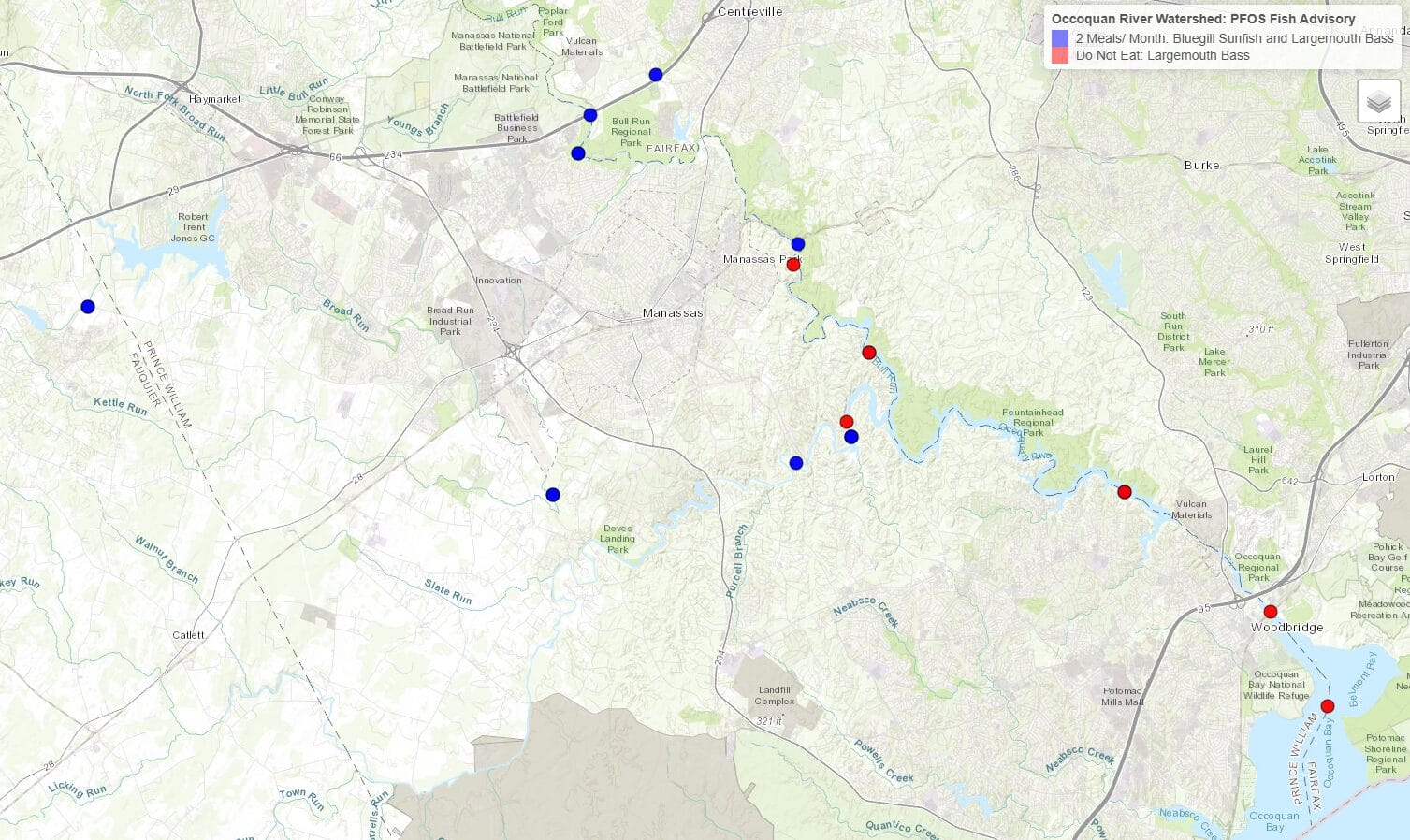
The state health department advises eating no more than two meals per month of bluegill sunfish caught in either the Occoquan Reservoir or Broad Run. The same limit is placed on largemouth bass caught in the Broad Run area of the river.
However, the VDH recommends avoiding eating any largemouth bass collected from the Occoquan River and Occoquan Reservoir.
“The advisory covers the tidal portion below the Occoquan River from the Occoquan Reservoir dam downstream to Occoquan Bay including Belmont Bay and the backwaters of the Occoquan Reservoir on the Bull Run arm near Hemlock Overlook Regional Park and just upstream of Davis Ford Road on the Occoquan River arm down to the water supply dam of the Fairfax County Water Authority,” the VDH said.
If locals do eat the fish, they are encouraged to eat fewer servings and eat younger fish, who are less likely to contain “harmful levels of contaminants,” according to health officials.
Recreational activities, such as swimming and boating, are not impacted by the fish consumption advisory, which affects Fairfax, Prince William and Fauquier counties as well as Manassas.
