


After a contentious debate, the Fairfax County School Board will give parents the opportunity to opt out of take-home laptops and tablets in the upcoming school year and study stronger screen limits and restrictions.
At its meeting Thursday (June 11), the board discussed restrictions on screen time and school-provided devices for students amid local, regional and national pushback against technology in classrooms, particularly in elementary schools.
Technology has made its way more into classrooms over the past decade, as schools started rolling out one-to-one device programs to provide each student with school-issued technology, such as tablets or laptops. That expanded during and after the COVID-19 pandemic, which prompted Fairfax County Public Schools and other divisions to switch to online learning.
Some parents are now trying to roll back what they see as an overreliance on technology.
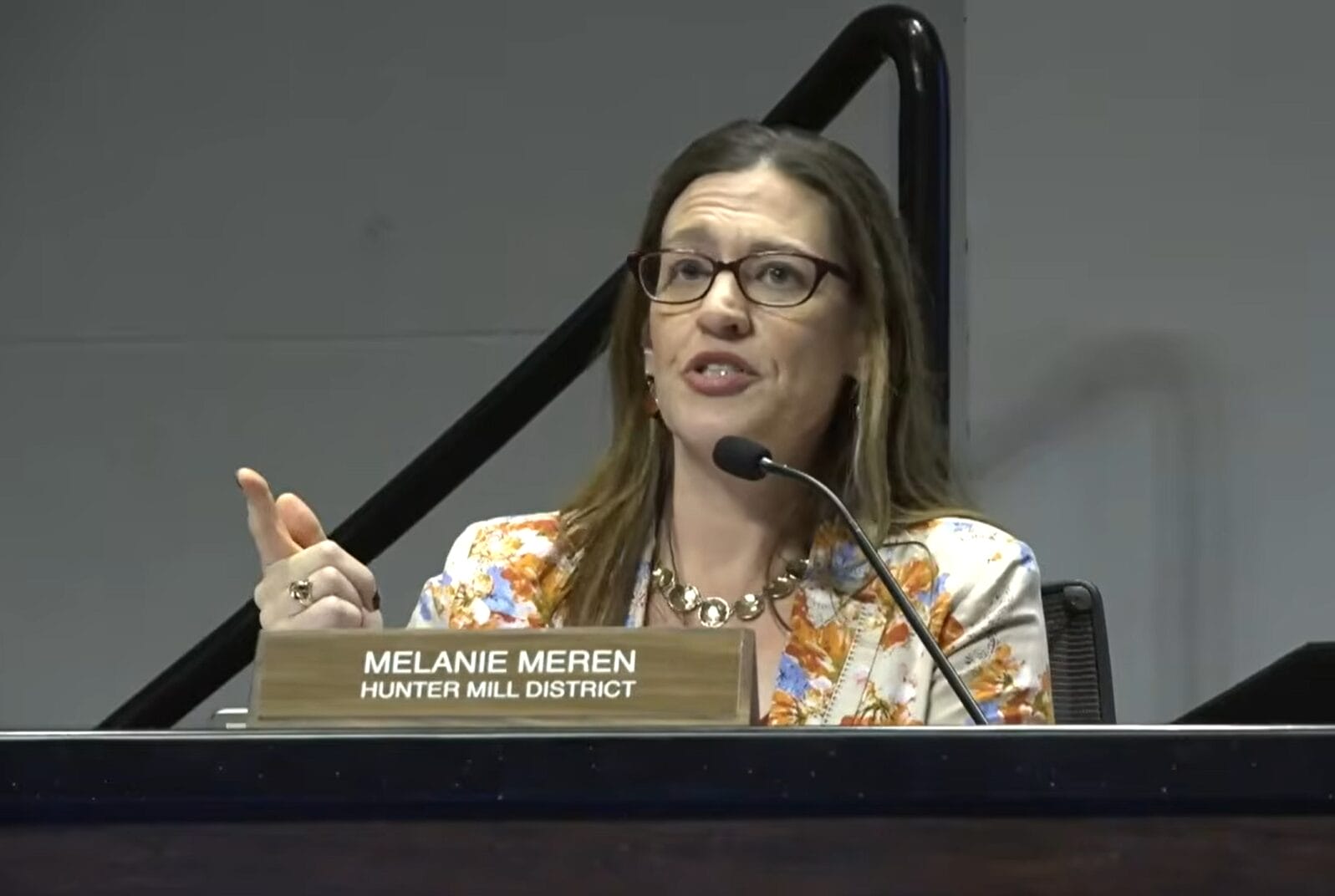
Entering the meeting, Hunter Mill District Representative Melanie Meren proposed three motions that would’ve:
- Required parental permission each year for laptops or other devices to go home with students
- Prohibited devices in grades pre-kindergarten through second grade while storing them in the classroom for the rest of elementary school
- Required the superintendent to come up with a digital literacy instruction plan banning artificial intelligence use for students in eighth grade and lower
However, at the start of the discussion, the board voted 7-5 to combine those measures into one on a motion by Braddock District Representative Tom Dannan.
Also, rather than finalizing any policy changes, the board directed Superintendent Michelle Reid to work with a newly established Educational Technology Review Committee to bring recommendations to the board by Nov. 12 for the 2027-2028 school year.
Meren expressed frustration with the changes, saying they cut down on debate and kicked the can down the road on more concrete policy decisions.
“I can only think that either other board members don’t want to talk about this in depth and have their votes recorded, or they want the credit for work that I’ve been leading with others for months,” she said. “What has happened with the motion is devious and dishonorable. It’s politics at its worst. It’s unnecessary and it’s not best for kids.”
Several board members said the change was necessary because Meren didn’t have the votes to pass her motions, but they still wanted to do something.
Dannan said it’s not simple changing policy with only a few months until the next school year starts. There needs to be consideration of accommodations for state testing requirements, students with disabilities and the physical needs of classrooms, he argued.
Meren, however, countered that waiting another year was a disservice to the community.
“We don’t need to wait,” she said. “We need to pull the plug now because we know it’s not good for kids.”
Board Chair Sandy Anderson, who represents the Springfield District and was a target of Meren’s ire, didn’t feel that changing the motions was “out of line.” She said “we were looking for a path forward here” and called it a “happy medium moment.”
“It’s not saying that we’re not going to do any of these things,” she said. “It’s just saying we’ve got to figure out how to make it happen, and we’re a week from school ending. And I have a gaggle of teachers emailing me probably hoping that we’re not going to change their curriculum over the summer.”
Meren wasn’t the only one frustrated.
“I don’t think this has been our best work here tonight,” At-Large Representative Ryan McElveen said, adding that the new combined motion was making the process more complicated.
At-Large Representative Ilryong Moon unsuccessfully moved to postpone the discussion to a work session focused on instructional technology on June 23, while Mason District Representative Ricardy Anderson wanted to give parents some relief in the upcoming school year and felt waiting another year would be disastrous.
“We have got to make some changes for this upcoming school year,” Ricardy Anderson said. “Otherwise, we will have a mutiny on our hands.”
The motion asking Reid to bring back recommendations by Nov. 12 passed 10-1, with Ricardy Anderson voting against it and Meren not at the dais at the time of the vote.
Ricardy Anderson did get a motion passed, however, that would require the superintendent to create a system letting parents of preschool and elementary school students opt out of having a device sent home with their child to use overnight in the upcoming school year.
According to Reid, parents have that option now, but it’s not explicitly offered on the forms parents must sign before the start of the year affirming their understanding of FCPS’ policies.
“I don’t think there’s any clarity or transparency that they have that option,” Anderson said. “This will do that.”
FCPS staff must have an opt-out policy in place by August.
The discussion around technology won’t be going anywhere anytime soon as FCPS works to create an artificial intelligence policy. That topic — along with possible screen time restrictions — will be at the center of the board’s governance committee meeting tomorrow (Tuesday).
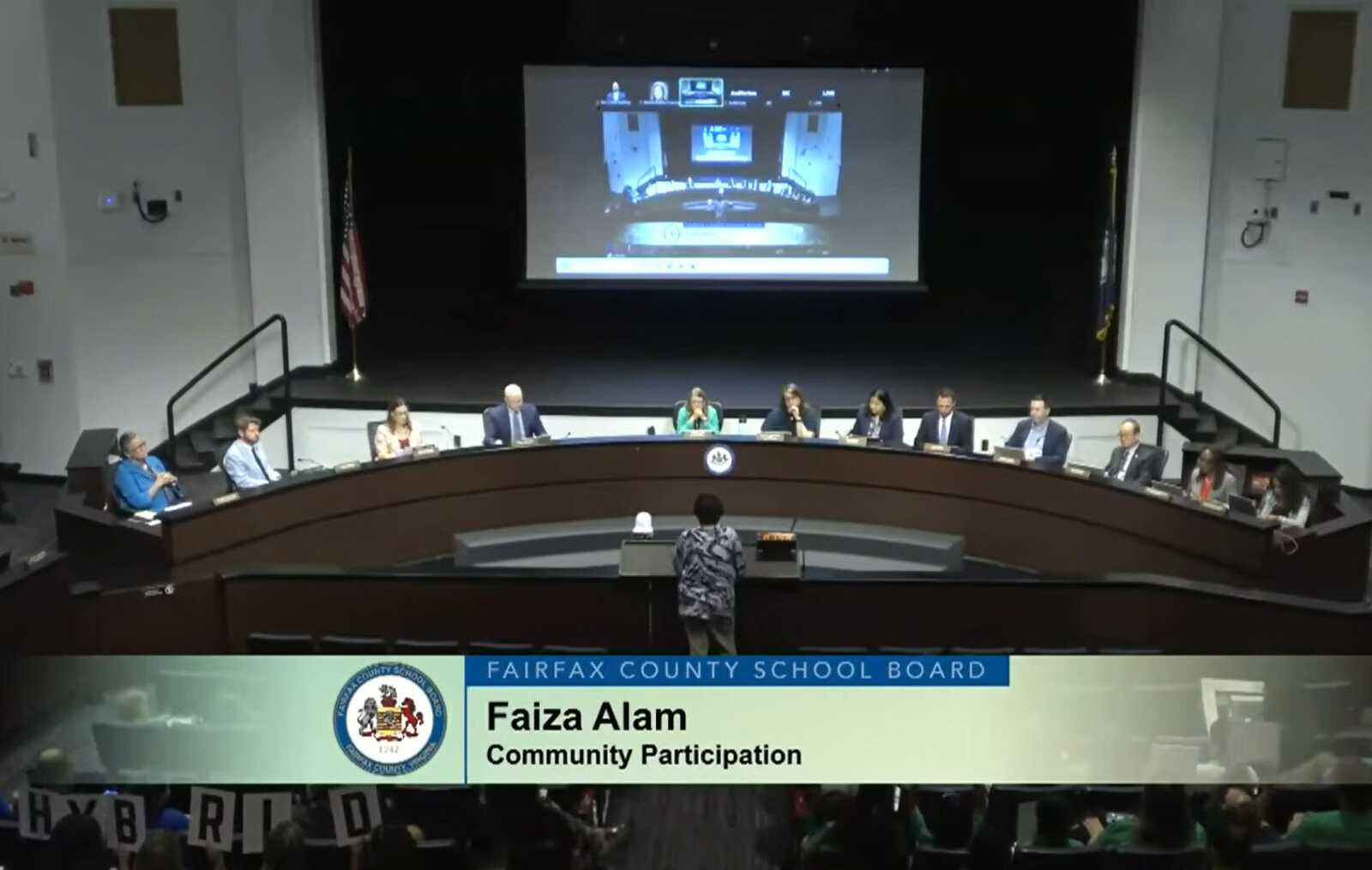
During the public comments prior to the board’s discussion, several people from the relatively new advocacy group FCPS Parents for Intentional Technology voiced concern about the school system’s current use of technology in the classroom.
Isabel Cheng, a fourth-grader at Oakton Elementary School, said she uses a computer several hours a day and described her curriculum for the past year as “very tech heavy.”
Juliet Gregory, a local high school student, said the board needs to restrict device usage because just going after websites isn’t enough. Students are always finding “hacks” around the blocks and when it’s time for computers to come out, “it’s just a colorful array of different gaming websites and it’s honestly kind of obnoxious,” she said.
Faiza Alam, a teacher at Katherine Johnson Middle School, said students are incredibly distracted when on digital devices, and it’s hurting their ability to learn.
“FCPS has never been afraid to lead,” she said. “Now let’s lead again through course correction. Our students need more protection and guardrails.”
The school board recently took one step to reducing devices in classrooms, adopting a policy requiring all students to turn their cell phones off and put them away during the regular school day in accordance with state legislation that will take effect on July 1.
FCPS Parents for Intentional Technology said in a statement that it appreciated the option to opt out of take-home devices for parents of younger students, but maintains that more action is needed.
“Fairfax County parents are asking for and need to have device elimination for PreK through grade 2, and a true device opt-out for all grades before the start of the 2026-27 school year,” the community group said. “The American Academy of Pediatrics, the American Federation of Teachers, and the U.S. Surgeon General’s Advisory have all recommended reducing and eliminating screentime for children in PreK through grade 2.”
The organization urged the school board to “prioritize the students” as it develops policies governing the use of technology.
This story’s headline was updated to make clearer that the opt-out option is for laptops and other technology that students can take home from school, not the use of all digital devices.
