

When the U.S. celebrates its 250th birthday next month, one Fairfax man could see the end of his American dream.
Over the years, the South Korean immigrant and medical professional has regularly renewed his lawful immigration status under the Deferred Action for Childhood Arrivals Act (DACA), the federal policy that offered relief from removal proceedings and the ability to work in the U.S. for young immigrants.
He didn’t keep up with the informal online communities that warned processing delays were stacking up, instead submitting the necessary renewal paperwork within the recommended time frame on the U.S. Citizenship and Immigration Services website, as he always had.
But unlike in the past, the Fairfax man has yet to receive an extension. If the federal government doesn’t renew his DACA permit by July 4, he will temporarily lose his employment and protection against deportation.
“I’m in a more optimal situation than others. I don’t need to take money out of my 401(k) to survive, so I’m grateful for that,” the man told FFXnow. “However, there are those I still think about — those who are waiting in their 180th day pending renewal, 210th day of pending renewal.”
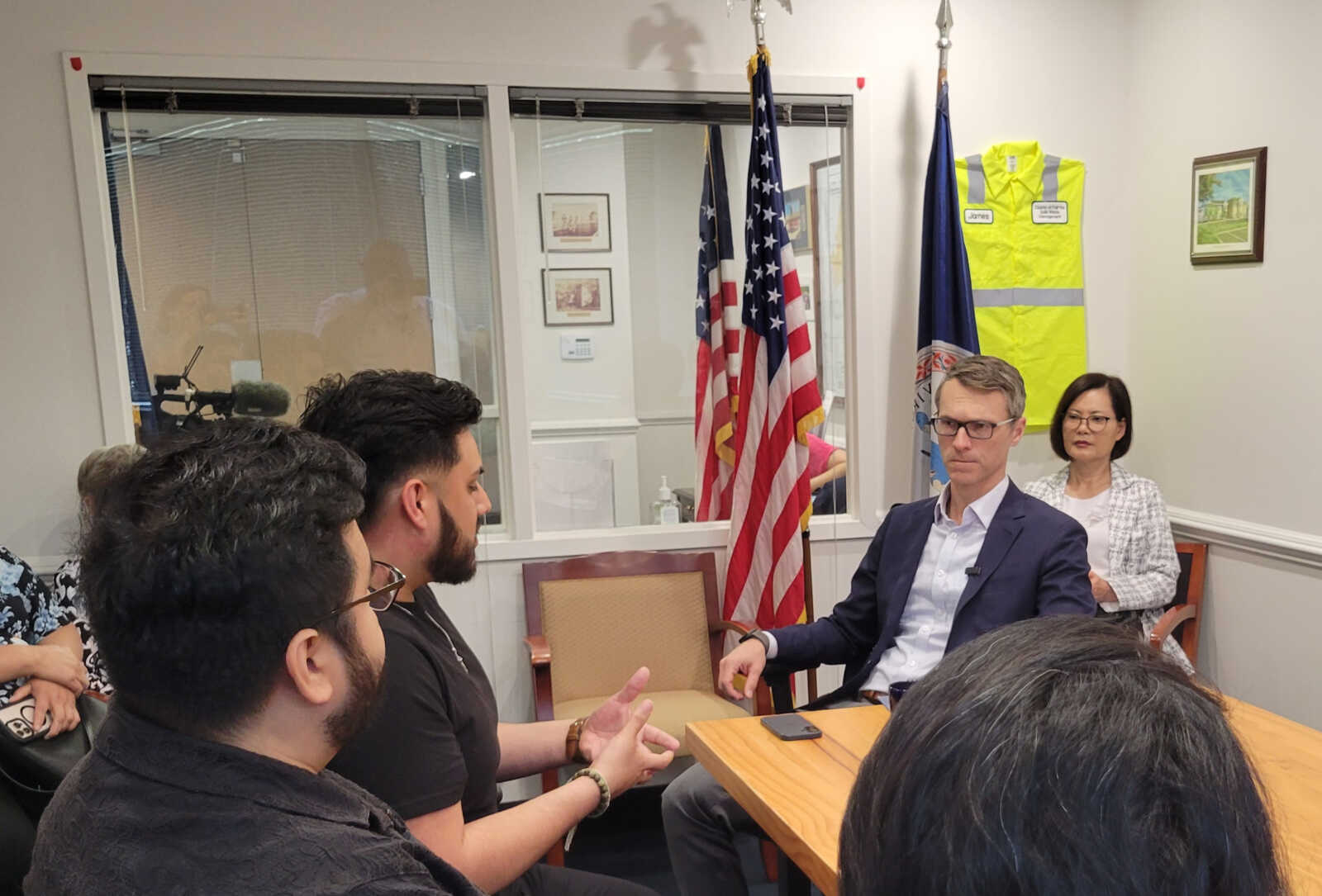
The Fairfax resident was one of several local DACA recipients who visited Rep. James Walkinshaw (D-11th district) on Monday (June 15) — the 14th anniversary of the federal program implemented by then-President Barack Obama — for a roundtable discussion on its future and the uncertainties many of the over 500,000 “Dreamers” still face.
“One of the things that we’re seeing is folks maybe not knowing or hearing that their renewal has been basically frozen or put on hold…They submitted all of the paperwork and followed the process, and then hear nothing,” Walkinshaw said. “It is important that they reach out to their member of Congress and ask them to make an inquiry, because sometimes we can determine whether something is on hold.”
Initially established via executive order in 2012, the DACA program was intended to provide relief from arrest and deportation to immigrants who arrived in the U.S. when they were children.
To be eligible for DACA, applicants must have entered the U.S. when they were 16 or younger, lived in the country continuously since June 15, 2007, either be in school or have a high school or equivalent degree, and maintain no criminal record. They must renew their permits allowing them to live and work in the U.S. every two years.
USCIS maintains on its website that the majority of DACA requests are adjudicated within 120 days and that it makes “every effort to efficiently process these requests as we receive them.”
However, many immigration attorneys and recipients nationwide have reported delays longer than 120 days.
President Donald Trump attempted to end the DACA program during his first administration in 2017. Though that was blocked in 2020 by the U.S. Supreme Court, legal battles over the policy have continued, and the current Trump administration has indicated that DACA status won’t shield recipients from arrest or deportation.
While “we obviously can’t change this administration’s philosophy or approach or get renewals,” members of Congress can sometimes at least intervene to get updates, Walkinshaw said.
He is also co-sponsoring legislation to provide DACA recipients with a pathway to citizenship.
“I’m not optimistic that this current Congress is going to seriously consider any of that legislation, but this current Congress is only going to be around for a few more months, and we’re going to have to take this debate to the ballot box in November, and then the Congress in January,” Walkinshaw told the roundtable participants. “But you have my commitment that I’ll fight alongside. I see this as an issue of basic fairness.”
In the meantime, the Fairfax resident will wait for an update on his case. After approaching Walkinshaw for help recently, USCIS told him the agency would provide an update within 30 days.
There’s just one problem with that, he said, “[Within] 30 days, my status will end.”
