


Sixty summers ago in what was then a small enclave in the wilds of western Fairfax County, a new theater troupe called the Reston Players prepared for its first production — a musical called “The Greatest Game in Town.”
The performances on July 15-17, 1966 at the South Riding Center Stables helped bring a budding sense of community to the “new town” emerging around Lake Anne and environs.
More than 230 productions have followed, along with a change in name to the Reston Community Players.
RCP, as it’s known, recently announced its 2026-2027 schedule, with performances to be held at the 260-seat Leila Gordon Theatre in Reston Community Center’s Hunters Woods facility (2310 Colts Neck Road).
In addition to promoting the performing arts in Reston, RCP also has been a regional leader for six continuous decades.
In 1999, it was a charter member of the Washington Area Theatre Community Honors (WATCH), a coalition of community theater organizations across the D.C. metro area. RCP frequently is among groups receiving the most nominations and awards in the annual WATCH theater competition.
The organization’s history has not been without challenges.
In April 1972, Reston’s Bowman Chapel burned to the ground, taking with it the Reston Players’ assets. Later that year, the organization reconstituted as the nonprofit Reston Community Players.
Seven years later, the organization moved into the newly constructed Reston Community Center for performances.
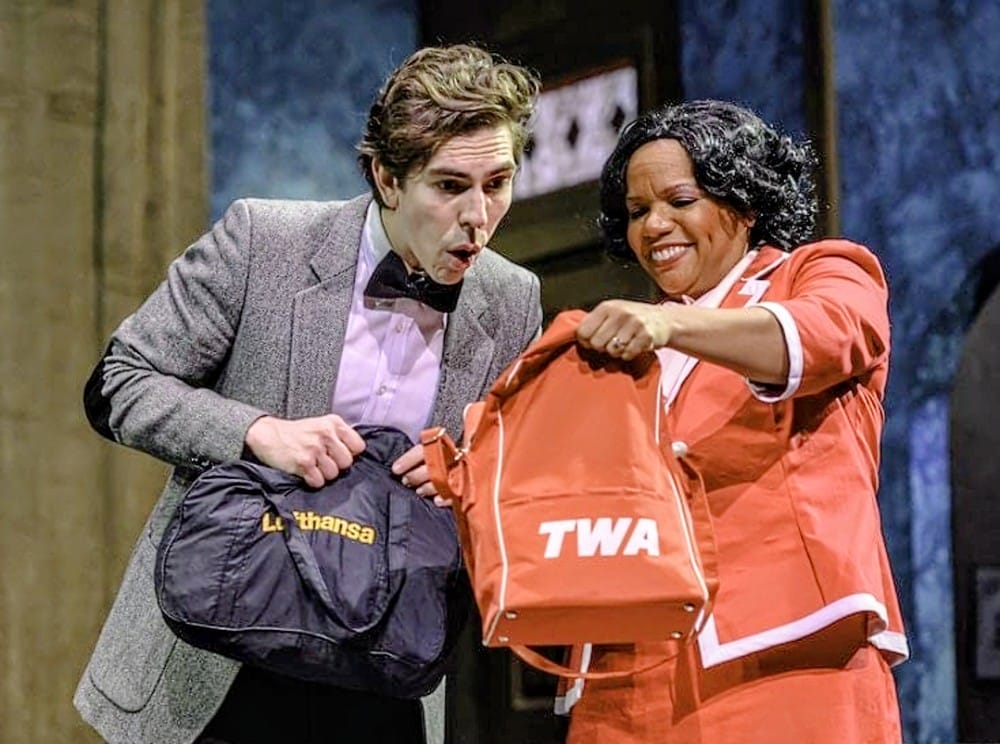
In the early 1980s, Lindsay Petersen, then secretary of the RCP board, purchased a warehouse space in Herndon that she leased at low cost to the arts organization. Upon her death in 2002, she bequeathed the space to RCP, which continues to use it.
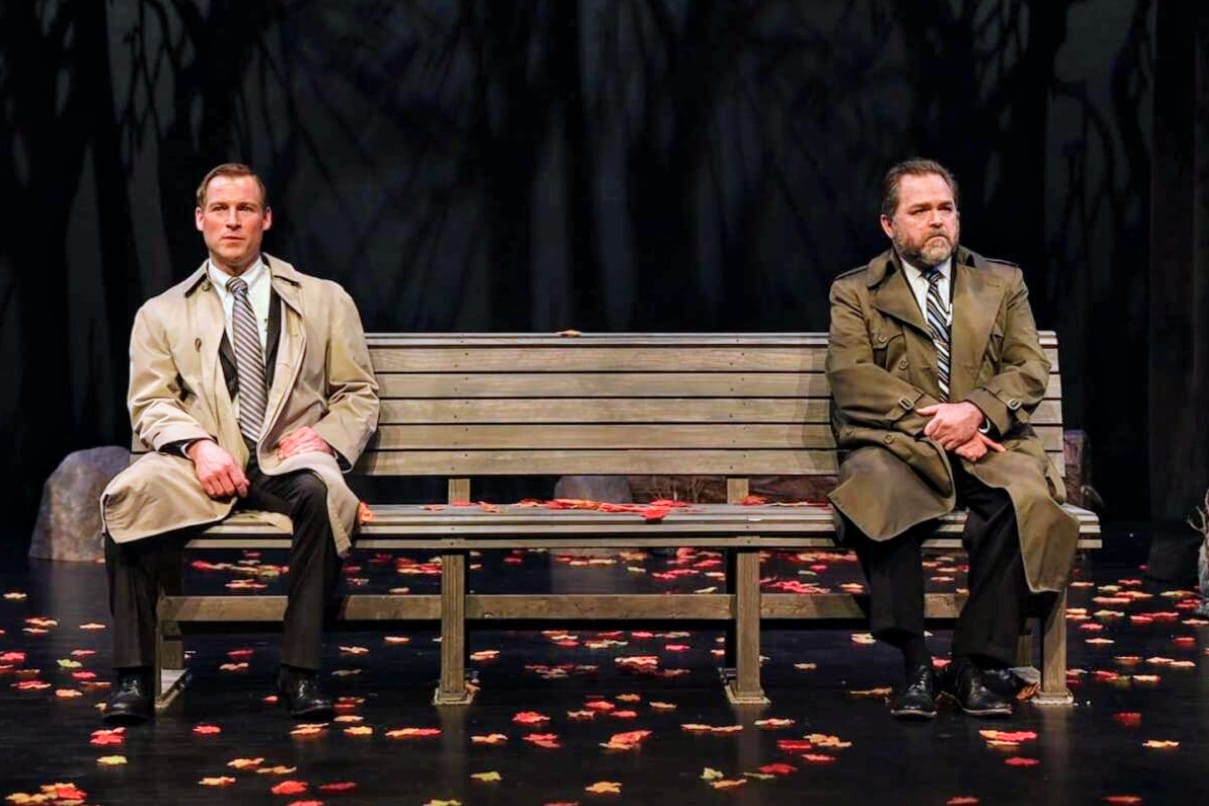
Like many performing arts organizations, Reston Community Players was significantly affected by the Covid pandemic, sitting out a year of productions before returning with the Cold War thriller “A Walk in the Woods” in the spring of 2021.
That production was filmed on stage and presented in an on-demand online format for audiences. In-person productions returned for the 2021-2022 season.
In its early days, the troupe would occasionally partner with other community theater organizations, a tradition that continued this summer when it collaborated with Fairfax County Public Schools on a production of “Dear Evan Hansen” at South Lakes High School.
RCP is planning a four-production 2026-2027 season, opening with “Once Upon a Mattress,” a 1959 musical comedy that made a star out of a young Carol Burnett. It will run Oct. 16-Nov. 7.
Other shows in the upcoming season include “Harvey” (Jan. 22-Feb. 7, 2027), “The Trojan Women” (Feb. 25-28) and “The Mystery of Edwin Drood” (April 9-May 1).
To mark the 60th anniversary, FFXnow asked RCP board president Michael Barret Jones about the organization’s philosophy, and how it has persevered in a challenging environment for performing arts groups.
How did last season’s audience count look compared to pre-Covid times, and have the demographics of audiences shifted in the post-pandemic era?
Audiences over the last few seasons have generally rebounded to, and in some cases exceeded, pre-pandemic levels, although comparisons need to account for the timing and format of individual productions.
One production each season runs for a single weekend rather than three or four, and we expect those productions to draw smaller audiences because there is less opportunity to build word of mouth.
More broadly, the biggest challenge facing Reston Community Players is one shared by many theaters — the aging of our audiences and the resulting changes in ticket-buying habits. Our subscribers have declined from nearly 40% of our audience to just over 25%, and the proportion of subscribers who are seniors continues to grow.
At the same time, we have seen our programming attract younger and more diverse audiences, particularly with productions such as ‘She Kills Monsters,’ ‘The Rocky Horror Show’ and ‘The Prom.’ The vast majority of those audience members, however, are single-ticket buyers rather than subscribers. That means an increasing amount of our time and resources goes into marketing each production individually, while also working to build brand loyalty and encourage audiences to return from one production to the next.
The good news is that we continue to perform very well in ticket sales. Nearly every production surpasses its projections, and many sell out performance after performance. So while the way audiences engage with us is changing, there remains a strong appetite for the work we are producing.
Have you found any changes in terms of people auditioning for roles, pre-pandemic vs. post-pandemic?
The biggest shift we have seen since the pandemic is not necessarily that people are less interested in participating, but that the way people are able to participate has changed. The desire to participate is still very strong, but the flexibility people have to devote to a production has changed.
Our performers are often balancing work, family, travel, and other commitments in ways that make the traditional model of community theater more difficult to sustain. It is also increasingly common for people to be involved in two or more productions at the same time.
Before the pandemic, a theater could publish a rehearsal schedule and performers generally understood that they were expected to be there for all but two or three excused absences. Today, we have to build more flexibility into the process. Work requirements, travel, family schedules, and other realities mean that having the entire cast in the room at the same time is no longer necessarily the norm.
For our spring production of ‘A Funny Thing Happened on the Way to the Forum,’ for example, we ultimately had just four rehearsals with the entire cast present before moving from the rehearsal room into the theater. And the challenge extends beyond rehearsal. Costume measurements and fittings, promotional photographs, staging and technical work, and even the basic company-building that is such an important part of a collaborative theater experience all benefit from having the full company together. Those things simply require more planning and flexibility than they once did.
The result is a domino effect. A rehearsal period that might once have been eight weeks now often needs to be 11 or more, which creates additional overlap among competing productions. That affects not only performers, but also rehearsal space, shop space for building sets and costumes, rented production materials and ultimately the cost of putting on a show.
For an all-volunteer theater, I think the larger lesson is that we have to adapt to the lives our volunteers actually have. People still care deeply about making theater, and we continue to see tremendous enthusiasm at auditions. But the traditional model of asking everyone to clear their calendars for two months is becoming harder to reconcile with modern life.
Our challenge is to find ways to preserve the collaborative experience and artistic quality of community theater while making participation possible for people whose lives look different than they did before the pandemic.

How are shows selected?
Our season selection process has evolved somewhat over the past several years, but the goal has always been the same: to create seasons that are artistically ambitious, offer meaningful opportunities for our performers and directors, and give our audiences something they cannot find at another theater down the road.
From 2023 through 2026, an RCP season selection committee, generally made up of five to seven people and including both board and community members, worked together to build each season. The committee began with several basic questions.
First, how many productions are we looking for? In 2023-24 and 2024-25, we produced two musicals and one play. For 2025-26, we returned to a four-production season and ultimately added a fifth production as a limited engagement.
Second, what are the recency, frequency and proximity factors? Several years ago, RCP produced ‘The Prom’ and ‘Murder on the Orient Express,’ only to discover that another ‘Prom’ was being produced 15 minutes away two weeks before us, while two other ‘Murder on the Orient Express’ productions were being staged by WATCH theaters within a month or two of ours.
Those experiences have stayed with us. We currently follow a policy of not selecting a property that has been produced in Northern Virginia or Montgomery County, Md., within the past five years, or within the past 10 years if it was nominated for Best Play or Best Musical at the WATCH Awards. We also will not produce a show that RCP itself has produced within the previous 20 years.
There is a famous piece of advice attributed to legendary Broadway producer David Merrick: ‘Be the first or the tenth to do something, but never the second.’ We have found that to be remarkably true. On several occasions, we have reconsidered a production under consideration because another local company announced it before we had an opportunity to produce it.
Third, what do we want the season to say as a whole? We look at the balance of genres, the opportunities for performers, the kinds of stories we are telling, and the ways the season can challenge our audiences and our artists.
For example, we recognized that our musicals over the previous two seasons had skewed toward large male roles, with ‘Fiddler on the Roof,’ ‘The Producers,’ ‘The Rocky Horror Show’ and ‘A Funny Thing Happened on the Way to the Forum.’ All have important roles for women, but for our 60th-anniversary season, we specifically wanted to create more opportunities for women to take on substantial, complex roles.
That thinking helped shape our 2026-27 season: ‘Once Upon a Mattress’ has three terrific roles for women, ‘Harvey’ has three, ‘The Trojan Women’ has six to eight and ‘The Mystery of Edwin Drood’ has three or four.
The titles were also deliberately chosen to reflect a classic season for our 60th anniversary. All four are Tony and/or Pulitzer Prize winners, with the notable exception of ‘The Trojan Women,’ which is 2,500 years old. Our production will feature a new adaptation that we have spent the spring and summer workshopping, and we are excited to offer it as a new classic.
When we announced the anniversary season, we specifically invited directors to bring new perspectives and theatrical filters to classic works. ‘Mattress,’ ‘Harvey’ and ‘Trojan Women’ will all have a freshness that audiences may not expect. And ‘Drood’ literally changes every night, with the audience voting on choices that can lead to 480 different, fully scripted endings.
How are potential directors involved in the selection process?
For this and earlier seasons, RCP selected the titles first and then invited directors to apply to direct specific productions that we wanted to include in the season. For our 2027-28 season, however, we flipped the process. Several directors had asked when we would open the floor for their own ideas, so we decided to do exactly that.
A board-only committee has been reviewing scripts and considering the 38 projects submitted for our four-production season. Some directors proposed a single project, while others submitted several possibilities. At the end of the process, we expect to surprise our audiences with productions that are unmistakably in the tradition of RCP while continuing to push our artistic vision and expand what our audiences expect from us.
Because theatrical rights generally cannot be secured more than 18 months before opening, there is also a practical limit to how far ahead we can finalize a season. “There is a thematic thread connecting the four productions, and we look forward to announcing the season later this fall.
There is an online list of RCP productions dating back to the start. It is a complete roster of all shows that have been performed?
I cannot guarantee that it represents a perfectly complete record of every production we have ever done, but it is the most comprehensive record we have been able to reconstruct using the historical materials available to us and contemporary archival tools.
There are currently 237 productions listed, which works out to an average of 3.95 productions per year over the company’s history. That makes it likely to be very close to the actual total, even if there are a few gaps in the historical record.
