

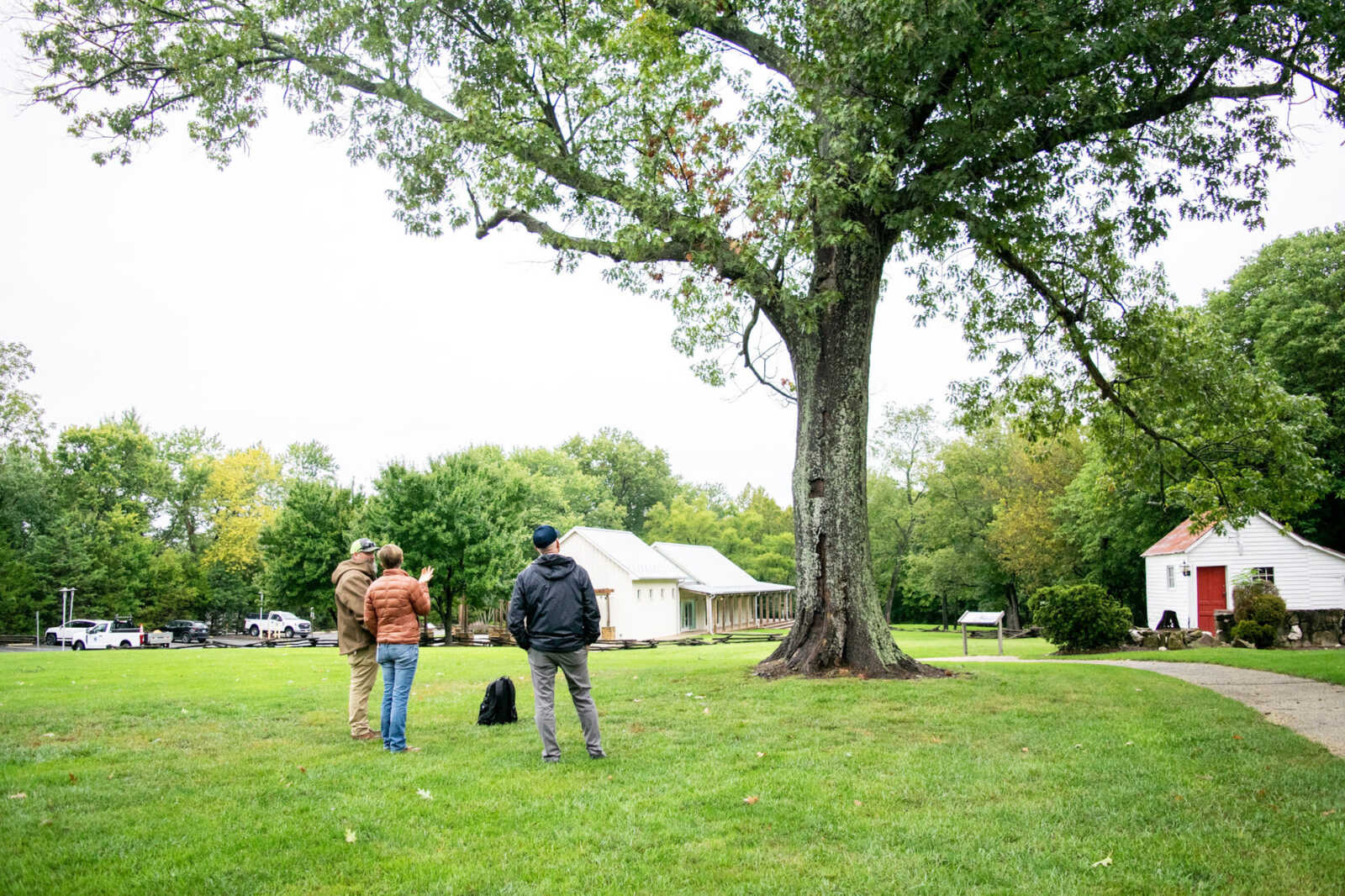
The Historic Blenheim grounds in Fairfax City are closed for today (Tuesday) to accommodate the removal of a large southern red oak tree near the preserved 19th-century home.
The tree was initially scheduled to be removed on Oct. 2 as part of a larger project to restore the site’s woodland habitat, including by eliminating dead or invasive trees, but the contractor’s plans were foiled by “equipment problems,” the City of Fairfax said.
“The contractor is back on-site today to complete the job. Historic Blenheim is closed for the day to allow the work to proceed safely,” the city said in an update sent out this morning. “Removing the oak tree requires a crane. Mats will be placed to protect the surrounding lawn.”
The work isn’t expected to affect traffic on Blenheim Blvd, which is separately undergoing construction to add sidewalks, a cycle track and other multimodal improvements.
According to Fairfax City, the oak at Historic Blenheim was planted within the last hundred years. Though city staff have worked to maintain it over the decades, the tree’s condition has declined as it nears the end of its life span, which is typically around 150 years for this species:
Advanced root rot is visible around the base of the tree, with mushrooms – nature’s decomposers – feeding on buried roots and exposed bark. The tree’s crown, once robust, has died back to reveal leafless branches. A giant vertical crack in the trunk opened up, and discolored bark flakes off in large chunks, exposing severe internal decay. Last year was a bumper crop for acorns, but the oak barely produced any seeds, yet another sign of the tree’s rapidly declining health.
The city says its staff has administered preventative care, including pruning, but the tree has now reached a point where falling branches or a collapse could “pose a threat to visitors, the historic house, and the irreplaceable artifacts within the house.”
A cultural landscape study completed for Historic Blenheim by the consultant WSP USA in March 2025 recommended developing a management plan for replacing the 40-inch caliper southern red oak and other declining trees “with historically appropriate specimens.”
“Once the tree is safely removed, the stump will be ground down to the surface of the surrounding lawn and overplanted with grass,” the city said. “A new northern red oak will be planted nearby.”
A total of 17 trees have been targeted for removal from Historic Blenheim, Fairfax City spokesperson Matthew Kaiser says. That includes 10 invasive royal paulownia and white mulberry trees as well as seven red maple, black cherry and southern red oak trees determined to be dead or hazardous.
The tree removals followed months of work by city staff and their contractor to tackle invasive plant species, such as bush honeysuckle and Asiatic bittersweet, that have proliferated in wooded areas on the nearly 12-acre site.
The city brought in a dozen goats from Nostra Farm to graze on approximately 3.5 acres in June and July, clearing some dense brush and making it easier for humans to access the forest understory, according to the project page.
Staff and contractors then cleared remaining invasive woody vegetation starting in late September through forestry mulching.
“After initial removal work is complete, staff will follow up with targeted herbicide treatments and native plantings to accelerate natural forest regeneration and prevent reinfestation,” the project page says. “Tree planting is anticipated later in 2027.”
Located at 3610 Blenheim Blvd, Historic Blenheim includes a farmhouse built around 1859 that has become famous for the graffiti left on its walls by Union soldiers during the Civil War. The site also features a Civil War Interpretive Center and the cemetery of the Willcoxon family, the estate’s original residents.
The site’s grounds are generally open from dawn to dusk, while the interpretive center operates from 10 a.m. to 3 p.m. on Wednesdays through Saturdays. Admission and parking are free. Free guided tours of the farmhouse are offered at 1 p.m. on Saturdays.
