

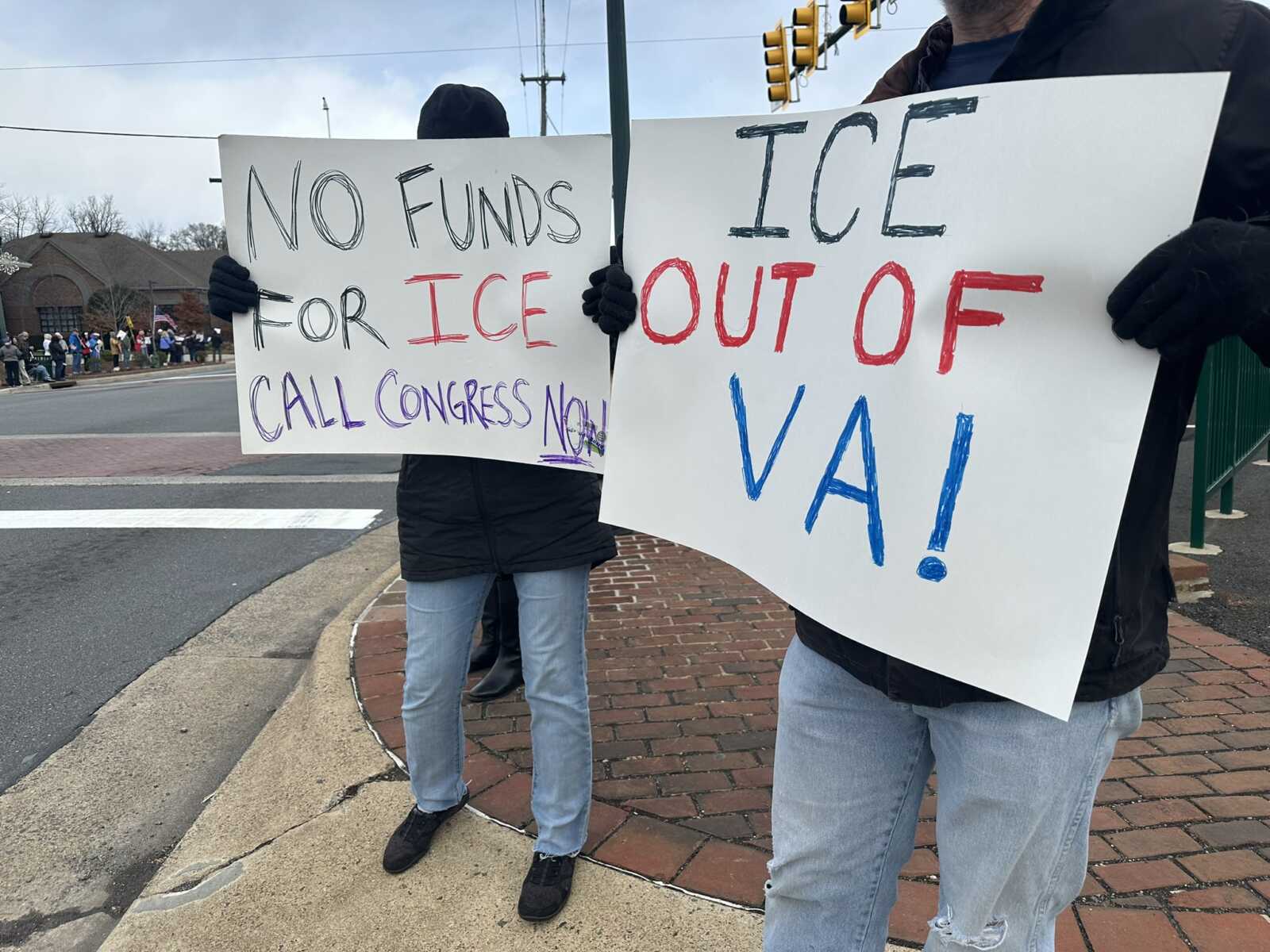
Virginia Gov. Abigail Spanberger has taken a mixed approach to bills from Fairfax state Sen. Saddam Azlan Salim (D-37) intended to counter the Trump administration’s draconian approach to immigration enforcement.
The governor announced today (Wednesday) that she has signed SB 352 and its House of Delegates companion HB 1482, which ban law enforcement officers from covering their faces, while vetoing legislation (SB 351 and HB 650) that would restrict federal immigration agents from conducting civil arrests in certain public places, including courthouses, schools and health care facilities.
The legislative actions were accompanied by an executive order directing state agencies to prohibit the federal government from accessing state property or using it as a staging site for civil immigration enforcement unless officers have a “valid warrant or order.”
The state government must also develop guidance for local prosecutors, hospitals, schools and elections workers for handling interactions with federal immigration officers. A website will be established “to help Virginians understand their rights and report alleged legally prohibited practices by federal agents.”
“Law enforcement officers wearing masks on American streets undercut basic expectations of accountability, sow fear and confusion, and erode the public trust,” Spanberger said. “Americans have witnessed the horrors of what can occur when masked federal immigration enforcement agents engage in fear-based policing and enforcement theatre on American streets — like in Minnesota where Renee Good and Alex Pretti were murdered.”
Spanberger’s office noted that Virginia has seen a “significant increase in immigration-related detentions” since President Donald Trump took office for a second term in January 2025.
Though Trump’s administration has touted its mass detentions and deportations as an anti-crime campaign targeting “worst of the worst,” only about 30% of the approximately 14,687 people detained in Virginia between January 2025 and March 2026 have been convicted of a crime, and in over 200 of those cases, the most serious offense was a traffic violation, WRIC reported based on information collected by the Data Deportation Project.
The governor presented her executive order directing state entities to develop protocols for handling encounters with U.S. Immigration and Customs Enforcement and other federal immigration agencies as an alternative to the bills restricting civil arrests in courthouses and other facilities passed by the General Assembly.
“I appreciate the goal and intended purpose of this bill, but in practice, this legislation would not achieve the intended goals,” Spanberger said in a statement explaining her veto. “It would effectively require security guards and, in some cases, local law enforcement be placed in the untenable position of choosing between violating state law or federal law, rendering this proposal unworkable.”
Amendments were rejected
At a reconvened session last month, the General Assembly rejected amendments proposed by Spanberger to both the masking and civil arrests bills that Salim said would’ve rendered them “toothless.”
SB 352 and its House companion include exceptions to the face covering ban for cases where a mask is necessary to protect against infection or exposure to toxic substances, or the officer is carrying out official duties as part of a SWAT team. Violations could be punished as a Class 1 misdemeanor, which carries a maximum possible sentence of a year in jail and a $2,500 fine.
In a substitute bill, Spanberger had proposed removing the misdemeanor designation and a requirement that law enforcement officers wear clothes or a badge identifying them and their agency when performing their duties.
As passed by the General Assembly, SB 351 and its House companion would’ve:
- Designated health care facilities, schools, commonwealth’s attorney offices, polling places and courthouses as “protected areas” where federal civil immigration activities are prohibited
- Required federal immigration officers to present identification, a judicial warrant authorized by a court or judge and a justification to enter courthouses for an arrest
- Prohibited police or other security personnel assigned to the courthouse from letting someone in without meeting those requirements
- Defined a violation of the ban on civil arrests without a warrant in courthouses as contempt of court, which can be punished in Virginia with a fine of $250 or up to 10 days in jail
- Allowed Virginia’s attorney general to bring civil charges against violators
Spanberger’s substitute removed the additional requirements around civil arrests at state and local courthouses and provisions specifying how violations would be punished. She also specified that the legislation “shall [not] be construed” to nullify claims of qualified immunity and set a two-year limit for filing civil lawsuits over violations.
Legislators react to governor’s actions
Salim said he was “glad to see” Spanberger sign his bill prohibiting face coverings for law enforcement, calling the legislation “an important step toward strengthening transparency and accountability.”
“By prohibiting masked law enforcement officers in most public-facing situations, the bill ensures that public employees are clearly identifiable while interacting with the people they serve, which supports trust, visibility, and responsible policing,” Salim said in a statement. “At a time when Virginians expect both safety and accountability from their institutions, this legislation reinforces the principle that law enforcement should operate openly and with the public’s confidence.”
Del. Charlie Schmidt (D-77), who represents parts of Richmond and Chesterfield County and sponsored the House version of the bill, described the restriction as a reflection of the state legislature’s commitment “to protecting Virginians from the unprecedented, dangerous and lawless actions by ICE and the federal government.”
Salim and Del. Katrina Callsen (D-54), who represents parts of Charlottesville and Albemarle County and filed the House bill limiting civil immigration arrests without warrants, argued that Spanberger’s veto of their legislation “undermines public safety and accountability.”
“This veto was a choice not to stand up to the Trump administration’s persecution of marginalized communities and protect our immigrant neighbors, but it is not the end,” they said. “We will continue to work with the administration and fight for policies that keep our communities safe, protect the rights of Virginians, and stand up for public safety and the rule of law, not retreat from them.”
In her veto explanation, Spanberger said she understood the desire to “send an important signal” reassuring immigrants in Virginia that they can access courts, schools and other services without fearing detention, but the message would’ve been misleading.
“Communicating that immigrant families are protected from immigration action in places they are not by virtue of federal law would put families at risk,” she wrote.
Salim, whose district includes Tysons, Vienna, Oakton and the cities of Falls Church and Fairfax, also filed SB 783 prohibiting state and local law enforcement agencies from entering into cooperative agreements with ICE or using their resources to assist with enforcing federal civil immigration laws.
The General Assembly accepted an amendment that expanded an exception for transferring adults convicted of violent felonies from prisons and jails to include any adult facing a judicial warrant, and the bill was signed into law on April 22. The bill will take effect on July 1.
