

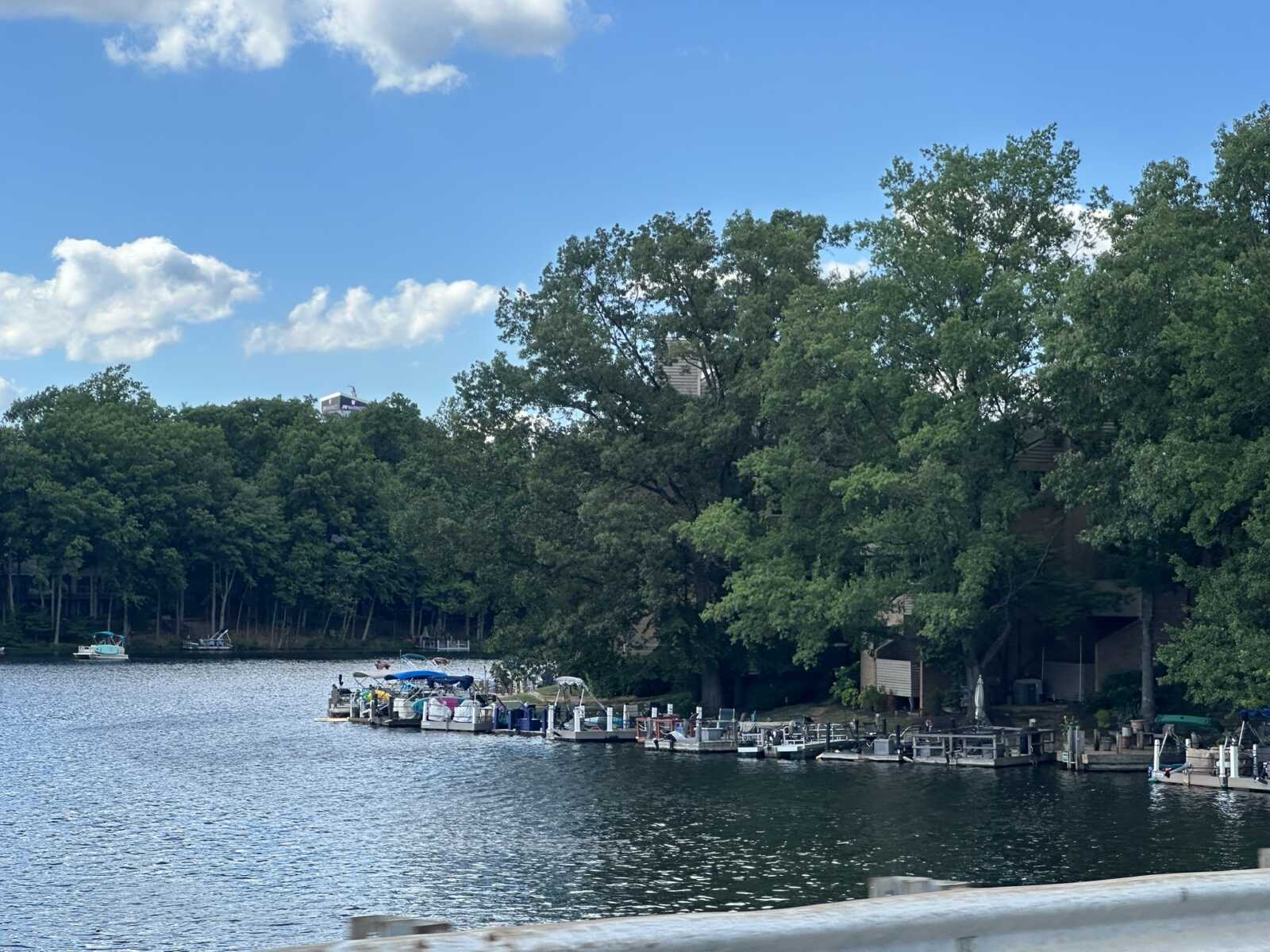
Reston Association is breaking out the herbicide this summer in response to a proliferation of hydrilla at Lake Thoreau.
The invasive aquatic plant resurfaced last year after a couple of quiet summers. Though RA replenished the lake’s population of grass carp this spring, the fish don’t appear to be keeping the hydrilla in check as effectively as hoped.
“We’ve noticed that our hydrilla is growing back just like last year,” RA Watershed Manager Ben Rhoades said in a video released by the homeowners’ association on Friday (July 3). “The grass carp that we introduced in March don’t appear to be having the effect we hoped for, but we anticipated this, and in the 2026 hydrilla management plan, have a backup of herbicide use to follow.”
According to an RA spokesperson, the herbicide treatment is scheduled to take place on July 9, if the weather cooperates.
“It’s a low dose, selective herbicide application that’s all part of our existing overall hydrilla management plan,” the spokesperson told FFXnow.
The chemical won’t disrupt boating or other recreational activities on the approximately 41-acre lake west of the South Lakes Village Center, according to Rhoades.
First spotted in the Potomac River in 1982, hydrilla is a long-stemmed plant that’s considered invasive in the U.S., because its ability to grow rapidly crowds out native species and creates impediments to boating and irrigation, according to the Virginia Institute of Marine Science.
The species has been a recurring issue at Lake Thoreau that RA traditionally manages by stocking the lake with sterile grass carp, a freshwater fish regularly used for aquatic weed control in the U.S. and Europe.
However, a particularly rapid spread of hydrilla in 2020 prompted RA to hire a contractor to treat the lake with herbicide late that July, contributing to the emergence of a potentially harmful blue-green algae bloom.
In response to criticism of the decision to apply herbicide during the hottest part of the summer, RA allocated more funding in its 2021 budget toward lake management. The organization also developed a new approach to handling hydrilla in Lake Thoreau that involved both stocking it with grass carp and applying some herbicide earlier in the season.
The change appeared to have an effect, reducing hydrilla enough that RA stopped using herbicide in 2023 in the hopes that the carp had matured enough to manage the plant more naturally.
When the hydrilla returned last summer — initially as isolated plants, then in “significant quantities” — RA let it die off naturally to avoid repeating the mistakes of 2020. Grass carp were then released into the association’s four manmade lakes this spring and have proven effective everywhere except at Lake Thoreau, according to Rhoades.
If the herbicide is applied on July 9 as planned, the lake will be treated earlier this year than it was in 2020, though it will occur just after a heat wave that produced record temperatures in the D.C. region three days in a row.
“We hope it’ll take care of our hydrilla issue through the end of the boating season,” Rhoades said.
RA’s use of pesticides to treat grass in its common areas recently sparked concerns from at least one resident, who argued that community members should be notified when treatments are planned so they can keep children and pets safe.
The association announced in mid-June that it has updated its policies to require clearer, more prominent signage at sites where pesticide was being used.
“RA’s focus is integrated pest management, prioritizing the least disruptive and most effective solutions first,” the organization said in a statement. “We would like to minimize the impact to a site and the likelihood of nuisance species from recurring. While using fresh woodchips in beds and hand-pulling weeds get us part of the way to our management goals, certain locations require herbicide application for long-term weed control, or invasive plant removal.”
