

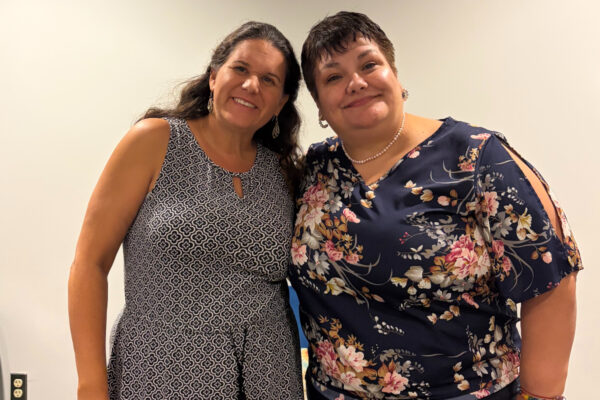
The Women’s Center recently marked the 10th anniversary of its Break the Cycle of Domestic Violence program.
The initiative provides critical support services for victims of domestic violence, including crisis intervention, safety planning, information about accessing and navigating the legal system, and mental-health counseling.
It also provides referrals to and information about medical, mental health and financial services as well as community resources and education on the cyclical nature of domestic violence.
“The Break the Cycle program made me feel very supported, heard and protected,” said a male client, who received services for 15 months.
“It gave me the strength to face the difficult process I was going through and provided me with options that were in the best interest of both me and my children,” the client said. “The advocate who supported and accompanied me during the hardest times was very professional and assisted me with everything that was within her ability to help with.”
The effort also “provides education to the community, professionals and the clinicians working with victims of domestic violence through training, peer and supervisory support,” the Tysons-based nonprofit organization said.
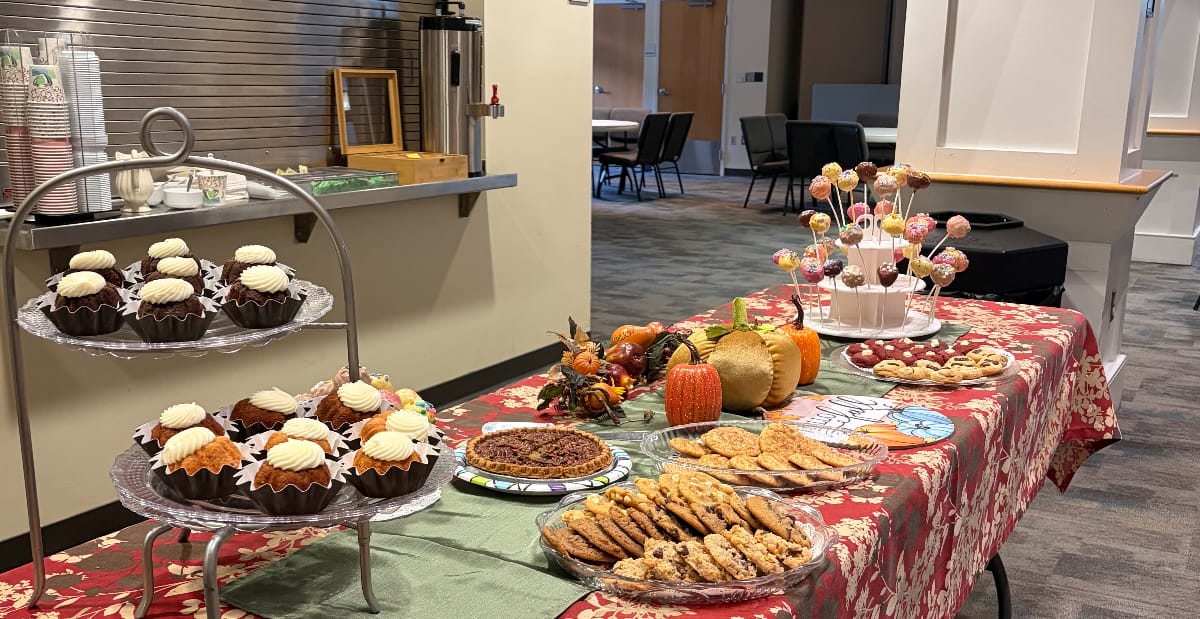
On Sept. 16, The Women’s Center held a 10th-anniversary reception to honor the work of those providing services and those who have benefited from them. With an autumnal theme and selections from Lina’s Bakery, it drew both clients and service providers.
“It was a wonderful event,” said Rachna Krishnan, CEO and executive director of The Women’s Center.
FFXnow recently spoke with Krishnan about the program, its genesis and its community impact.
What was the genesis of the effort when it was created a decade ago? Was this program aimed at filling service gaps, or was it an expansion of existing services?
The Break the Cycle program was originally started as a survivor-led support group. Initially, we hoped to train survivors to be speakers and advocates. However, we quickly realized many clients had recently left abusive relationships and were not ready to speak.
The program was aimed at filling a service gap. While there are many county-funded programs that offer crisis support through hotlines, shelters, court advocacy, short-term counseling and support groups, there was no program that provided long-term services to survivors to rebuild their lives, break the isolation of years of abuse, and heal in community with other survivors.
Who benefits from the program, both in terms of those receiving services directly and their broader family/community members?
The Break the Cycle Program benefits anyone who feels physically, emotionally, psychologically, verbally and sexually unsafe in their relationship. This includes individuals who have experienced domestic violence, sexual assault, and other forms of
interpersonal abuse, as well as secondary victims, including family members and others impacted by the victim’s experience.The program began as a service for women and has since grown to serve anyone experiencing abuse, including men, who receive the same short- and long-term advocacy and case management services. It is open to everyone, regardless of race, ethnicity, gender, sexual orientation, religion, economic, immigration, or legal status, or other background or identity, and services are provided at no cost.
No matter where anyone is in the process, whether they want to stay in their relationship or want to leave, our primary focus is on the safety of the victim/survivor and their children.
The program’s impact also extends into the broader community. Through advocacy, support, education, outreach, resources and referrals, the program helps victims and survivors strengthen safety, understand their rights and options, access needed resources and make informed decisions based on their individual circumstances and goals.
By supporting survivors and secondary victims and providing prevention and education, Break the Cycle contributes to increased awareness, stronger support networks, and healthier, safer communities.
Has the program provided information/learning experiences for The Women’s Center that has positively impacted other programs/services?
Yes, 33.6% of Virginia women and 28.6% of Virginia men experience intimate-partner physical violence, intimate partner rape and/or intimate partner stalking in their lifetimes, based on information from the Virginia Action Alliance. Survivors of domestic abuse are three times as likely to meet the diagnostic criteria for PTSD compared to the general population, with some clinical studies showing up to a 7-fold increase in likelihood among abused women.
Every semester, our Break the Cycle Program manager trains our clinical interns on the dynamics of domestic and safety concerns, so they are aware of the heightened safety concerns and mental health risks related to domestic violence. Also, when possible, advocates join therapy sessions to do risk assessments, safety planning and options counseling around the individual's unique situation.
Moreover, The Break the Cycle Program’s 2025 impact show that we served 530 domestic-violence victims with 6,086 hours of crisis intervention, mental health counseling, advocacy and support, resulting in 96% of domestic-violence clients reporting enhanced safety, 94% improved mental health and progress on their identified therapeutic goals, and 92% reporting feeling less isolated.
Also, the access to affordable financial education, career services and mediation services resulted in 90% of clients reporting that the information they received helped them gain confidence in their skills to find paid work, achieve financial stability and
navigate complicated legal processes.
In recent years, have “best practices” evolved significantly, and if so, how have they impacted this program?
Over the past decade, best practices in domestic and sexual violence services have continued to evolve, placing greater emphasis on victim-centered, trauma-informed, culturally responsive, accessible and individualized services. These practices recognize that every victim and survivor has different needs, circumstances, cultural consideration, and safety concerns, and that individuals should have meaningful choices in how and when they receive support.
Early on, we learned that our Break the Cycle program needed to be culturally and linguistically responsive to the unique needs of our clients, so The Women’s Center decided to hire bilingual advocates.
In addition, the Break the Cycle Program, in alignment with the Virginia Department of Social Services, incorporated Dr. Jacquelyn Campbell’s “Danger Assessment” into its work with clients. This approach strengthened our understanding that safety planning is not a one-size-fits-all process, but rather an ongoing and collaborative process that responds to each client’s unique circumstances, level of risk, concerns and choices.
Through individualized risk assessment, safety planning, and connection to appropriate resources, advocates work alongside clients to identify strategies that support their safety while respecting their autonomy and decisions.
These evolving practices have strengthened the Break the Cycle Program by prioritizing immediate and flexible access to advocacy services without waiting lists or a referral system. Clients are able to connect directly with advocates and receive services in a way that best meets their individual needs and circumstances. The priority is to create an environment where individuals feel safe, comfortable, respected and able to share their experiences at their own pace.
The program has also continued to adapt to emerging forms of abuse, including technology-facilitated abuse and digital safety concerns, while expanding virtual and hybrid options. Ultimately, evolving best practices have helped Break the Cycle reduce barriers to services, increase accessibility, and strengthen survivor choice and autonomy, while maintaining safety, confidentiality, and the individual needs of each person at the center of advocacy.
Nowadays, in-person and virtual services allow us to serve clients who were unable to leave the home or who felt unsafe leaving their home due to their immigration or economic situation.
The effort also acknowledged the emotional impact the work can have on advocates and therapists, Krishnan told FFXnow.
“In response, we implemented monthly vicarious trauma meetings to provide a supportive space for staff to process their experiences, normalize the emotional responses associated with this work, strengthen resilience, and promote professional well-being,” she said.
“By acknowledging and proactively addressing vicarious trauma, we not only support the well-being of our staff but also strengthen their ability to continue providing compassionate, trauma-informed, and victim-centered services,” Krishnan said.
