

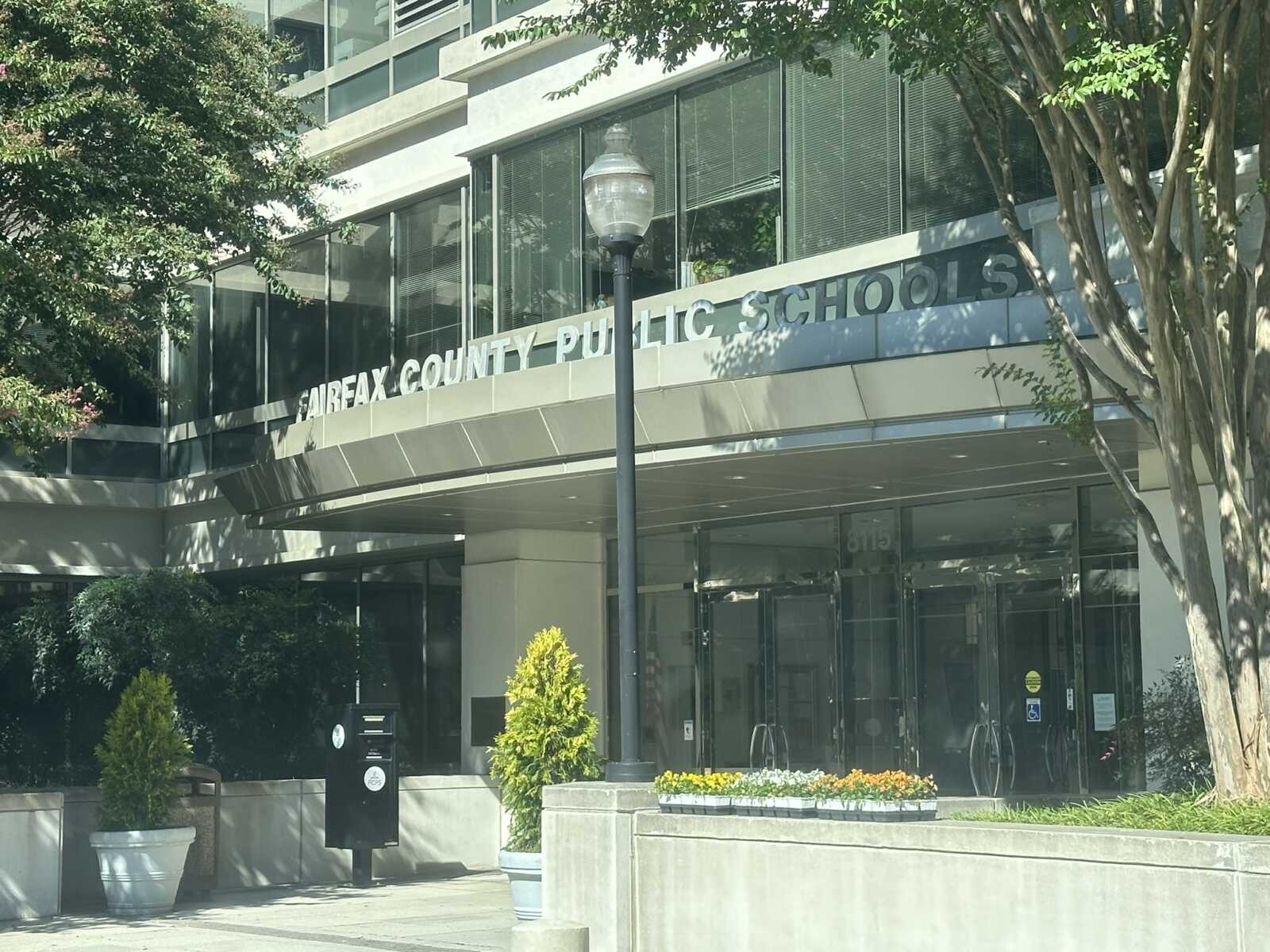
Fairfax County Public Schools’ legal bid to restore funding withheld by the U.S. Department of Education due to its policies supporting transgender and other gender-expansive students has found new life.
A three-judge panel from the U.S. Appeals Court for the Fourth Circuit ruled 2-1 yesterday (Thursday) to send the lawsuit filed by FCPS and Arlington Public Schools (APS) in August 2025 back to a federal district court that had previously dismissed the complaint.
The Fourth Circuit disagreed with U.S. District Judge Rossie Alston Jr.’s conclusion that the lawsuit was filed in the wrong jurisdiction, stating that while federal contractual disputes are typically handled by the Court of Federal Claims, the school districts are challenging the Trump administration’s funding freeze on policy grounds, rather than the terms of the affected grants.
“The core of the school districts’ claims is not that the Department [of Education] has breached its contractual obligations but rather that the Department is enforcing Title IX against them when, in their view, they have not violated the statute,” U.S. Circuit Court Judge Allison Rushing wrote in her majority opinion, drawing a distinction between the schools’ lawsuit and others filed over the past year challenging grant terminations by federal agencies.
The appeals court didn’t take a position on the merits of FCPS’ lawsuit, instead vacating Alston’s decision and sending the case back to the U.S. District Court for the Eastern District of Virginia.
Fairfax and Arlington school leaders sued U.S. Secretary of Education Linda McMahon and the Education Department on Aug. 29, 2025 for restricting their access to federal funds after they and other Northern Virginia school systems refused to rescind policies letting students use bathrooms and other facilities that match their gender identity.
The Trump administration has argued that policies accommodating students based on gender identity violate Title IX, which prohibits discrimination based on sex in public education, while FCPS and APS say complying with the current federal interpretation of the statute would mean violating gender identity-based protections for students in state law and a legal precedent set by the Fourth Circuit.
In its complaint, FCPS estimated that it was missing out on approximately $167 million as a result of the Education Department’s funding freeze, including money to pay food services staff, provide free and reduced-price meals, and support students with disabilities.
FCPS was separately sued in 2024 over its policy allowing students to use restrooms based on their gender identity by a now-graduated student and the right-wing organization America First Legal. The school system settled that complaint last December with a payment of $50 and compensation for legal fees, though it maintained that its policies align with state and federal laws.
“We are encouraged by the decision by the Fourth Circuit Court of Appeals, which allows our legal challenge to move forward,” FCPS said in a statement on the Fourth Circuit’s decision. “The case now returns to the district court for consideration of the remaining legal issues.”
“Throughout this process, our focus remains where it belongs: on our students, our schools, and protecting the resources needed to provide a strong educational experience for every child,” the school system added.
FFXnow has also reached out to the U.S. Education Department for comment.
Perhaps bolstering FCPS’ confidence in its case, last month, a U.S. district court judge in Massachusetts declared the Education Department’s directive terminating grants for diversity, equity and inclusion-related programming to be unlawful, siding with eight states that had sued over the loss of grants totaling $250 million.
The U.S. District Court in Massachusetts also ruled in a separate lawsuit in July that the Trump administration can’t revoke grants based on its new “anti-DEI” priorities that didn’t exist when the funding was originally awarded. The ruling didn’t restore canceled grants, but blocked the federal government from future terminations, including of school-based mental health awards that spurred the complaint from a coalition of 23 states.
Meanwhile, the Trump administration has been working to dismantle the Education Department through mass layoffs, grant program cancellation and a reorganization sending many offices to other agencies — changes that some workers say have been costly and resulted in additional bureaucratic hurdles.
