

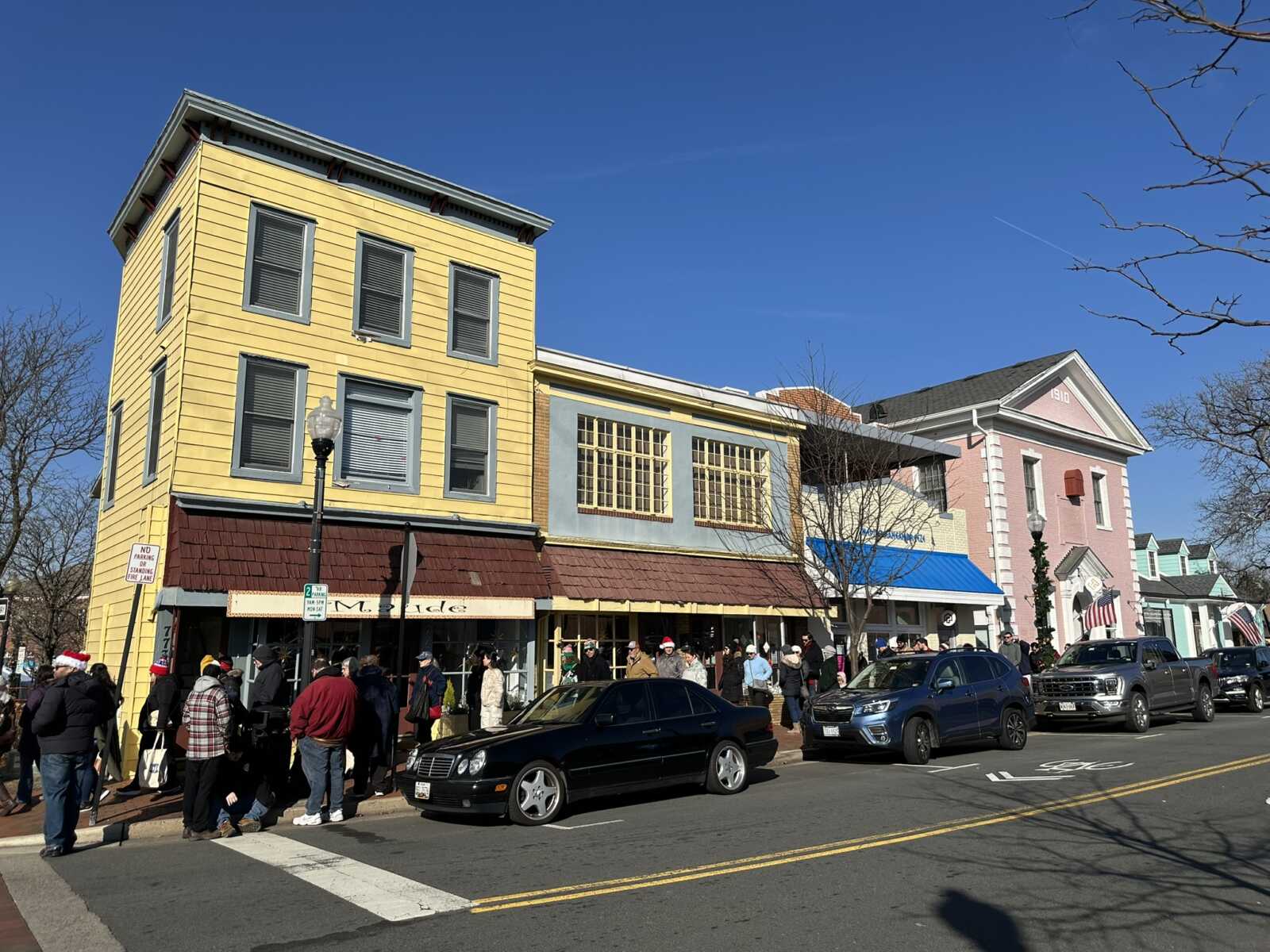
While still fighting to regain control of 5 acres ceded to Comstock Companies in 2020, Herndon officials aren’t waiting on the private developer to bring new life to their historic downtown.
The Herndon Town Council authorized staff on Tuesday (Oct. 27) to submit downtown Herndon for inclusion in Virginia Main Street, a state-led program that provides resources for communities seeking to revitalize and promote their downtowns and commercial districts.
If the application is approved, Herndon would become the first locality in Fairfax County, and one of only a few in Northern Virginia, to join the program, which is administered by the Virginia Department of Housing and Community Development.
“It’s been a long time coming,” Collin Okoniewski, Herndon’s economic development manager and acting deputy town manager, said when presenting the proposal to the town council at an Oct. 6 work session. “We’ve been working with businesses and working with citizens about how to coalesce around a shared vision, a shared buy-in for our downtown exclusively.”
With vacant lots and long-empty storefronts raising fears of stagnation, town staff spent months evaluating different management options that could help jumpstart economic and social activity in the historic downtown.
Models more familiar to Northern Virginia, such as a business improvement district (BID) or a partnership like the Southeast Fairfax Development Corporation that promotes the Richmond Highway corridor, were considered, but Okoniewski says the Main Street program ultimately emerged as the most promising approach.
On top of enabling the town to tap into state resources, including technical assistance, grants and training seminars, the program is geared toward clearly defined, pedestrian-oriented commercial areas. While Herndon doesn’t have a literal main street, the downtown core is compact enough to meet the eligibility criteria, Okoniewski said.
“In addition to that, we do have a strong, locally owned business sector that are small businesses,” he said. “They’re not scattered with chains, whether that be bank chains, retail chains. It’s small business owners.”
Established in 1985, the Main Street program has generally gained traction in more rural areas, but Leesburg joined at the end of 2024, and the Columbia Pike Partnership in Arlington has explored the possibility, according to a map of Virginia Main Street communities.
“We would be the furthest into the core of D.C.,” Okoniewski said. “I know the state is very optimistic about this and is very excited to have an urban/suburban locality buy into this and test out some of their thoughts and theories as it relates to a Main Street program in these settings.”
Prior to bringing the proposal to the town council, staff presented it to residents and business owners on Herndon’s Downtown Early Action Plan Committee and received their backing.
Once the town is accepted as a Main Street participant, it would have immediate access to some resources, including grant funding, to help it establish a community-led, independent nonprofit that could oversee and implement future downtown revitalization initiatives, from business support services and marketing to events and placemaking improvements.
“There has to be some seed money to get them going if we want this to happen, because there is no existing group right now that will do this,” Herndon Director of Finance Marjorie Sloan told the town council. “We’ve kind of got to build it from the ground up, and that is going to take some investment from the town.”
Sloan said the initial financing could be considered as part of the fiscal year 2028 budget, which will be proposed early next year and take effect on July 1. The goal is for the town to phase out its funding over time as the nonprofit becomes self-sustaining through fundraising, sponsorships, grants and other revenue sources.
Town council members expressed support for pursuing Main Street status after staff assured them that no money is needed upfront to join the program and that the town could set some goals or parameters for how its investment is spent through an agreement with the nonprofit’s board.
Councilmember Cesar del Aguila stressed the need to include all downtown businesses and stakeholders.
“Some of the businesses feel they’re never considered, and that could just be perception of ‘we always include these businesses and not these,'” he said.
Okoniewski said the town will be “very intentional” about ensuring representatives from different communities will be involved in the nonprofit “because it is all of our downtown.”
“We want to build some life around the downtown, and this is a really good way to promote [it],” Okoniewski said. “It kind of dabbles in the tourism realm, it kind of dabbles in the business support realm, but it gives a better picture to what we could have here.”
