Countywide

A plan to upgrade Metro’s service and long-term sustainability by establishing dedicated funding for the transit system won backing Monday afternoon (Nov. 17) from two key panels.

The boards of the Metropolitan Washington Council of Governments (COG) and the Washington Metropolitan Area Transit Authority (WMATA) each formally endorsed the funding plan laid out in late October by the DMV Moves Task Force at a joint meeting.


Countywide

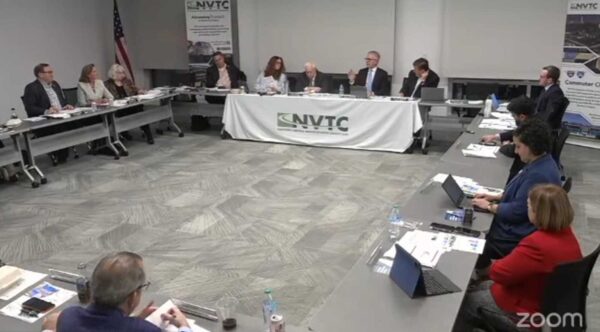
The Northern Virginia Transportation Commission (NVTC) on Thursday (Nov. 6) gave its support to two transit-funding initiatives currently working their way through a complex review process.

With no dissents, the commission signaled its backing of recommendations of the DMV Moves task force and the General Assembly’s Northern Virginia Growing Needs of Public Transit Joint Subcommittee, also known as the SJ28 Subcommittee after the state Senate resolution that established it.


News

Fairfax City is considering whether to keep a fare-free policy in place for its CUE bus system.

The city’s CUE buses stopped collecting fares in mid-2020 when the pandemic started. In 2022, the city adopted a four-year zero-fare pilot program that will expire at the end of fiscal year 2026, according to city documents.


Countywide

A state legislative panel set up to identify potential new funding for Northern Virginia transit completed its work this week by delivering a firm starting number: $400 million annually.

But the panel opted against prioritizing which funding streams would work best as it readied its report for consideration during the 2026 General Assembly session.


News

Fairfax County supervisors on Tuesday (Oct. 28) took steps to acquire private property needed for construction of the Richmond Highway bus rapid transit (BRT) project.

With three members absent and one seat vacant, the Board of Supervisors voted 6-0 to authorize county staff to move forward with filing paperwork in court allowing for the condemnation and acquisition of property needed for utility relocation as the nearly billion-dollar project begins to move from planning to construction.


Countywide

Virginia’s state and local governments would be required to come up with $136 million annually in additional funding for Metro rail and bus service starting in mid-2027, if recommendations from a key regional task force make it through a still-uncertain future.

The DMV Moves task force approved a nonbinding framework yesterday (Wednesday) for increased, dedicated capital spending in support of the Washington Metropolitan Area Transit Authority (WMATA). It recommends $460 million in additional funding split between Virginia, Maryland and D.C., starting in fiscal year 2028 and rising after that at a rate of 3% per year.


News

Regional transportation planners continue to take the pulse of riders and other local residents as they prepare for a major revamp of the Route 7 bus corridor.

“It’s a good thing” to be out in the community, said Kate Mattice, executive director of the Northern Virginia Transportation Commission (NVTC), which is overseeing a study that could bring bus rapid transit (BRT) service to the corridor from Tysons to Alexandria.


News

Fairfax City is considering transforming its CUE bus system by offering more frequent and direct connections between the most popular stops, as well as speeding up routes — but also cut service for some riders.

A draft transportation development plan for the next 10 years of service envisions three simplified routes between the Vienna metro station, Old Town, and George Mason University, the areas with the highest demand.


News

The Fairfax County Board of Supervisors authorized a number of procedural steps last Tuesday (Sept. 30) to advance plans for the nearly billion-dollar Richmond Highway bus rapid transit (BRT) initiative known as The One.

In actions combined into a larger consent agenda approval, supervisors formally requested Northern Virginia Transportation Authority (NVTA) funding to support the project and scheduled an upcoming public hearing to address the acquisition of easements from property owners along the route.


Countywide

On-time Metrobus performance declined in fiscal year 2025 from the previous two years, leading transit leaders to plan more aggressive moves to keep the buses on schedule.

“We’ll be focusing on things in our direct control,” said Jordan Holt, senior director of performance, benchmarking and customer service at the Washington Metropolitan Area Transit Authority (WMATA) at the Sept. 11 meeting of WMATA’s safety and operations committee.


View More Stories