

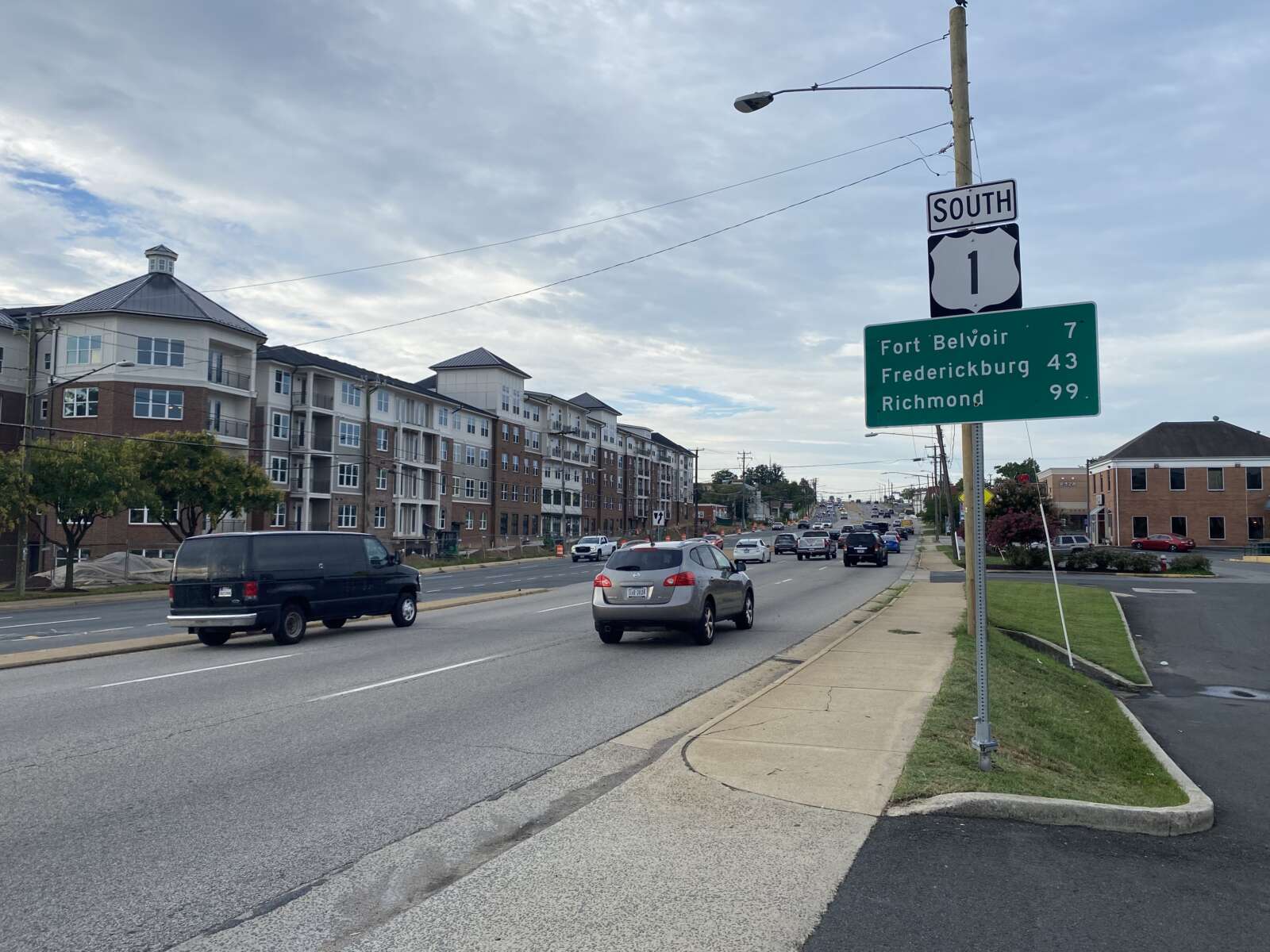
Public art and social spaces will be key to transforming southern Richmond Highway into a community, a panel of local land use experts says.
Last week, the consulting nonprofit Urban Land Institute (ULI) presented recommendations at the Hybla Valley Community Center for how to foster economic growth in the corridor, while preserving its cultural identity through “placemaking.”
Placemaking highlights the unique aspects of a community, including its people and history, which encourages activity and “helps to make the space vibrant,” Southeast Fairfax Development Corporation (SFDC) Executive Director Evan Kaufman told FFXnow in an interview.
“Obviously, you can go to any corporate strip mall across the country, and you’re not really going to find a sense of place,” Kaufman said. “You’ll probably find an Applebee’s, Wendy’s, and Home Depot, which are great. Those provide services, but they’re not really telling a story of the community.”
After spending two days studying four miles of the corridor from Jeff Todd Way to Lockheed Blvd, the assembled panelists proposed creating community spaces for socializing — like parks and event venues — and enhancing the area with public art and more greenery.
The full findings will be detailed in a report that’s expected in the next six to eight weeks, according to the SFDC, which worked with the Fairfax County Department of Planning and Development to finance the study.
ULI will also conduct follow-up surveys to track the implementation of the panel’s recommendations.
Designated as a focus area for commercial revitalization since 1986, the Richmond Highway corridor has seen those efforts intensify in recent years, as the county and Virginia Department of Transportation prepare to widen the road and add bus rapid transit service.
With some community members fearing negative impacts from the road widening project in particular on traffic, pedestrian safety and local businesses, the ULI study aims to identify strategies that can stimulate economic growth and improve the area’s quality of life.
In the short term, the consultant’s panelists recommended establishing a visitors center and using signage to guide visitors and residents to businesses affected by construction. Panelists also proposed using landscaping, pop-up activities and murals to beautify shopping plazas and make commercial areas more inviting.
“Those are great for serving local residents and visitors, so it can become a destination as well,” community design and housing advocate Anna McCorvey told attendees of the Feb. 1 presentation.
Over the long term, the aim is to support projects that encourage social interaction, improve access to commercial areas, and reflect the area’s unique culture.
“I think more people have begun to recognize, especially people maybe within the government or the planning realm, how important these people-centric and placemaking modalities are and creating livable communities…where people want to live, work and play,” Kaufman said. “That’s kind of a cliche saying, but it’s true: people want to be around other people.”
With many local government officials in attendance, panelists suggested Fairfax County could make it easier for small businesses to host outdoor community gatherings, such as food and music festivals.
In addition, expanding green and recreational areas near shopping centers could help attract residents and support local businesses, they said.
County officials could take a more active role in requiring developers to integrate parks and green spaces into their projects or contribute to a fund dedicated to creating public spaces.
“You want to kind of pick and choose and focus on projects that are closer to where the people reside and have greater expectations for those projects because then you’ll be able to make sure that people are occupying those spaces,” Steven Segerlin, Amtrak’s head of commercial development, said during the meeting.

So far, panelists have identified eight possible sites for placemaking projects along the corridor, based on their historical importance, ease of access, potential for market success, ownership, role as community gateways, and suitability for temporary events or installations:
- Gum Springs gateway and wetlands
- A vacant former 7-Eleven site at 8010 Richmond Highway
- Original Mount Vernon High School
- Various bridges and stream valleys
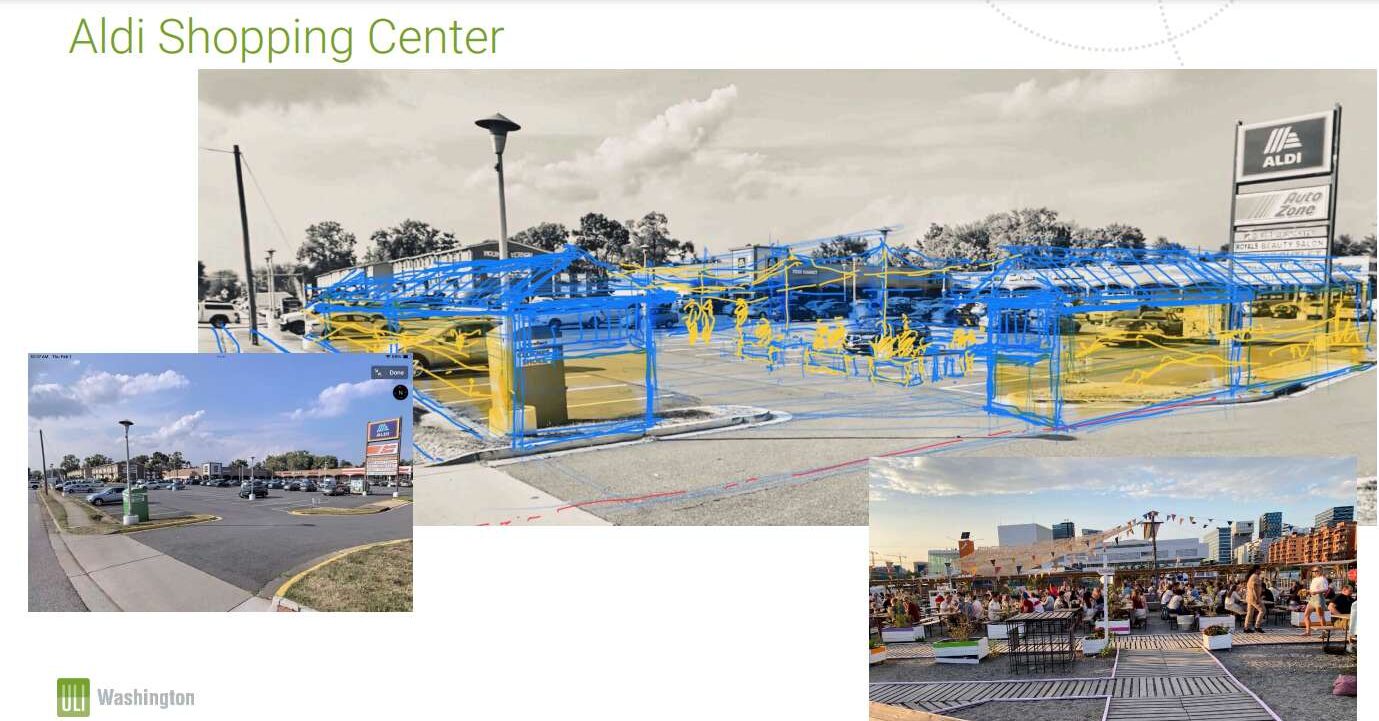
- The Aldi parking lot at 8256 Richmond Highway
- Mount Vernon Crossroads
- The Residences at North Hill
- The Gerry Hyland Government Center
The panel offered examples of landscaping buffer designs around the South County Government Center and the Residences at North Hill. They also proposed a temporary market in the Aldi shopping center’s parking lot as a future project.
The responsibility of managing and maintaining these placemaking projects would depend on the individual projects and who’s involved, Kaufman said.
“It’s more of a collaborative effort and shared responsibilities, depending on the partners and who benefits most from these kinds of projects,” he said. “It’s hard to know exactly until we start getting into the project and finding out what requires what and what needs to be maintained.”
