

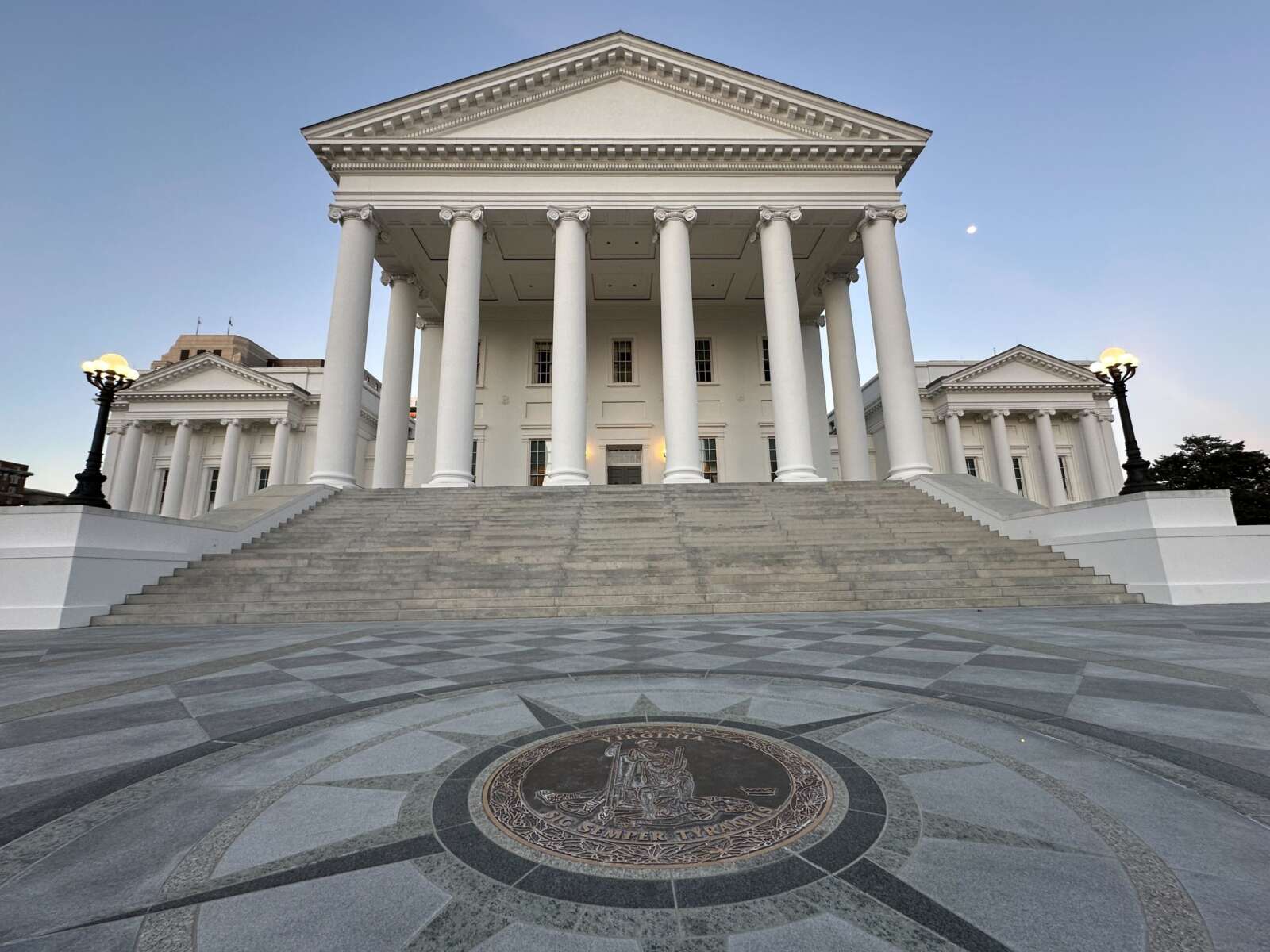
By the Fairfax County government’s math, local residents are being shortchanged nearly $570 million annually in education funding by the state government.
Facing a $292.7 million gap between expected revenues and expenses projected for the coming fiscal year, county leaders would like their state lawmakers to leave from Richmond next year with some of that funding in hand.
Funding for K-12 education “is absolutely at center stage for us,” Fairfax County Board of Supervisors Chairman Jeff McKay said at a Tuesday (Dec. 10) meeting between the board and members of the Fairfax delegation to the Virginia General Assembly.
“We’re going to need you help,” he told the 22 legislators who represent portions of the county.
The $568.7 million annual shortfall in state funding for Fairfax County Public Schools is based on a 2023 study by the Joint Legislative Audit and Review Commission (JLARC). It works out to about $3,000 for each of the county school system’s 181,000 students.
Education issues dominated the 90-minute session. Some downstate legislators and the Youngkin administration might simply consider the request “just Fairfax County whining,” but funding is a concern statewide, McKay argued.
“Rural, urban and suburban, wealthy, impoverished, you name it,” he said. “It affects every county is Virginia.”
While the present state delegates and senators seemed to agree that the funding shortfall is “a stain on Virginia,” in McKay’s words, some raised pointed questions about how it could be addressed in the 2025 session.
The state government currently is sitting on a healthy budget surplus, but Gov. Glenn Youngkin is pushing for tax cuts or rebates that will eat into the ability of legislators to allocate the funding elsewhere. Both political parties are also anticipating a potentially cooling economic environment.
“Our revenues are not very robust right now. A lot of the [budget] tweaking is going to be around the edges,” Senate Majority Leader Scott Surovell (D-34) said.
Surovell acknowledged that the state government “should be aiming higher” on education funding, and pressed county leaders to share “how you think we should find new revenue.”
“We’re happy to get you a mountain of options,” McKay responded.
Del. Vivian Watts (D-14), who chairs the powerful House Finance Committee, said it’s not enough for local and state lawmakers to compile a list of options. Looking deeply at the implications of every decision was important, too, she said, noting that tax policies “have to be tackled right.”
State education funding policy provides a baseline of support for all localities, but local governments that choose to spend more are largely on their own. While the state funds about 45% of the budget for most school districts, in Fairfax County, it provides only 27%.
In the current fiscal year, the state is providing $5,484 per Fairfax student, with the county government spending $14,223, county officials say.
Del. David Bulova (D-11) saw some hopeful signs in recent efforts by legislators, stating that there’s a road map in place for 2025, which likely will focus on “things that we could act on in the short term.”
Special education funding and “things where everybody wins” should receive support among lawmakers, Bulova said.
County leaders said they would do their part.
“We’re eager and willing and will be in Richmond to help in any way we can,” said School Board Chair Karl Frisch, who represents the county’s Providence District.
Earlier this week, Youngkin announced that he will propose amending the state’s two-year budget to give an additional $51 million to schools identified as most in need of support and $290 million for school infrastructure projects. The governor vetoed a measure in April that would’ve let localities increase sales taxes by 1%, raising an estimated $1.5 billion for school construction.
State lawmakers will gather in Richmond Jan. 8 for a session expected to last 45 days. Democrats hold razor-thin margins in both houses of the General Assembly, but the exact makeup of the chambers won’t be known until a number of special elections are conducted prior to the session’s start.
Fairfax County’s 22 state legislators — seven senators and 15 delegates — are all Democrats, as are nine of 10 supervisors, with Springfield District Supervisor Pat Herrity standing as the lone Republican.
