


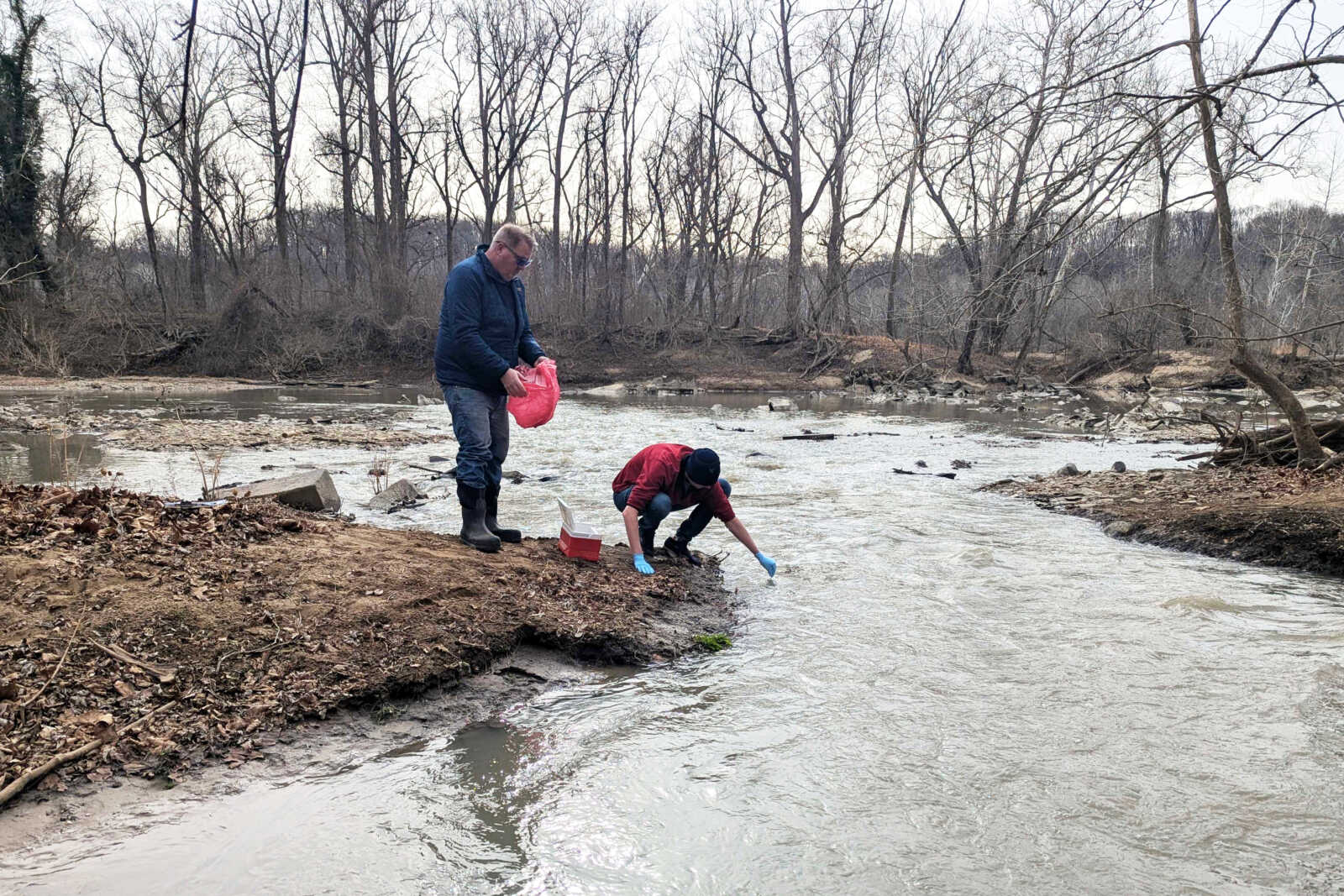
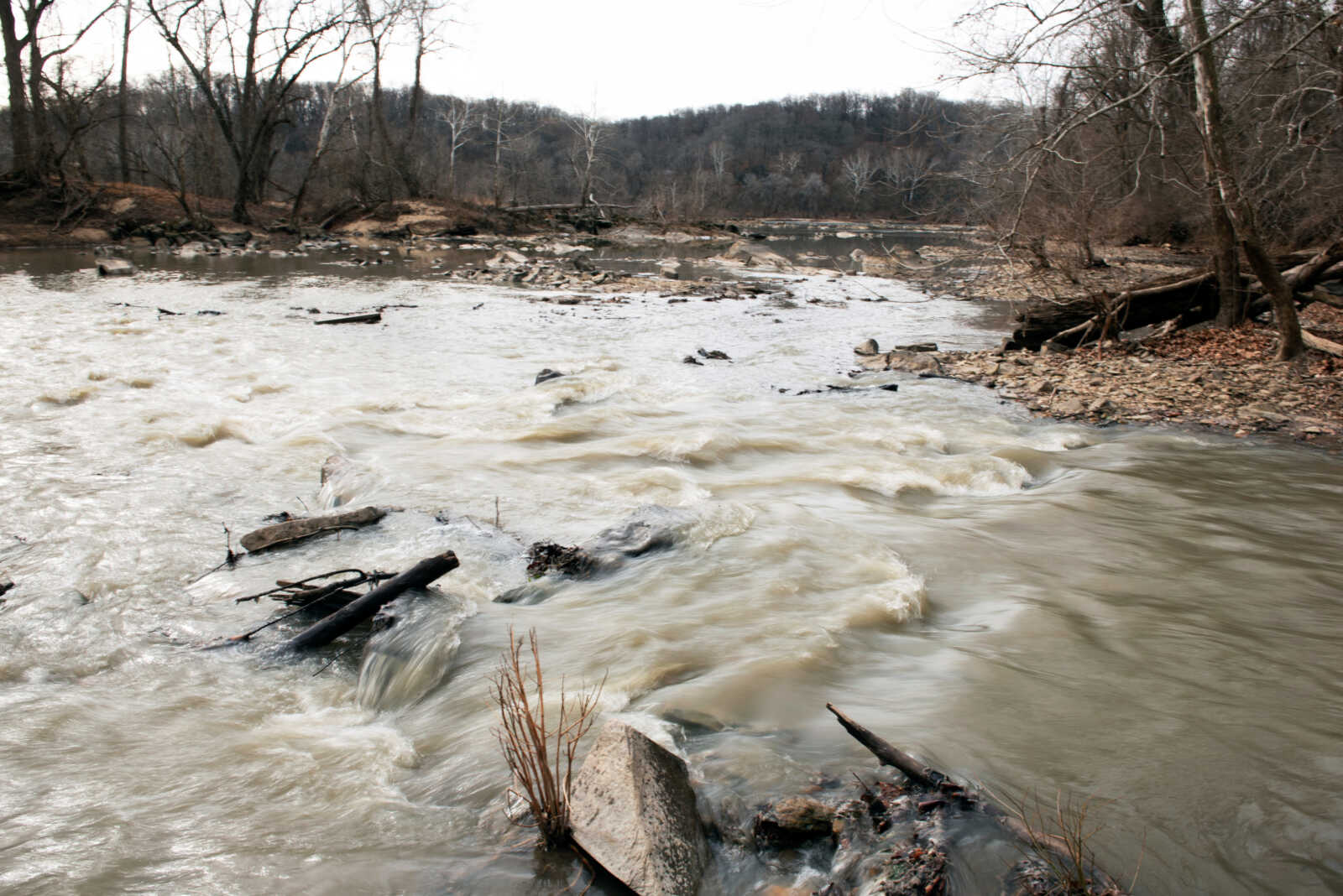
A sewage spill in the Potomac River northwest of D.C. last week has not affected drinking water in Fairfax County, the local water utility says.
The spill occurred in Montgomery County, Maryland, along Clara Barton Parkway, which hugs the northern edge of the Potomac River near Chesapeake and Ohio Canal National Historic Park. The spill was caused by a DC Water sewer pipe that collapsed late Monday, Jan. 19, shooting sewage out of the ground and into the river.
DC Water spokesperson John Lisle said the utility estimates the overflow at about 40 million gallons (about 150 million liters) each day. The utility is hooking up pumps to divert sewage around the rupture and allow crews to make repairs. Signage posted near the river read “Danger” and “Raw Sewage,” cautioning people to stay out of the area and to wash their skin if exposed.
According to Fairfax Water, its customers should not be concerned about impacts to the quality of their water, which comes from the Potomac River and Occoquan Reservoir.
“DC Water’s sewer line break is down stream of our intake, so it is not impacting water quality or service for Fairfax Water customers,” Fairfax Water spokesperson Susan Miller told FFXnow.
DC Water said its own water supply was not impacted, as the wastewater spill happened downstream of its Washington Aqueduct intakes at Great Falls.
DC Water constructed a bypass system to reroute wastewater from the collapsed sewer pipe, where excavation and repairs are beginning. The utility confirmed the bypass system was activated Saturday (Jan. 24) ahead of the winter storm, but work is continuing to fully stop the wastewater spill into the Potomac River.
The broken sewer pipe is part of DC Water’s Potomac Interceptor, a sewer line that carries up to 60 million gallons of wastewater daily from parts of Virginia and Maryland to DC Water’s Blue Plains treatment plant. The Washington Post noted wastewater from Fairfax, Loudoun and Montgomery counties travels through the pipeline.
DC Water knew the pipeline was deteriorating, and rehabilitation work on a section about a quarter-mile from the break began in September and was recently completed, DC Water’s Lisle said. Repair work on additional “high priority” sections of the pipeline is expected to start later this year, according to the DC Water website.
“I know a lot of the wastewater folks are trying to catch up as best they can, but this is something we see and will continue to see, where these pipes fail and these massive sewage dumps occur,” Gary Belan, a senior director with American Rivers, told the Associated Press. “This is why we can’t defer maintenance of our wastewater infrastructure. Too often, we’re dependent on these disasters to prod us forward.”
Nationally, hundreds of billions in infrastructure investment is needed over the next two decades for clean water problems like aging sewer pipes. In other places where sewer breaks are persistent, it can lead to backups into homes and regular flooding.

