

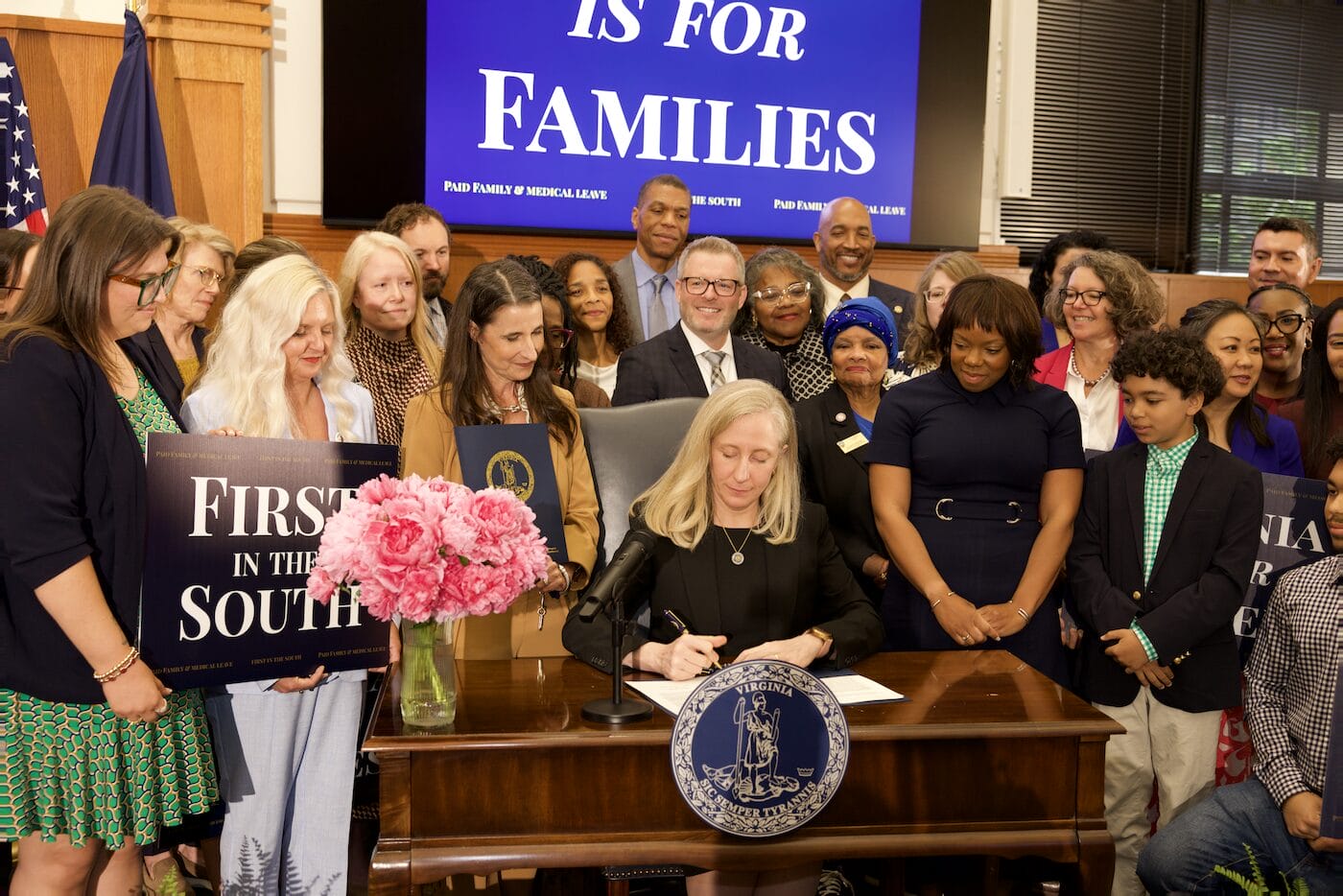
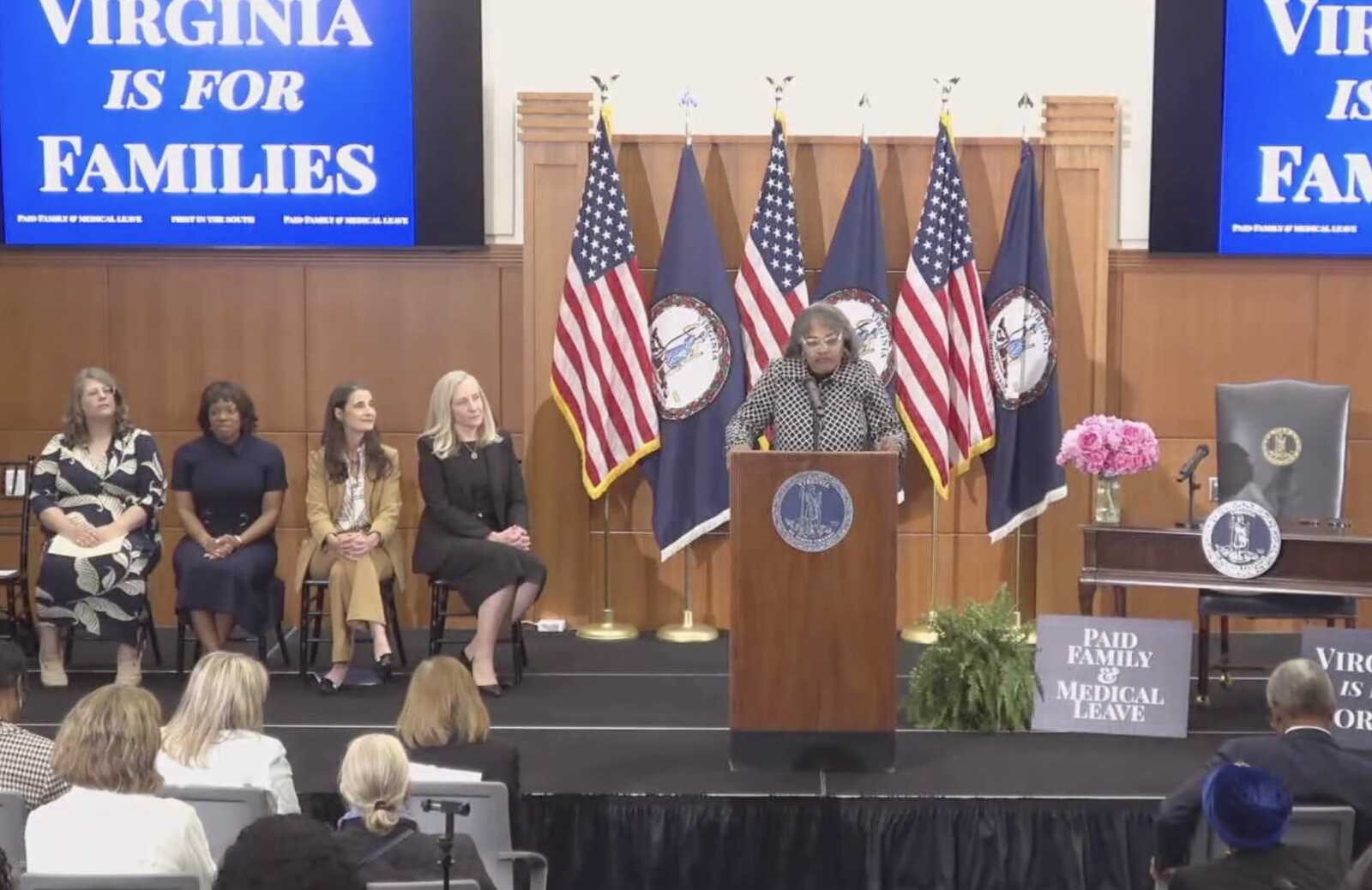
A North Springfield child care center owner spoke in support of the new paid family and medical leave program at a ceremonial bill signing with Gov. Abigail Spanberger (D) and lawmakers yesterday (Monday).
Starting on Dec. 1, 2028, Virginia’s new paid leave program will allow most workers to take up to 12 weeks of paid leave for significant life events like caring for a new child, recovering from serious illness, military family needs or caring for relative with a serious health condition.
Workers taking leave will receive 80% of their average weekly wage, with a cap of 100% of the state’s average weekly wage. The program is the first created in the South and 15th in the U.S. overall.
The program will be paid for through a shared employer and employee payroll contribution system, with contributions starting on April 1, 2028. Fairfax County State Sen. Jennifer Boysko (D-38), who worked on the legislation for eight years, previously told FFXnow it equates to $5 from a weekly paycheck for an employee making $50,000.
The program will be administered by the Virginia Employment Commission (VEC).
The governor’s office said most private sector workers — including self-employed workers, part-time workers and small business employees — will be eligible. State government employees will receive a similar benefit, according to the VEC. Virginia businesses also have the option of continuing their private paid family and medical leave programs that meet the new law’s requirements.
At the bill signing, Jackson Child Care owner Monica Jackson said the program helps level the playing field for small businesses like hers by supporting worker recruitment and retention.
“As a business owner and childhood provider, I see every day how closely families and the workforce are connected,” she said. “As a small employer, I face challenges that large companies often don’t. I’m unable to offer paid family leave because of the size of my business. However, these benefits are needed, and they help to attract skilled workers essential to maintain and run a high-quality child care program.”
Jackson said the program also helps employees with work-life balance without jeopardizing their financial stability.
“When families have access to paid leave during critical life events, children can recover at home, families remain financially stable, and child care programs can maintain healthier environments for everyone,” Jackson said.
Spanberger said the program means workers won’t have to choose between a paycheck and spending time with their newborn, caring for a sick relative or recovering from a serious illness.
“Not only is this law a huge win for workers, but it will allow small- and mid-sized businesses to better thrive in our Commonwealth by offering competitive benefits they previously could not afford,” Spanberger said.
The program also provides leave for circumstances like domestic violence, sexual assault or stalking. However, Boysko said the governor’s amendment put a four-week cap for those situations.
Spanberger’s other amendments tightened up guidelines to make people who are legally present and able to work in the U.S. eligible for the program and better clarify who is considered a family member that an employee could take leave to care for.
