

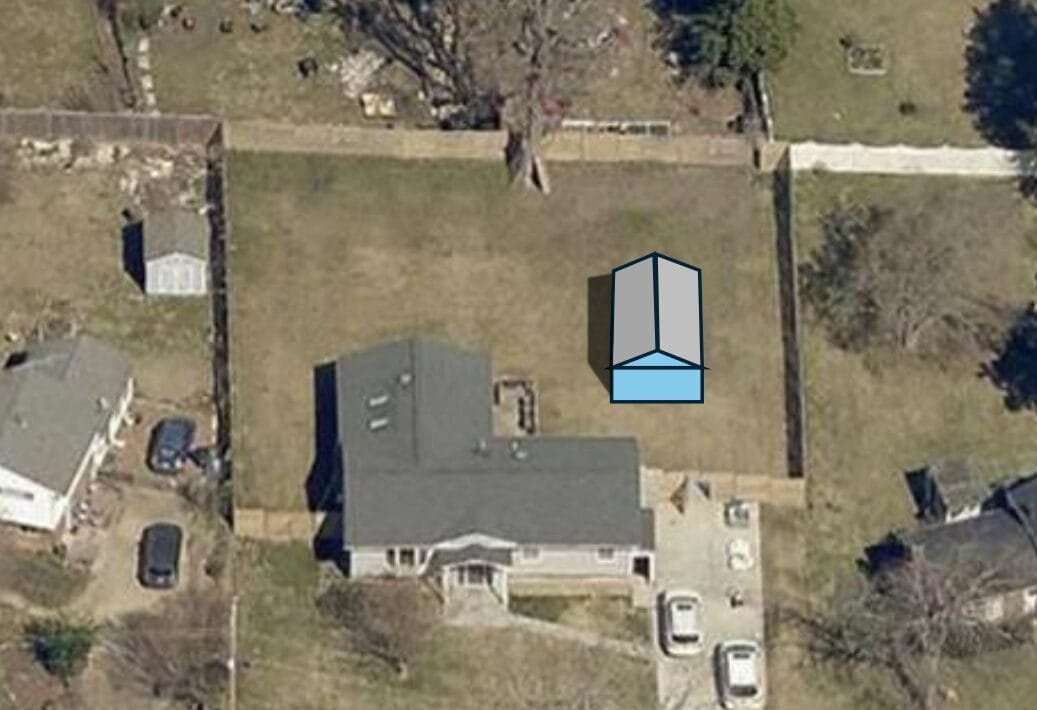
It’s not clear yet if many Fairfax City homeowners will have the option one day to build accessory dwelling units (ADUs) — more commonly known as “granny pods” or “in-law suites” — in their yards. But despite some hesitation expressed during a May 12 work session, Fairfax City Council members are ready to hear public comments on the issue.
In a presentation to the council, city staff laid out the implications of a new zoning ordinance that would let significantly more homeowners build detached accessory units in their yards.
While the city already permits units attached to a primary residence with certain restrictions, the proposed ordinance would permit homeowners who live on the property to also build a separate unit, Eric Forman, a senior planner with the city, told council members.
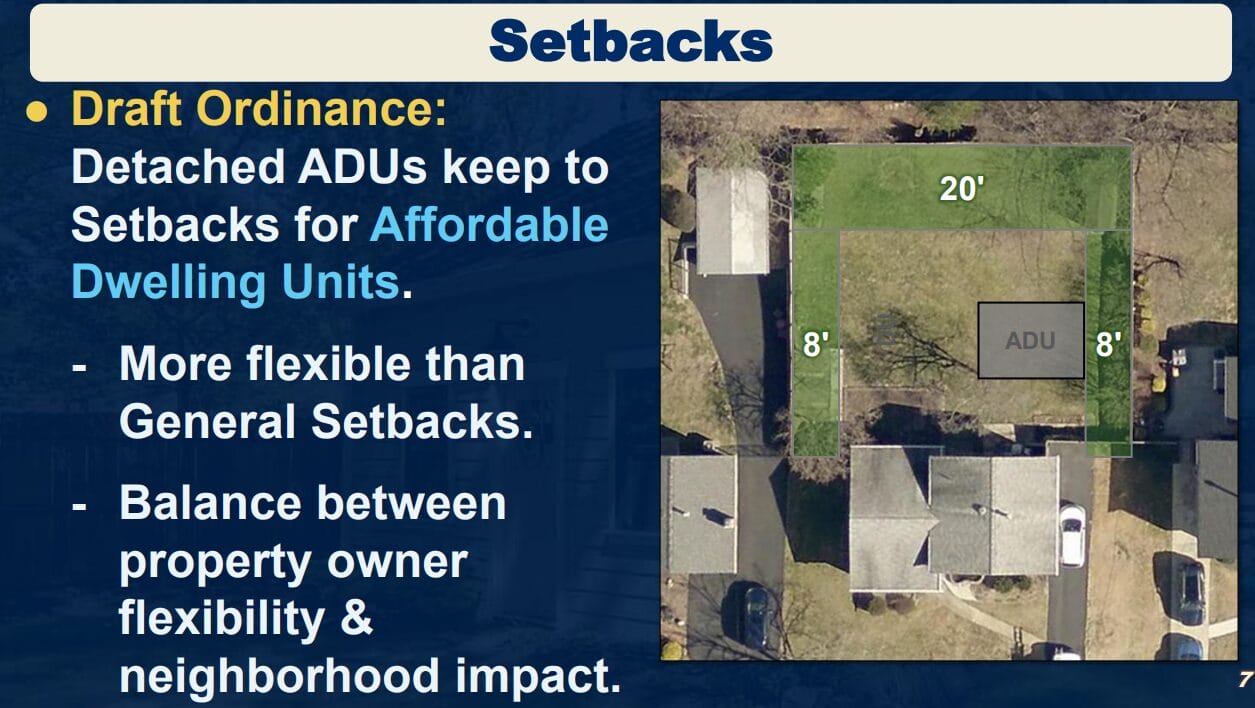
“What’s needed to allow detached accessory dwelling units in our city? The answer to that is a zoning text amendment that would modify our current ADU standards, and those standards are already in the zoning ordinance,” Forman said. “The main characteristics of an amendment to do that would be physical standards … things like setbacks, height, square footage.”
“These physical standards are what’s key to making this work, to reducing those kinds of negative externalities that the Comprehensive Plan mentions,” Forman added. “The challenge from a policy perspective is that this is a balancing act, trying to juggle that flexibility for property owners to do what they want to do with the neighborhood impact that that kind of flexibility could bring.”
Under the proposed amendment, the owner could live in either the separate unit or the main residence, while allowing other family members in a multigenerational household or unrelated renters to live on the property. City staff recommended that properties with a detached ADU have at least two off-street parking spaces.
The draft ordinance also proposes a height limit for ADUs of 20 feet or the same height as the main house, whichever is lower, and maintains existing standards that the accessory unit take up less than half of the primary residence’s footprint. It would also let property owners convert existing detached structures into homes even if they don’t meet the new standards, though the Board of Zoning Appeals’ approval would be required.
Council members appeared divided between those who opposed or wanted more time to study the issue, and those who were ready to go ahead with a public hearing.
The sharpest dissent came from Councilmember Stacy Hall, who expressed concern over a data point that potentially 85% of single-family homes in the city could be eligible to build units.
“If even half added, that’s 2,500. You’re talking, most likely, at least two people living in a house. You’re now adding 5,000 residents,” Hall said. “That doesn’t take into account any of the multi or high-density housing that is coming through. I’m very concerned that we are overloading all of our systems, our schools, our roads, all of the things.”
Hall also cited a number of other reasons why she opposed moving the ordinance forward, including concern about the city’s ability to actually enforce the requirement that the owner live on the property.
“A buyer, an out-of-state person, someone who doesn’t bother to read the code, could be very mistaken when they go and buy a property that has two houses on it, and all they see is rental potential. And now we’re in a situation where they close on that house, we wait and see who moves in,” Hall said. “Six months down the road, somebody complains, which then prompts you guys to go out and investigate. Again, we have one investigator, is my understanding. What do we do? Then we require this person to either sell their house or to move into the house and continue to try to prove that they live there?”
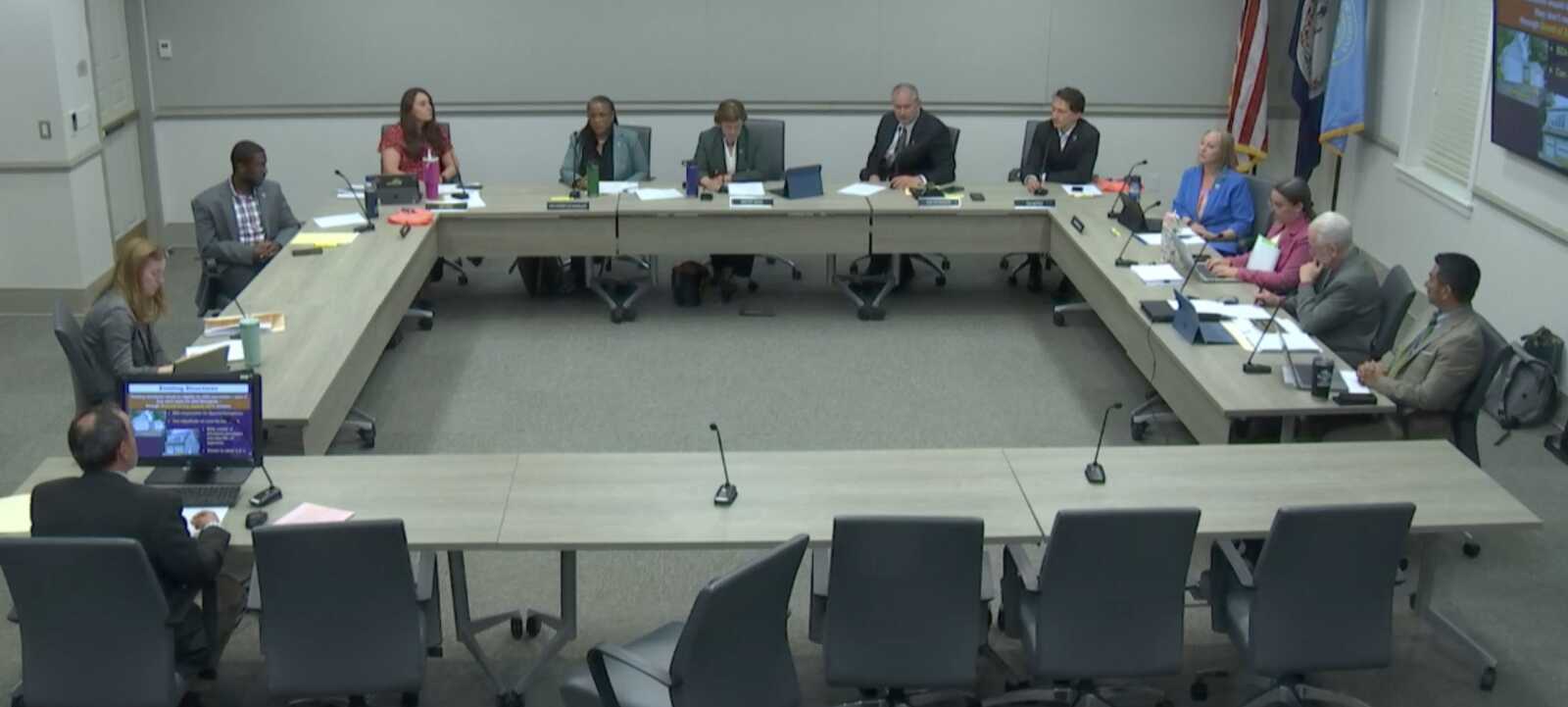
Councilmember Stacey Hardy-Chandler said that she was having “the opposite response” and supported moving the measure to public hearing.
“I think that we can hypothesize about what might happen,” Hardy-Chandler said, “but I think we need to hear from the community, and we can still bring in additional information … But I also just really want to reiterate that homeowners within limits should have choices, and I completely agree with this being a viable choice.”
She added that the proposed restrictions “are reasonable or even more restrictive” than in many other communities.
With council members Hardy-Chandler, Anthony Amos, and Billy Bates supporting moving ahead with the motion, and council members Thomas Peterson and Rachel McQuillen wanting more analysis, Mayor Catherine Read broke the impasse and voted to set a date for a staff presentation and public hearing.
“If you own a piece of property within guidelines, what you do with your property is up to you, within restrictions, and I don’t think we should lose sight of that,” Read said. “We don’t decide, for people who decide to build an accessory dwelling unit, who is going to live there … We’re making assumptions about the fact that they will all be rentals, when in fact, it could be families who are putting family members there, and no money whatsoever is changing hands.”
“I think further analysis is not going to help us to predict what people in the city are going to do if they are allowed to build a detached accessory dwelling unit,” she added. “That, to me, is making public policy around ‘what-about-ism,’ and that is not a good way to make public policy.”
The public hearing is not yet scheduled, according to a spokesperson for the city, but the earliest date would be in July.
