

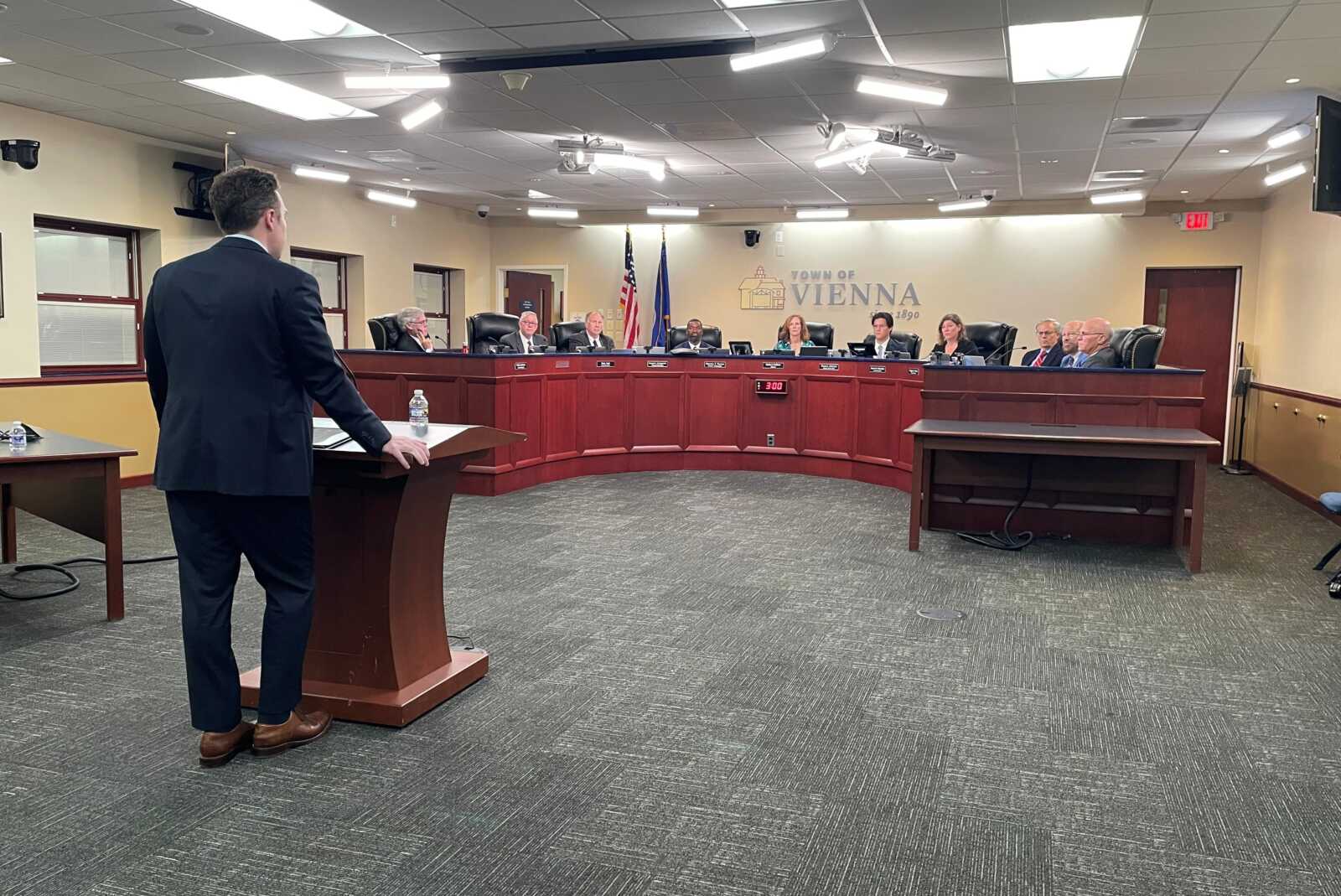
Vienna residents can expect to pay more in property taxes and water and sewer fees in the upcoming fiscal year, but their bills won’t be quite as high as they would’ve been under the town’s initially proposed budget.
The Vienna Town Council adopted a fiscal year 2027 budget yesterday that reduces the local real estate tax rate by a half-cent, from 19.5 cents to 19 cents per $100 of assessed value, while maintaining existing service and staffing levels, according to Director of Finance Steven Barlow.
“It’s always a balance,” Mayor Linda Colbert said before the new tax rate was approved. “We’re trying to get the lowest tax rate for our residents, but of course, we have to retain good services, we have to have the safety, we have to have good staff, because that’s what Vienna is known for, for the friendly and great services that staff provides.”
While the council unanimously adopted the budget, which will take effect on July 1, not everyone was sold on the size of the tax rate cut.
Town Manager Mercury Payton’s original FY 2027 budget plan, released on March 6, was built on a flat property tax rate, which still would’ve resulted in an approximately $121 hike in the average resident’s annual tax bill due to rising assessments.
Seeking to reduce the financial burden on homeowners, the town council advertised a quarter-cent reduction in the rate after a public hearing on April 27, meaning 19.25 cents was the highest rate that could ultimately be adopted.
At yesterday’s meeting, Barlow presented the half-cent reduction as a possible alternative. At that rate, the average property tax bill will increase by $80 on average, and the Town of Vienna will receive $400,000 less in revenue, according to the town.
Councilmember Doug Francis, who is in his first year on the council, worried that the larger rate cut might make it more difficult for the town to address potential expenses driven up by inflation. As reported by the town’s human resources director, the cost of covering employees’ health care has increased by 12.5%, Francis said.
“That’s significant right there,” he said at the council meeting. The newly adopted budget included an additional $245,000 for health insurance costs.
Councilmember Roy Baldwin said it was “incumbent” on the council to offer some tax relief after Fairfax County trimmed its rate for FY 2027 by a quarter-cent, but he expressed reservations about a more sizable cut.
“Things could get a lot worse rather than better, and we could need the tax revenue to meet unforeseen circumstances,” Baldwin said. “I realize we have a large rainy day fund, but on the other hand, with the continued mismanagement of this nation’s affairs from Washington, we have to be very concerned about that.”
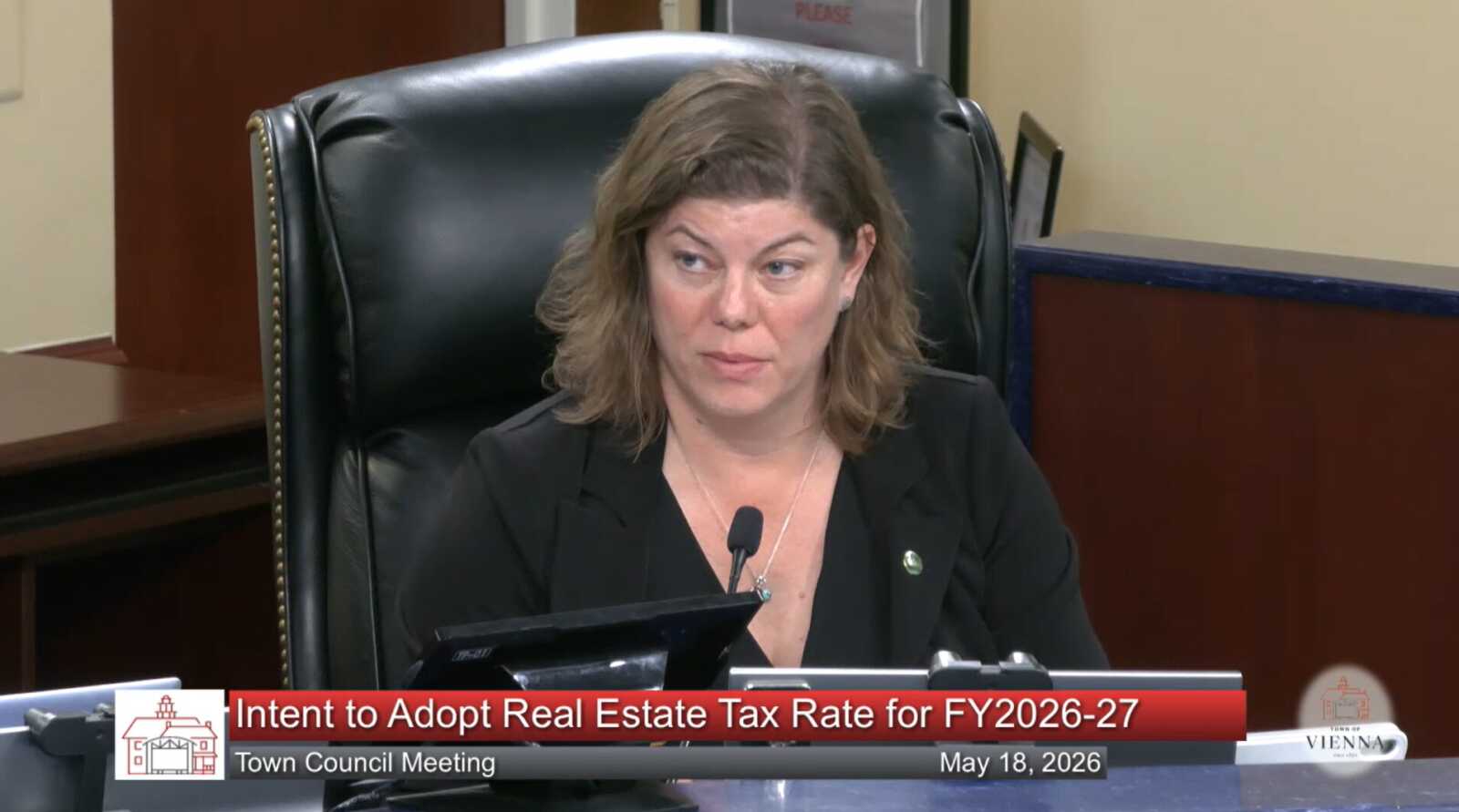
Leading the charge for a half-cent cut, Councilmember Jessica Ramakis called it “a modest step” toward her desired tax rate of 18.6 cents per $100 of assessed value — the point at which residents would actually stop seeing an increase. She acknowledged that goal may not be achievable, but argued “it would be really positive for our community to go in this direction.”
“Going to 19 cents, it would be great progress for us. It is not a reduction in the tax bill for residents,” she said, adding that she’s confident town staff will be able to manage resources effectively.
Councilmember Chuck Anderson threw his support behind the half-cent reduction but warned that the town needs to be wary of assuming real estate tax revenue will keep climbing indefinitely.
According to the town’s budget documents, overall real estate values rose 6.2% to $7.9 billion this year, with residential assessments increasing by 6.8% compared to a 2.2% uptick in non-residential assessments. Each cent of the property tax rate generates approximately $811,000 in tax revenue for the town.
Real estate taxes contribute approximately 44% of the town’s general fund revenues, which support day-to-day services and operations.
“I really think we need to start taking a really close look at essentially boosting productivity with artificial intelligence and other things, because the underlying base costs are likely to increase over time,” Anderson said. “We’ve managed to deal with those. We always do, because we’ve had this built-in, automatic accelerant of property tax revenues over the last 15 or 20 years.”
The council ultimately approved the 19-cent tax rate in a 6-1 vote, with Baldwin as the only opponent.
To offset the loss of expected revenue, the town is planning to increase planning and zoning-related fees; reduce its overtime budget, which is mostly driven by staffing for special events, by $50,000; shift costs for computer servers to the capital improvement plan (CIP); and allow for the use of $600,000 in surplus revenues left from this fiscal year, though that doesn’t mean all of those funds will be spent.
“We’re going to work throughout the year to monitor [the staff] turnover rate, overtime, a variety of areas to make sure we don’t spend our savings account,” Barlow said.
Water, sewer rates to increase
The town council also voted yesterday to adopt new water and sewer rates, backing a 1% increase for residential customers and realignment of commercial rates to match those charged to residents instead of the 4% overall increase proposed by town staff based on a consultant’s analysis.
Under the approved rate structure, the average residential customer using 12,000 gallons of water per quarter will see their water bill climb by approximately $4 per quarter or $16 annually, per town staff.
Increases for commercial users, meanwhile, will vary depending on how much water they use, according to Barlow. Smaller customers, such as restaurants, that use about 18,000 gallons per quarter can expect a 1 to 3% increase, while the town’s few multifamily properties might see hikes of 10 to 20%.
Barlow told the town council that staff had discussed the proposed changes with it biggest commercial users, and their feedback “was understanding and generally neutral, despite the potential for higher impacts, depending on individual usage patterns.”
According to the town, the increased rates are necessary to address rising costs around the region for wholesale water and sewer treatment, and to support infrastructure improvements.
“It doesn’t raise the rate that much on commercial users. Staff spoke to the ‘super-users.’ I don’t think there’s a huge amount of pushback,” Councilmember Dann Nash said. “I think evening up their rate with the residential rate makes a lot of sense.”
Representing a 5% increase over the current budget “to manage inflationary pressures,” the adopted $58.3-million budget includes raises of 3% for general town staff and 4.5% for police with no changes in personnel, according to the Town of Vienna.
“It maintains existing service levels and right-sizes a lot of areas where we had issues in the current year,” Barlow said.
