


Fairfax County will see significant growth in its 65-and-older population over the coming 20 years, according to newly released government estimates.
The county’s senior population is expected to grow from about 190,000 today to about 320,000 by 2045, significantly outpacing total county population growth.
The projections are included in the new 225-page demographic report issued last Wednesday (July 8) by the county’s Department of Management and Budget.
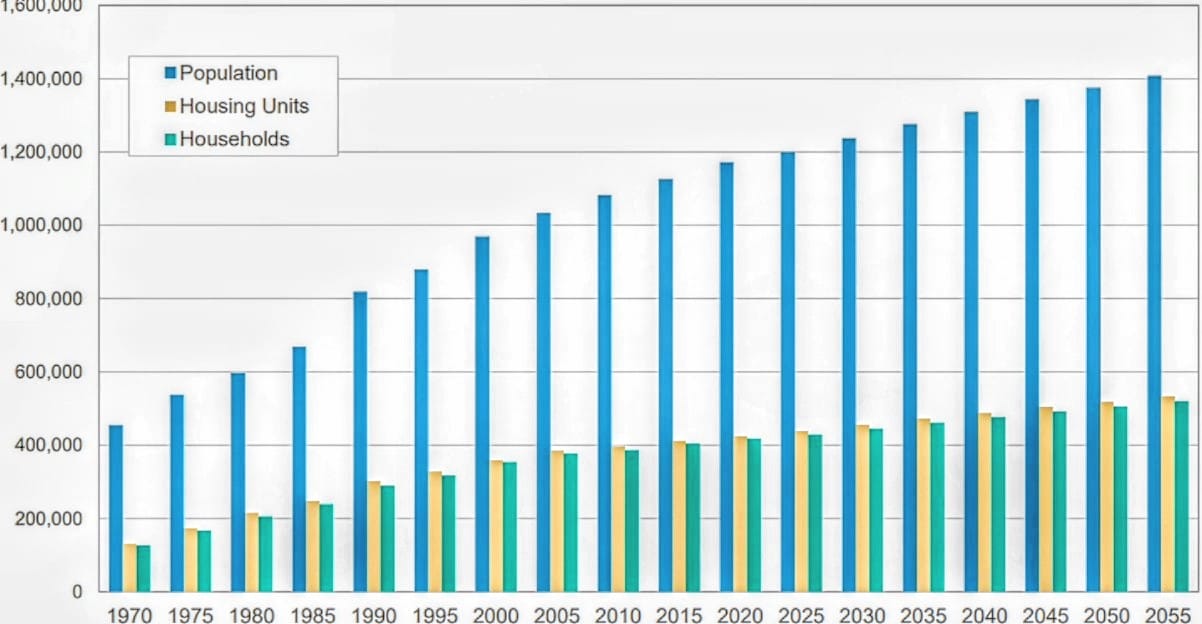
From 2025 to 2045, the county’s overall population is expected to grow from about 1.2 million to 1.34 million — an increase of 12%.
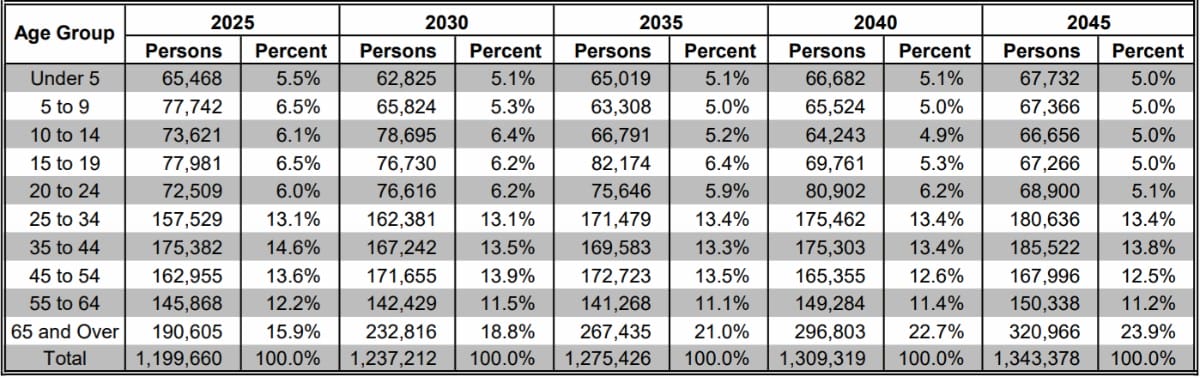
But because the 65+ population is expected to balloon by nearly 68%, the percentage of seniors in the overall population will increase significantly:
- 2025: 190,605 seniors represented 15.9% of the county’s population
- 2030: 232,816 seniors will represent 18.8%
- 2035: 267,435 seniors will represent 21%
- 2040: 296,803 seniors will represent 22.7%
- 2045: 320.966 seniors will represent 23.9%
Figures are based on a county analysis of U.S. Census Bureau American Community Survey data.
The projections also suggest that the 55+ age group, currently 28.1% of the overall population, will reach 35.1% by 2045.
The estimated 471,300 county residents aged 55 and older in 2045 will be higher than the county’s entire population recorded in the 1970 federal census.
The annual report is designed to offer a snapshot of Fairfax County, as of January 2025, with estimates and forecasts on population, households and housing units, along with data on home values and development activity.
“These demographic reports provide the localized data necessary to shape policies, plan intelligently and support the evolving needs of Fairfax County’s residents and businesses,” said Philip Hagan, director of the Department of Management and Budget.
Information is broken down by geographic areas, including magisterial districts, towns, ZIP codes and census tracts.
In addition to the written report, the county government also offers a web-based interactive tool that provides granular data on a number of demographic topics.
Photo via Vitaly Gariev/Unsplash
