

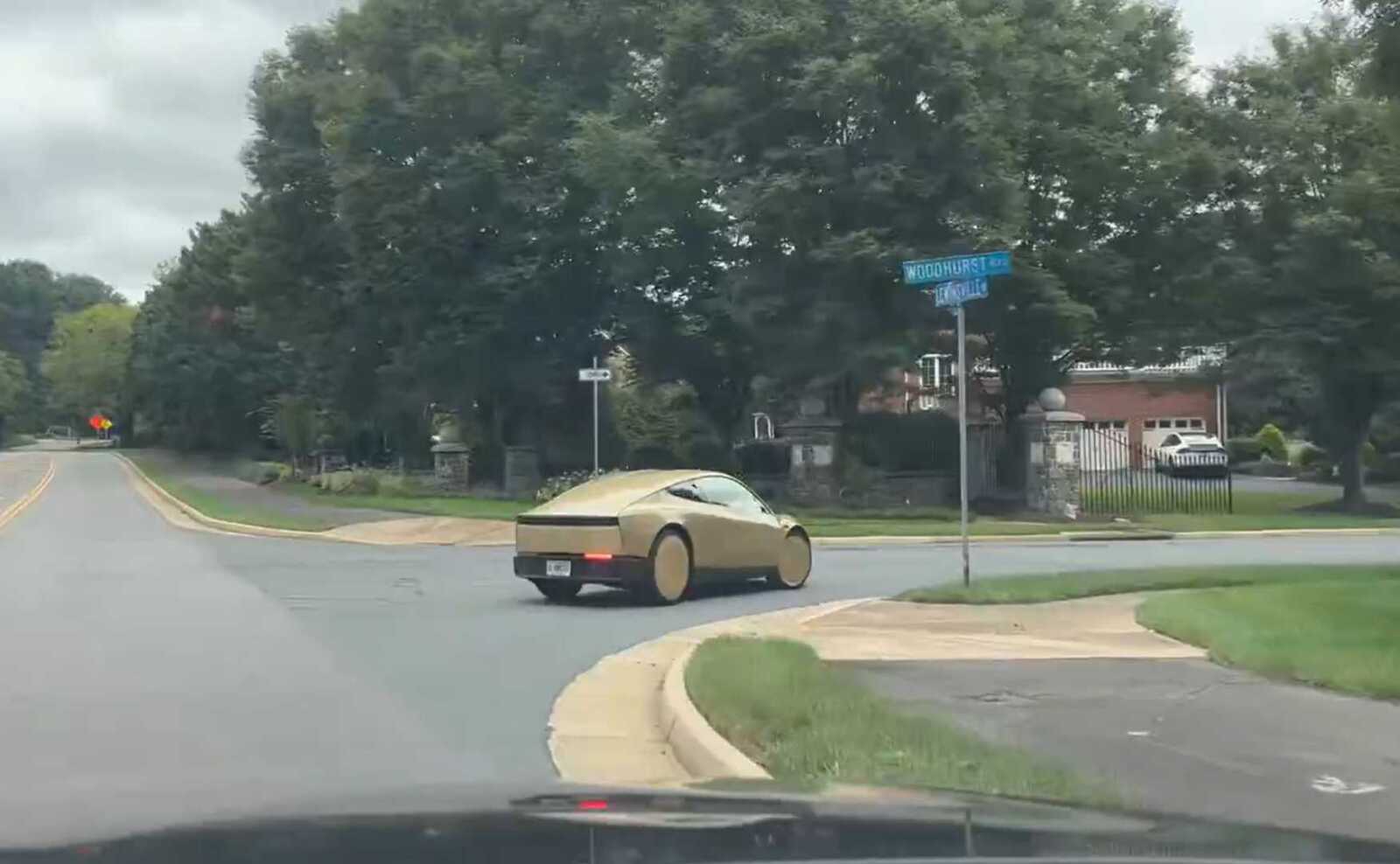
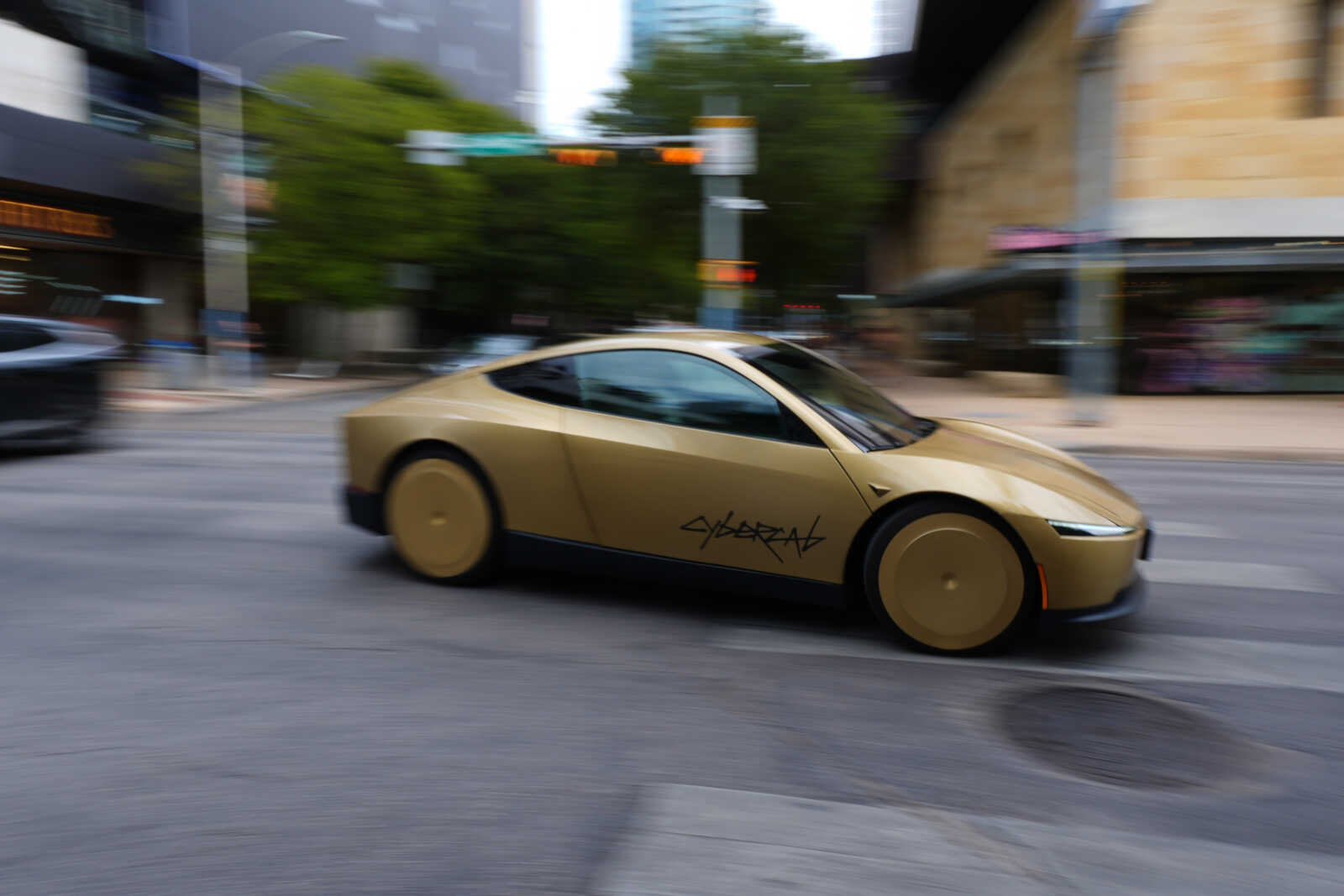
Gold-colored robotaxis developed by Tesla have been spotted driving on roads in Fairfax County, specifically in the Tysons area.
Footage shared last Thursday (Sept. 3) by NBC4 Washington and its transportation reporter, Adam Tuss, showed a so-called Cybercab traveling on Route 7 (Leesburg Pike) and turning into a residential neighborhood off Lewinsville Road in McLean. The self-driving vehicles appear to be collecting data on local roads and traffic.
— Adam Tuss (@AdamTuss) September 3, 2026
Though it’s shaped like a sedan, the Cybercab has no rear window or side-view mirrors, Tuss observed. A person was seated behind the wheel to serve as a backup for the self-driving system.
“Elon [Musk] is probably mapping our streets,” Tuss said in an Instagram video for NBC4, referring to the Tesla co-founder and CEO.
“More autonomous vehicles are starting to roll out across the country,” he continued. “We’re not there yet in Northern Virginia, but certainly a lot of information [is] being collected. And if you know anything about the roads in Tysons, you know it’s some of the worst traffic in the world, so this Cybercab is getting plenty of information.”
View this post on Instagram
Tesla didn’t respond to a request for comment by press time, but it isn’t the first company to test self-driving taxis in the D.C. region. A car from Waymo, Google’s robotaxi company, was spotted in Arlington last year on its way to planned testing on streets in the District.
Waymo has been itching to expand its service to D.C., where leaders are considering a bill that would legalize and regulate commercial autonomous vehicles. The legislation, which would initially limit operators to 200 vehicles, has drawn support from some business leaders and disability advocates, while facing challenges from unions and rideshare drivers.
In Virginia, a bill introduced by Fairfax state Sen. Saddam Azlan Salim (D-37) during the General Assembly’s 2026 session would’ve established requirements for fully autonomous trucking and ride-hailing vehicles. The measure easily passed the state Senate but was continued over to 2027 by the House of Delegates’ transportation committee on March 5.
Steering-wheel-free robotaxis make debut in Texas
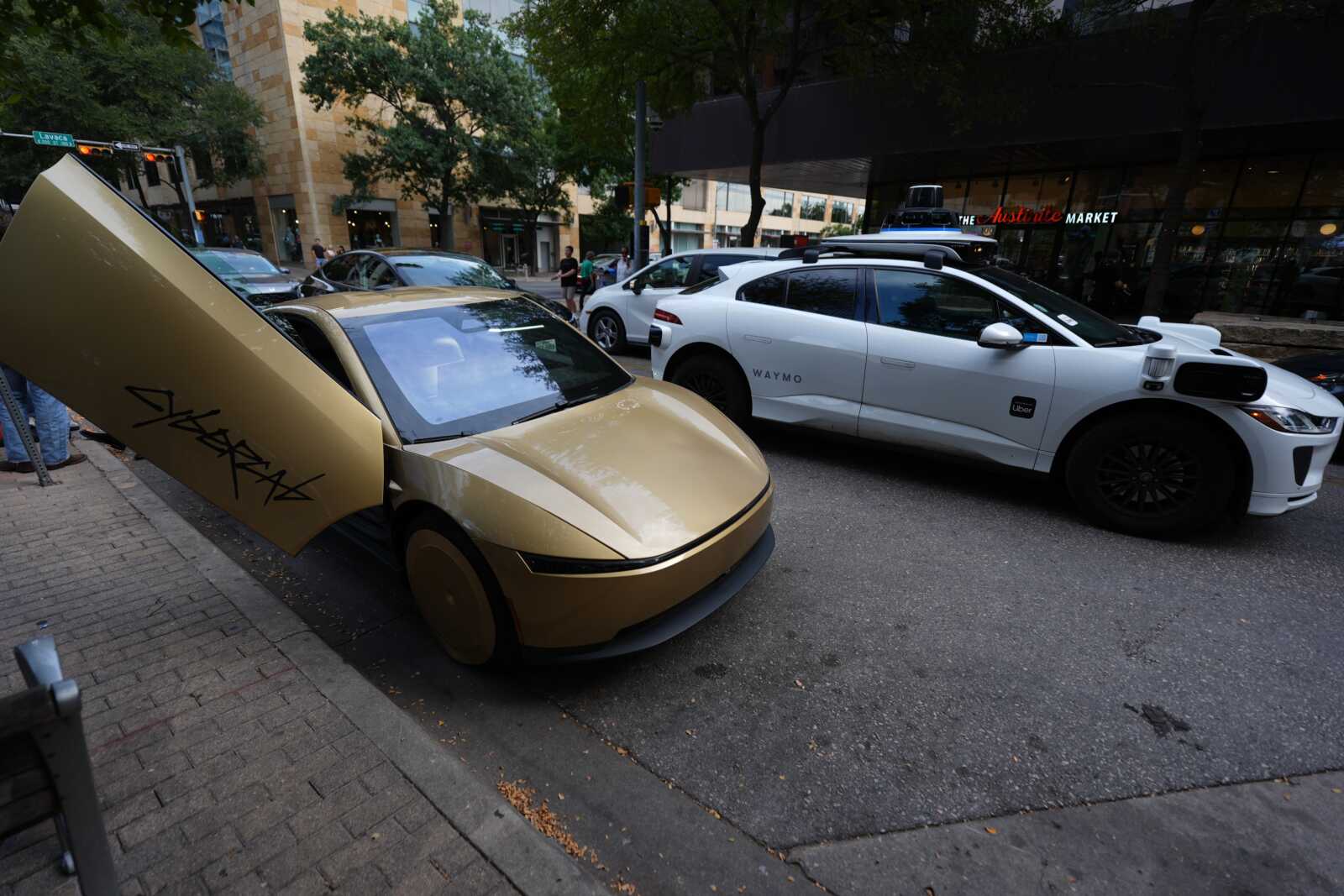
Tuss’s Cybercab sighting coincided with Tesla introducing self-driving robotaxis with no steering wheel or brake pedals in Austin, Texas.
The rollout of the gold-colored Teslas, which give passengers no way to take control in an emergency, comes as the company prepares to launch the service in other cities. Tesla shares have suffered amid a slump in vehicle sales, but they rose more than 5% Thursday on hopes that the futuristic-looking taxis will catch on quickly.
“No steering wheel, no pedals,” Tesla teased on X before the launch. Musk followed with a post showing a giant Cybercab floating above the Austin skyline and later wrote, “A Storm of Cybercabs.”
It is unclear how soon Musk intends to roll out the Cybercab service, but he needs to move quickly.
Tesla trails self-driving taxi leader Waymo in the number of cabs deployed and trips completed. To catch up, it must demonstrate that its camera-only system can safely navigate streets and avoid pedestrians. By contrast, Waymo and another rival, Amazon’s Zoox, supplement cameras with radar and a laser-based technology called lidar.
Even if the technology works well, Americans still need to be convinced.
A Pew Research Center survey conducted in February found that seven in 10 U.S. adults were “not too” or “not at all” comfortable riding in a driverless car.
Tesla stock was battered last year after Musk took over President Donald Trump’s government cost-cutting campaign, dubbed DOGE, and embraced extreme-right political candidates, sparking protests at Tesla showrooms and boycotts by car buyers in several countries.
Tesla posted a second consecutive annual decline in vehicle sales last year. Its profits plunged, and it lost its crown as the world’s bestselling electric vehicle maker to China’s BYD.
Austin has had a self-driving Tesla “robotaxi” service since June last year, but those cars are equipped with steering wheels and brake pedals. The service, which has since expanded to five other cities in Texas and Florida, initially carried passengers with safety drivers aboard to take over in case of problems.
Tesla has more than 200 “unsupervised” robotaxis in those cities, meaning they operate without safety drivers aboard, according to the monitoring site RobotaxiTracker. Waymo has more than 4,000 such vehicles in 14 cities.
In the Pew survey, 16% of U.S. adults said they would be “somewhat” comfortable riding in a driverless car, while 7% said they would be “extremely” or “very” comfortable.
Separate Gallup polling conducted in 2025 found that skepticism about the safety of driverless cars had risen over the previous several years. More Americans said all or mostly human-operated cars were the safest option than in a 2018 poll.
It is unclear whether Musk is the right person to coax people into cars with no human controls. Another Pew poll conducted in January found that nearly six in 10 U.S. adults had a “very” or “mostly” unfavorable view of him.
Musk eventually hopes to send full self-driving software to hundreds of thousands of Teslas through a software update. That would allow Tesla owners to turn their cars into taxis for hire when they are not using them.
But regulators in the U.S. and overseas have signaled that he still has some convincing to do.
Tesla has not received approval for drivers to use even its partial self-driving software in most European Union countries. In the U.S., where the software has been downloaded and used, regulators have opened several investigations into its safety.
One probe is examining the software’s role in several Tesla crashes in fog, sun glare and other low-visibility conditions, including one in which a pedestrian was killed. Another is investigating dozens of incidents in which Teslas using partial self-driving software ran red lights or drove on the wrong side of the road, sometimes crashing into other vehicles and causing injuries. A third is examining why Tesla apparently violated regulatory requirements by failing to report crashes promptly.

