

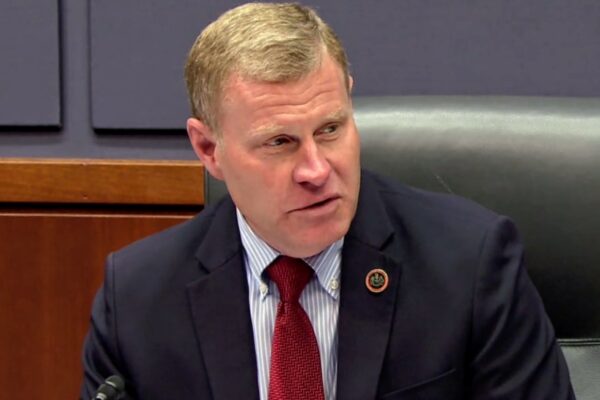
Jeff McKay has some neighborly advice for a next-door locality considering changing its governance structure.
“There is no perfect model. There are nuances to every one of these structures,” the Fairfax County Board of Supervisors chair said at a Sept. 9 forum.
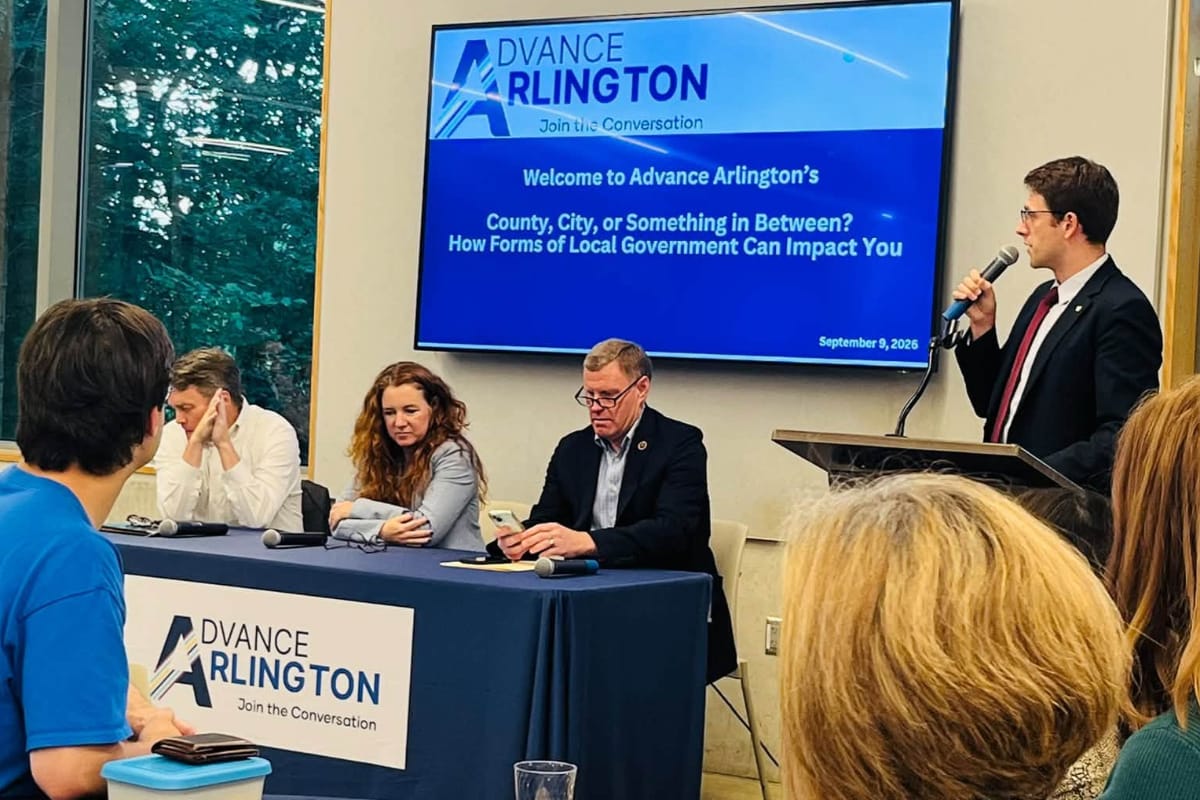
McKay and Alexandria Vice Mayor Sarah Bagley were recruited by the Advance Arlington civic group to participate in a panel discussion on the options available to Arlington as the county government considers its first major structural change in nearly 95 years.
Arlington has had its current five-member, at-large County Board structure in place since 1932. For the 70 years before that, the county was governed by a three-member Board of Supervisors elected in districts.
The county’s governance structure is unique among Virginia localities. Because it was authorized by the General Assembly, it will take legislative action — and possibly a referendum — for Arlington to make significant alterations.
One of the proposals being considered by Arlington is a return to district-based representation, or a hybrid of at-large and district seats.
McKay, who served as Franconia District supervisor before first winning election as the board’s chairman in 2019, said districts have pluses and minuses.
“There is absolutely no doubt that district supervisors parochially care about their own residents,” McKay said, but added that “we usually coalesce around things.”
“But it takes work,” he said.
While Fairfax is carved into nine magisterial districts, “every single person who lives in Fairfax County has two supervisors,” McKay said — their district supervisor and himself.
Those lobbying for an Arlington governance change also have floated the possibility of converting from a county to a city structure, something Fairfax officials previously mulled.
Concern about added costs of maintaining their own roadways was the major reason Fairfax officials abandoned any pursuit of city status, McKay said. By Fairfax’s analysis, the conversion would add 8 cents per $100 assessed value to the tax rate merely to control local roads.
“That’s not a good deal,” he said, advising Arlington that all impacts “have to be very carefully considered” before embarking on changes.
Becoming a city likely is a moot point, as there currently is a legislative ban on creating new cities through 2032. Arlington’s other options to change governance include expanding the county board’s size from its current five seats and having voters elect a chair, as they do in Fairfax.
Alexandria has an elected mayor coupled with an at-large council whose members, uniquely in the region, serve three-year terms.
Having at-large representation allows the city council to create “a budget designed to be responsive to everything,” Bagley said. The same argument is used by those supporting retention of Arlington’s at-large governance.
Currently in Arlington, the board chair rotates annually among the five members, which some see as putting the locality at a disadvantage on the regional stage.
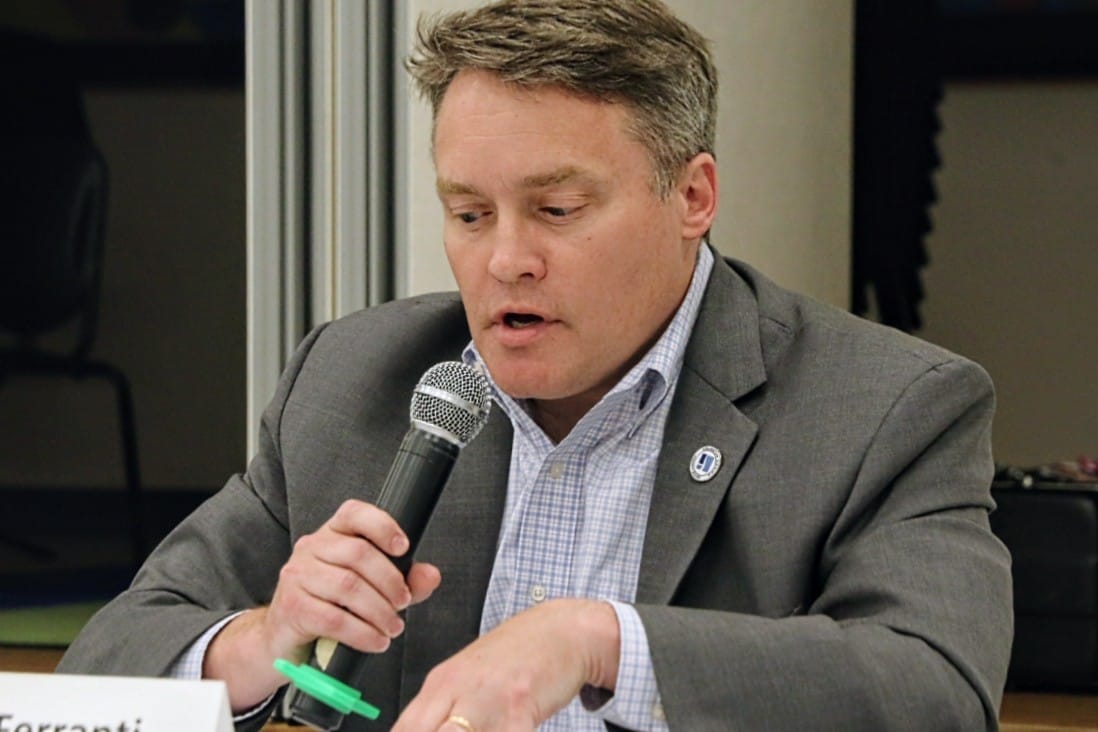
The current Arlington Board chair, Matt de Ferranti, has floated the idea of a seven-member board, with three members elected in districts, three at-large seats and a directly elected chair. He acknowledges he’s just one vote, and that might not be where the county decides to go.
“We should talk about all of the options,” he said. “I want the full conversation.”
In Alexandria, there is a smaller but similar governance-change discussion taking place, with school board members asking to be moved to staggered terms.
That would require General Assembly action to amend the city’s charter, and Bagley said it’s been a “chicken-and-egg thing” to decide whether to seek permission from Richmond first, or make decisions locally and then ask the legislature to ratify them.
“I’m not suggesting one way is necessarily better,” she said. “It’s tricky.”
Faced with the two options, Alexandria officials are working on getting local consensus before seeking legislative action.
De Ferranti hopes the county’s General Assembly delegation will stay out of change-of-government discussions until the 2027 legislative session is completed.
“Del. [Patrick] Hope could file a bill again. I’m hoping he does not do that,” he said at the Sept. 9 forum.
De Ferranti, who will serve as a chair through Dec. 31, said the local community needs to have time to determine what, if any, changes it wants considered.
“Change is best considered with grass-roots energy,” he said at the forum.
Previous Arlington board members went to Republican Gov. Glenn Youngkin to scuttle Hope’s earlier efforts at governance-change legislation. De Ferranti said the current board might be willing to form a similar alliance with Democratic Gov. Abigail Spanberger in 2027.
Spanberger “pays attention to local government” and “will have serious questions” if legislation passes over county board opposition, said de Ferranti, who is currently locked in a reelection battle.
Unlike Fairfax, where all 10 supervisor seats are on the ballot simultaneously, with the next election coming in 2027, Arlington elects one of its five board members in three years of the four-year election cycle, while two seats go on the ballot in the fourth year.
Some in the 26-square-mile, 240,000-resident community see that as a plus, because it ensures political continuity, while others would rather see only one or two elections per four-year cycle.
Arlington Board members have delayed consideration of how to move forward on the governance change issue, punting it from December 2025 to the summer of 2026 and then to December 2026. In the interim, the county attorney has studied the legal issues involved, and a consultant is working on a report detailing other matters for future consideration.
The next step could be the appointment of a community task force in early 2027.
Pat Carroll, who for years was the Arlington government’s legislative liaison on General Assembly affairs, agreed with McKay that possible changes need to be checked and double-checked for the possibility of unforeseen consequences.
“There’s a lot of things to balance to make this all work,” she said.
Arlington and Fairfax may have different governance structures, but leaders in each share the belief that the state government has too much power over localities, particularly counties.
As a result, downstate legislators who “never even entered Fairfax County … have an opinion on what Fairfax should be doing,” McKay lamented.
