

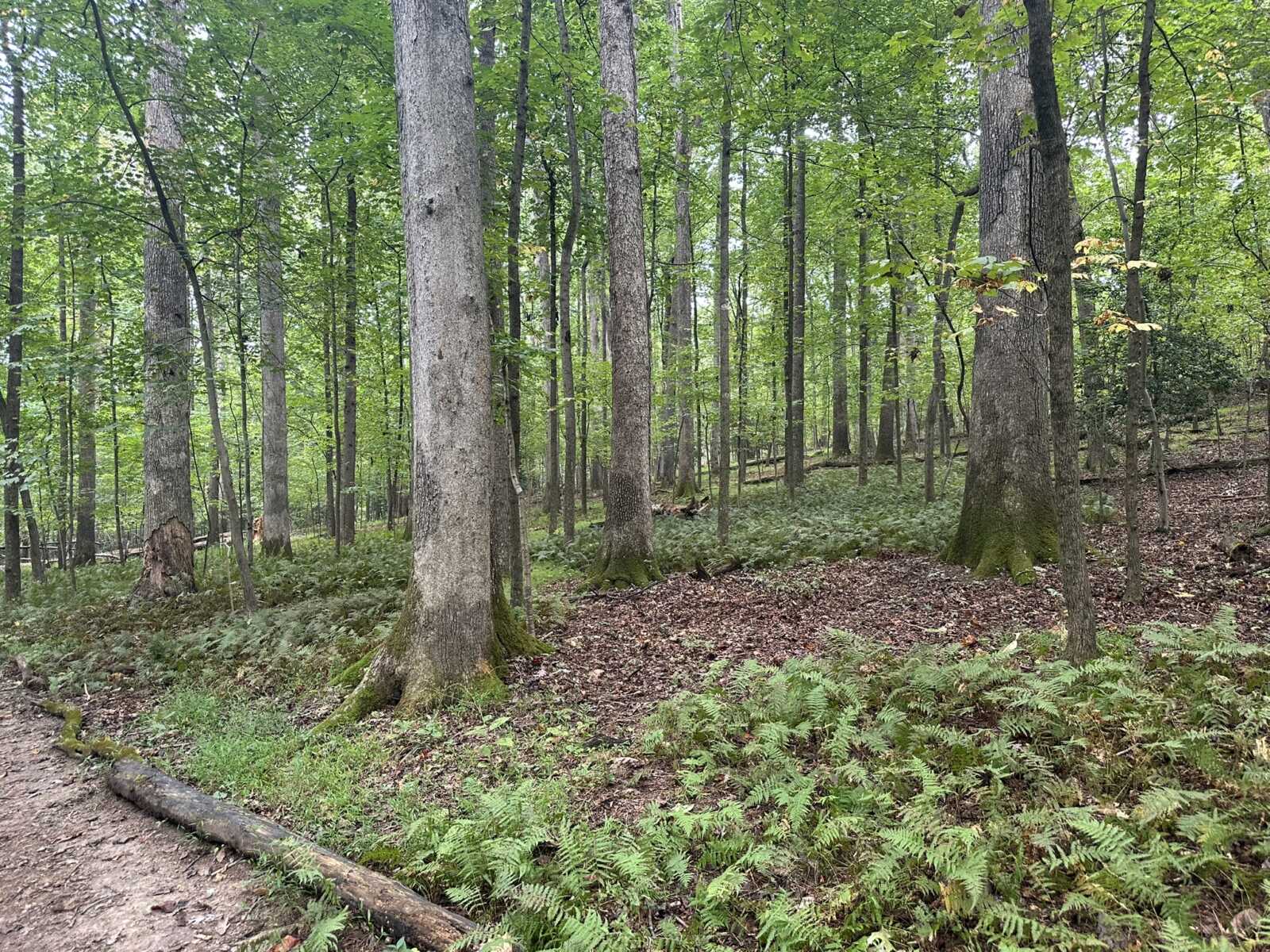
Though temperatures are cooling, some of the trails around Reston will see plenty of activity in the coming weeks, as work begins on a campaign to uproot invasive plants.
Crews with the Gainesville-based consulting firm Wetland Studies and Solutions (WSSI) began working this week to remove invasive species, including vines and shrubs, from nine designated sites, Reston Association announced yesterday (Wednesday).
The campaign is expected to continue through November and will focus on woods around Deer Forest, Buttermilk Creek, the Greens Recreation Area, Stirrup Road, the southern part of Walker Nature Center, and the Hunting Horn Recreation Area.
“Invasive non-native plants spread rapidly, outcompeting native species for light, water and nutrients and reducing biodiversity,” RA said in a press release. “Many of these invaders also alter soil chemistry and hydrology and can even pose risks to human health. By removing and preventing the spread of these species, we protect habitat, boost ecosystem resilience and avoid more costly eradication efforts in the future.”
RA’s environmental program first contracted WSSI to assist with its invasive plant removal efforts last year. With approximately 800 acres of natural land to oversee, the association also devotes staff and volunteers to monitoring and managing invasive species, such as bamboo, English ivy and stiltgrass.
Just last Saturday (Oct. 3), RA’s Habitat Heroes volunteers convened at Sunder Court’s natural area from 10 a.m. to noon to remove English ivy. The program’s next workday is scheduled for Nov. 3 at Vantage Hill and will address English ivy and bush honeysuckle.
According to RA, WSSI will deploy some herbicides as part of its work this fall. Signs announcing that habitat restoration is in progress and indicating whether herbicides are being used will be installed along paths and trails where the contracted crews are working.
“For your safety and to protect restoration zones, please stay on open trails, respect all posted signs and avoid entering these designated work areas,” RA said. “These efforts are essential for preserving and protecting the health and ecology of our natural areas.”
RA leaders said earlier this year that they would update their procedures for informing the community about the use of pesticides to combat invasive species. In response to a resident’s complaint that the provided signage and notifications were inadequate, the association revised its pesticide use policy to require larger signs and more detailed explanations of which pesticides are being used and why on its website, Patch reported.
According to RA’s website, WSSI will use two different herbicide mixtures — one that’s 3% glyphosate and one with 2% glyphosate and 1% triclopyr — for foliar spraying, which is applied directly to plant leaves. A herbicide with a 50% concentration of glyphosate will be used for cut-stump treatments.
