

Fairfax County’s elected leaders struggled yesterday (Oct. 20) to formulate the correct balance between public safety and individual privacy, as they discussed the future of automatic license plate readers (LPRs) in the county.
“There are questions that still need answers,” said Franconia District Supervisor Rodney Lusk, who chaired the supervisors’ Safety and Security Committee that spent two hours going over the subject.
Fairfax County Police Department leaders made it clear that they value license plate readers as part of their increasingly technology-driven strategy for responding to crime.
“It has become an essential law enforcement tool,” said FCPD Major Hudson Bull, who heads the department’s Real Time Crime Center and presented the department’s report to the Board of Supervisors.
“We have built a model [with] strong and accountable measures,” Bull said.
Police Chief Kevin Davis backed up that view.
“We get it right and serve as the example across the nation,” he said. “Within the law enforcement community, we’re still seen as a leader.”
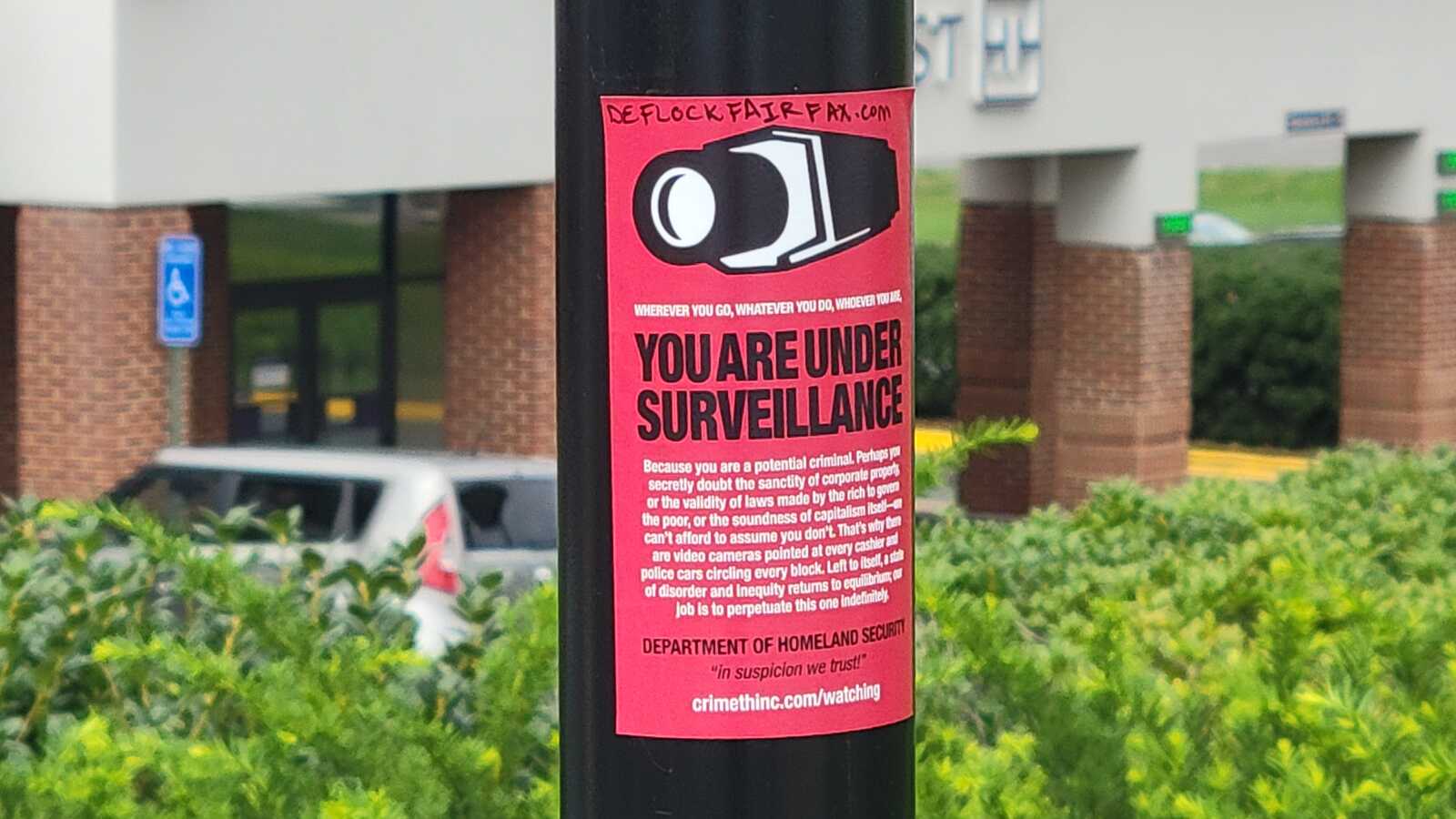
But a number of supervisors — perhaps even a majority — expressed concerns that the police presentation didn’t adequately address whether there are sufficient measures in place to protect the privacy rights of the public.
“There’s still so much information that’s missing. There’s still things that haven’t been answered,” Providence District Supervisor Dalia Palchik said. “We’re missing quite a few pieces.”
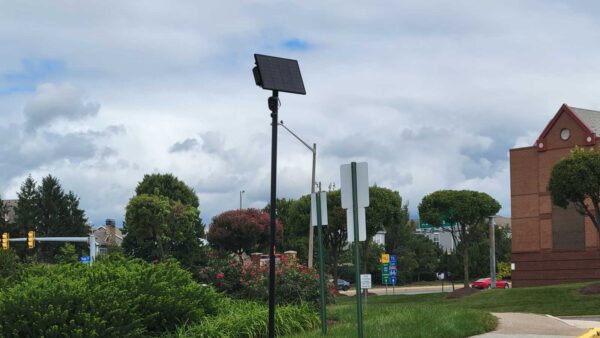
The FCPD currently operates 84 ALPRS procured from the private company Flock Safety, and has access to data from approximately 120 more privately owned cameras across the county.
A state law enacted in 2025 regulates how long the data from government cameras can be stored — currently a maximum of 21 days — as well as with whom it can be shared and for what types of infractions it can be used.
That law prohibits sharing information with out-of-state public safety departments, including federal agencies, absent being served with a judicial warrant.
The FCPD partnered with Flock Safety for a trial period to test its license plate readers before expanding the program a year later.
While the department has regularly touted the technology’s usefulness in solving cases, including vehicle thefts and missing people, a mounting public backlash to the cameras, both locally and nationally, led the Board of Supervisors to put any future installations on hold last month.
The Fairfax County School Board also voted on Sept. 24 to ban ALPRs from school property, citing “significant civil liberties and privacy concerns.”
During the discussion, a number of supervisors criticized Flock Safety for perceived security lapses and other operational issues. The cameras have reportedly been used by police officers elsewhere in the U.S. to stalk ex-partners, and advocates have raised concerns about data being shared with federal immigration agents or used to track women seeking out-of-state abortions.
Flock announced in August that it would implement additional safeguards to combat potential misuses of its system, including a shortened time frame for retaining data of seven days instead of the previous 30 days.
“If I were voting today … I would vote to end the contract with that vendor,” Hunter Mill District Supervisor Walter Alcorn said, adding in a subsequently released statement that discussions about the role of LPRs in law enforcement need to extend beyond Fairfax County’s borders.
He suggested that the Metropolitan Washington Council of Governments (COG) could take the lead, given that it already coordinates mutual aid agreements between various law enforcement agencies in the D.C. region.
“Maybe that’s a regional variation on the option for a closed network ALPR system that should be looked at as part of a broader community discussion of digital law enforcement in the [artificial intelligence] Age,” he said.
His colleague, Springfield District Supervisor Pat Herrity, warned against a rush to judgment without sufficiently weighing pros and cons and urged the county to consider facts, rather than emotions.
“We’ve got to think long and hard before we make changes,” he said.

While acknowledging concerns about privacy were real, Herrity said too little attention was paid to the impact of the cameras in solving crime and, in some cases, preventing it from happening in the first place, because criminals know they could more easily be caught.
“These things are incredibly effective,” Herrity said. “We don’t talk about victims enough when we talk about public safety.”
County staff laid out three possible scenarios for moving forward:
- Making no major changes but considering offerings from other technology vendors
- Testing and evaluating new systems with an eye to making more substantial changes
- Ending information-sharing with other Virginia public-safety agencies while continuing to use LPRs internally
Mason District Supervisor Andres Jimenez asked why a fourth option wasn’t on the table — ending the use of license plate readers entirely.
Tom Arnold, the deputy county executive for safety and security, predicted that route would lead to an increase in crime, but if supervisors wanted to consider it, that was up to them.
“The Board can take whatever action you like,” he said.
Having the back-and-forth dialogue that took place on Oct. 20 is “exactly what we need to be doing,” Board Chair Jeff McKay said.
The next step is to have supervisors send specific questions to county staff, who will collate them and provide responses to all board members so “everyone’s getting the same information at the same time,” McKay said.
A number of supervisors looked back to decisions in the past about police using body-worn cameras, technology that has also raised privacy concerns. The Board of Supervisors approved a full body-worn camera program in 2019 following a more limited pilot, though the rollout of the devices was slowed by funding limitations at the start of the pandemic.
Like with the body-worn camera program, “we’re going to work to make it right” with license plate readers, Sully District Supervisor Kathy Smith said.
Still, even some supervisors acknowledged that finding an equilibrium might prove challenging.
“It’s not an easy thing,” Braddock District Supervisor Rachna Sizemore Heizer said. “There’s a balance of rights. I don’t know the right balance.”
“We do have a responsibility … to thoughtfully consider this and see it through,” Alcorn said.
In their report to supervisors, the FCPD said that, since November 2022, license plate readers have been responsible for:
- 67 guns recovered
- 573 stolen vehicles recovered
- 60 missing people located
- 938 arrests with a total of 2,672 charges, most of them felonies
- 161 cases with narcotics
- Just under $9.8 million in stolen property recovered
Fairfax County has been using license plate readers in one form or another for nearly two decades, the police department said. The county owns all the data collected by the cameras, which cannot be sold to third parties.
Bull said recent policy changes have reduced the number of police personnel who can access data from 821 to 296, largely by removing access for patrol officers, who typically already coordinated efforts through the Real Time Crime Center to obtain information.
At the Oct. 20 meeting, county officials publicized comments they had received from Flock in response to a letter that the Board of Supervisors sent to the company on Sept. 15 requesting information about its policies.
“I have full confidence that Flock’s LPR system can continue to solve crime and keep Fairfax County residents safe, while remaining in accordance with state law and local policy,” Flock founder and CEO Garrett Langley said in a letter to McKay accompanying the responses.
Langley offered to meet with county leadership himself, or send appropriate staff members, to address their concerns.
Fairfax County is not the only locality in Northern Virginia evaluating its relationship with Flock. Last month, the Arlington County Board ended its relationship with the firm after a closed-door session that did not include public input.
The decision drew unusually aggressive public pushback from both the county’s police chief, Andy Penn, and the deputy county manager for public safety, Aaron Miller. Both said that LPRs were effective crime-fighting tools and that there’s no evidence privacy was put at risk by their use in the county.
At an Oct. 13 meeting with the Arlington County Civic Federation, Penn reiterated support for the cameras.
“I’ve been public about that. I’m a big supporter,” he said.
As was the case with Fairfax police, Arlington police say the technology has value beyond fighting crime, including locating endangered individuals.
“It has a wide range of uses,” Penn said.
