


The Fairfax County School Board last week handed unionized educators at Lake Braddock Secondary School an apparent win in their fight against mandatory weapons detection duty.
During a meeting on Thursday (Nov. 12), the school board directed Superintendent Michelle Reid, “in consultation with employee-exclusive representative organizations, to clarify applicable regulations, including adequate training and consistent opt-out option for employees, before the start of the 2027-28 school year.”
The directive, which was discussed in a closed session, followed a formal grievance process initiated by the Fairfax Education Unions (FEU), a partnership between two labor unions representing non-managerial FCPS employees, the Fairfax County Federation of Teachers (FCFT) and Fairfax Education Association (FEA).
“This is merely the first step, and we expect Dr. Reid to meet with us swiftly to address this urgent security matter that was ignored for far too long,” Emily VanDerhoff, FCFT president and co-president of FEU, said in a press release. “We look forward to robust conversations that ensure a true opt-out process for staff, adequate training, and worker autonomy.”
The school board also directed FCPS administrators to withdraw letters of reprimand against two teachers who refused to perform the duty.
The board’s decision was preceded by months of advocacy by the unions, which argued that the weapons detection scanners should be managed by trained security personnel.
Under the collective bargaining agreement negotiated by FEU and FCPS in 2024 and approved by the school board in January 2025, teachers are allotted a set amount of time for their workday and planning periods, which could include a period of “instructional and professional responsibility” as allowed under FCPS regulations.
However, the lack of a clear definition for what can constitute an instructional and professional responsibility has become a source of tension between the unions and FCPS, particularly after OpenGate weapons detection systems were permanently installed in every middle and high school last fall.
According to the unions, staffing for the systems, which are similar to those now used at professional sports stadiums and other venues, has been inconsistent across schools. While some allow staff to volunteer for the duty and some offer a stipend, at Lake Braddock, rotating duty was mandatory for teachers and other non-security employees.
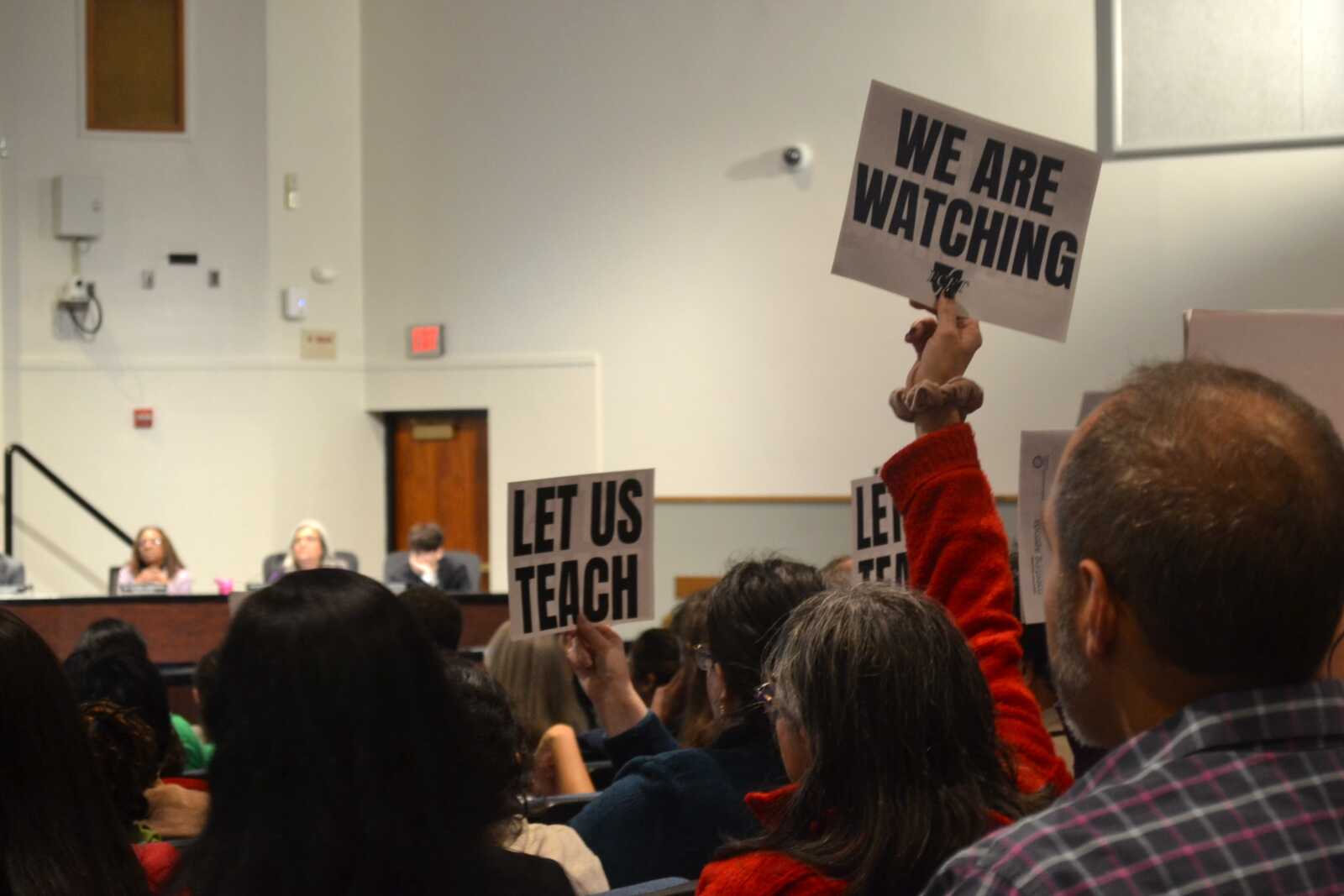
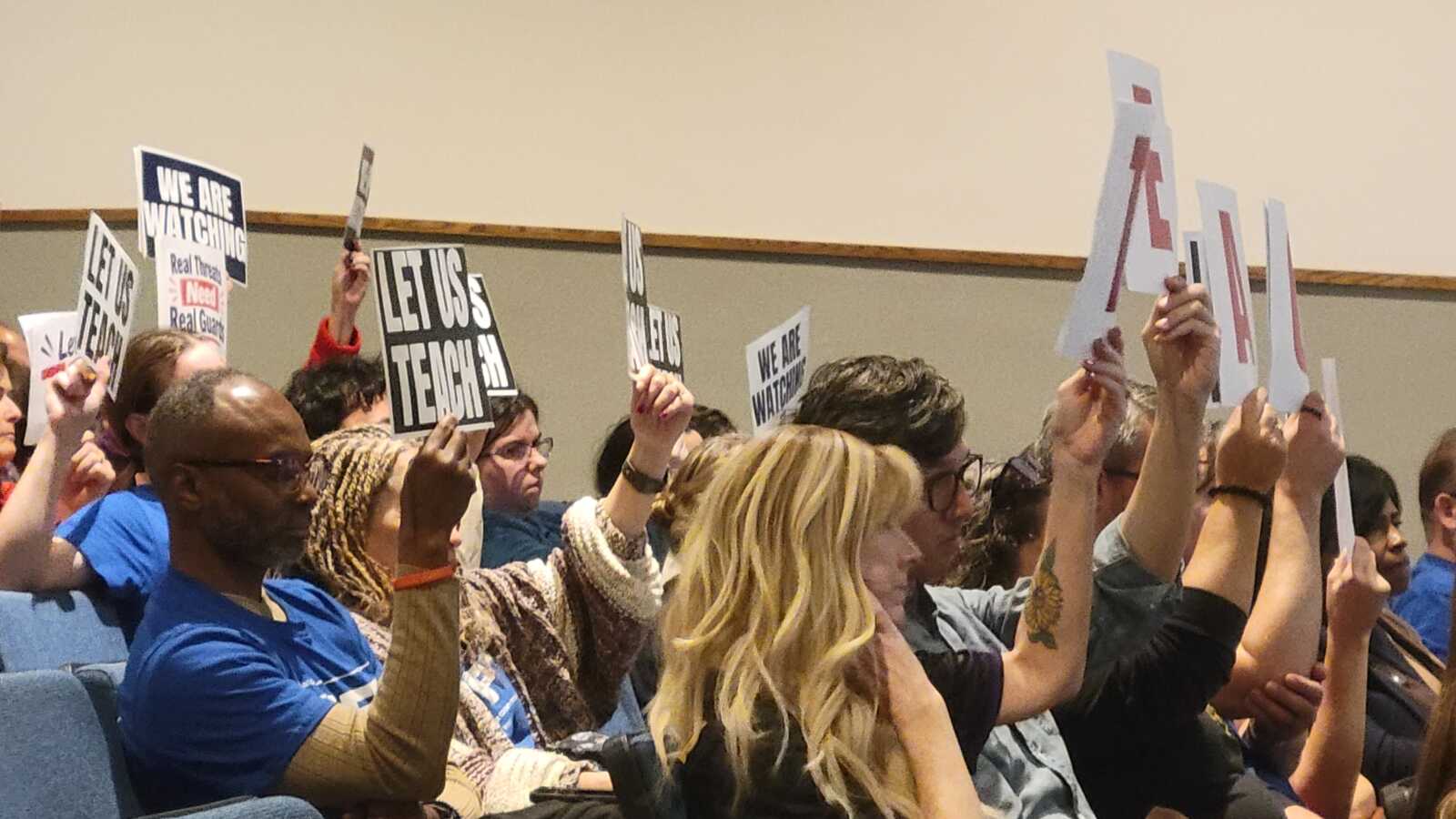
Educators pushed back, protesting outside the high school on Back to School Night, gathering a petition with thousands of signatures, and participating in a “walk in” earlier this month while wearing their union t-shirts.
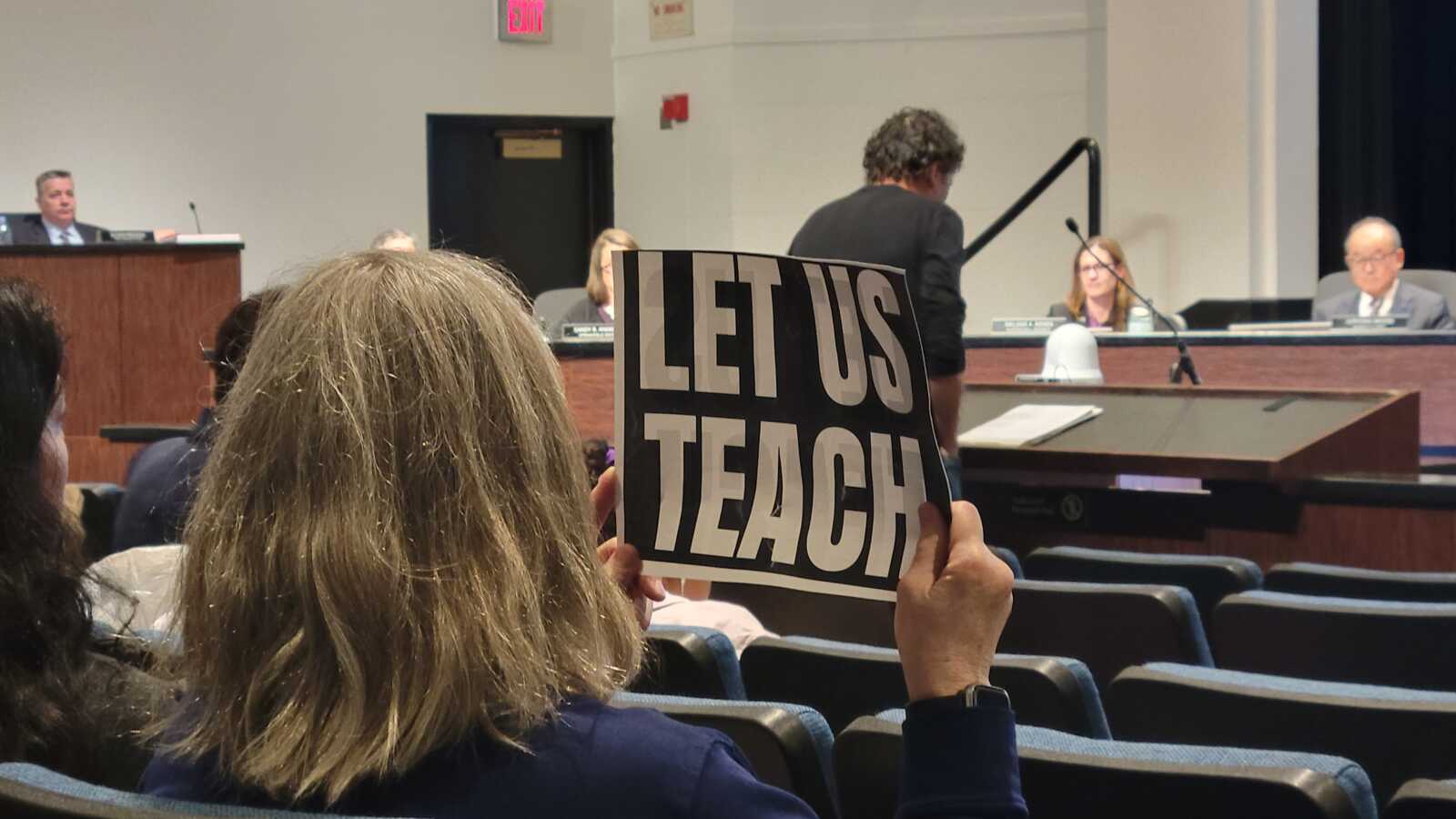
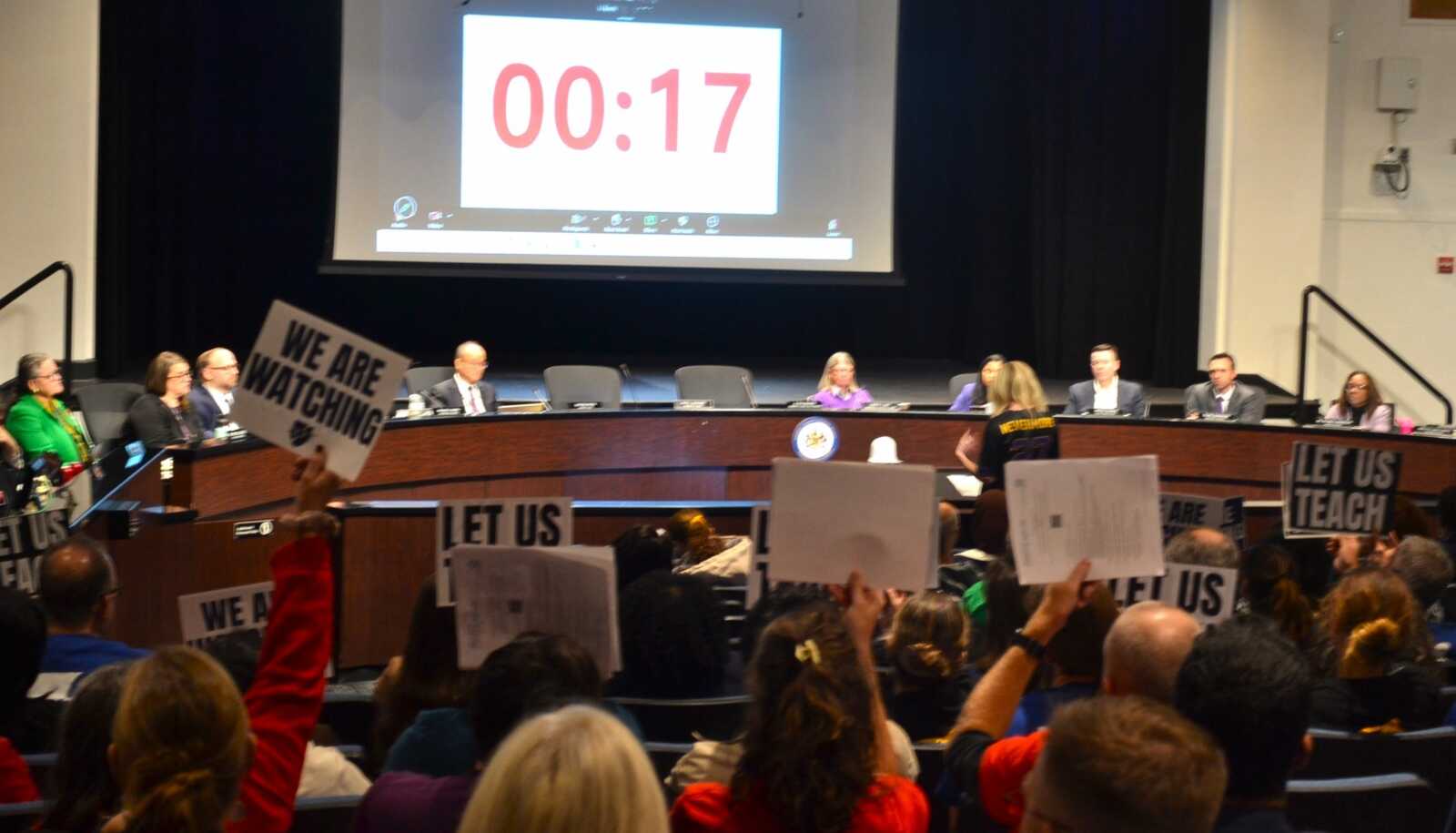
Their efforts culminated in a rally before last week’s school board meeting attended by several dozen people outside Luther Jackson Middle School, followed by several testimonies from staff during the public comment section of the meeting.
“As a teacher, I’ve never felt so undervalued and dehumanized,” Katherine Frazier, an English teacher at Lake Braddock, told the school board. “Thanks to some vague mention about assigning duties in our contracts, our whole school looks like a walking, talking House of Usher.”
Frazier said she often doesn’t have time to grade or plan because of non-student-centered duties assigned to her — and helping out a student isn’t considered a valid excuse for missing weapons detection duty.
While discussions often center around contracted hours, teachers often spend time well beyond their contracted hours on tasks such as writing recommendations for college applications or working events on the weekend, she noted.
“What is most frustrating and insulting is that the whole reason schools can get away with this is because we care so much about the students,” Frazier said.
Mike Horgan, a technology and engineering education teacher at Lake Braddock, offered a comparison from his classes, which help students learn how to use the right tools for a given job.
“You can improvise with tools, but when you force a tool to do something it’s not engineered to do, you bypass safety tolerances,” he said. “You create invisible fatigue. You invite catastrophic failure. Eventually, your tool quits working, and people get hurt…Assigning classroom teachers to weapons screening stations is administrative improvisation, and it is dangerous.”
FCPS didn’t elaborate when asked by FFXnow what the new opt-out policy will look like, and the directive doesn’t specify whether the opt-out will need to be approved by the school board.
“Ensuring the safety of our students and staff remains one of FCPS’s highest priorities — a commitment we know our entire community shares,” FCPS said in a statement. “FCPS will continue to engage in conversation to ensure staff duties are assigned in the best interest of both employees and students.”
However, FEU said its members are committed to holding the school administration “accountable” to its promise that a “consistent opt-out option” will be provided with input from affected educators.
The issue of instructional staff being called on for tasks beyond teaching students will likely be a talking point when FEU begins negotiating its next contract. The current agreement is scheduled to expire on June 30, 2028.
