

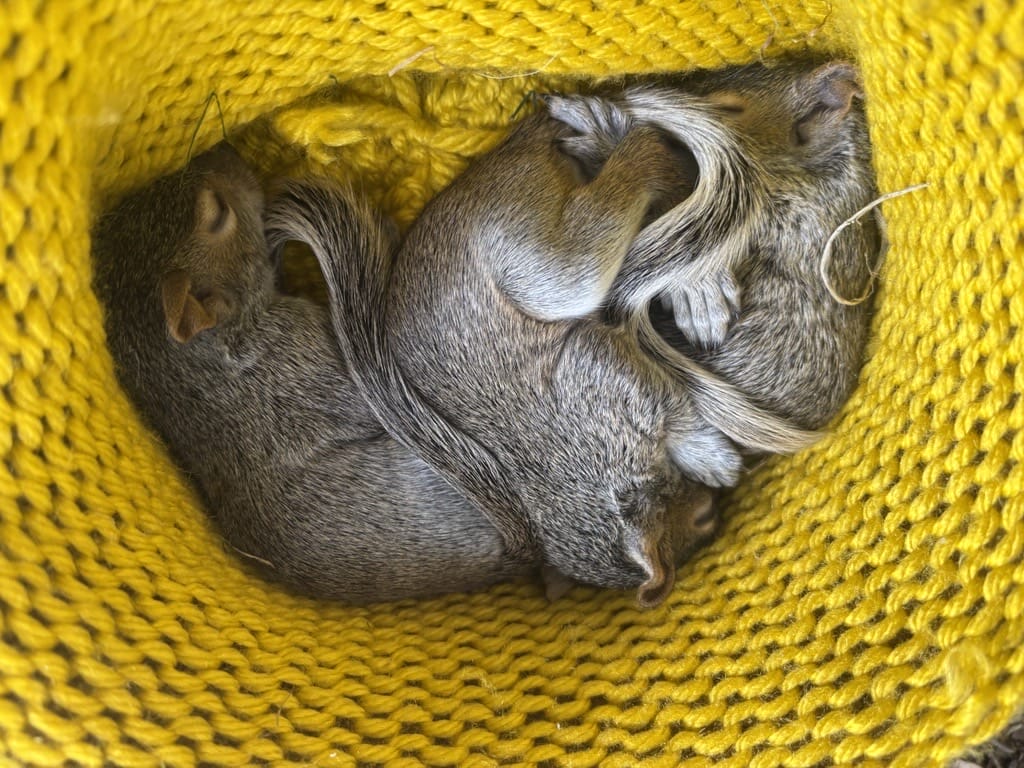
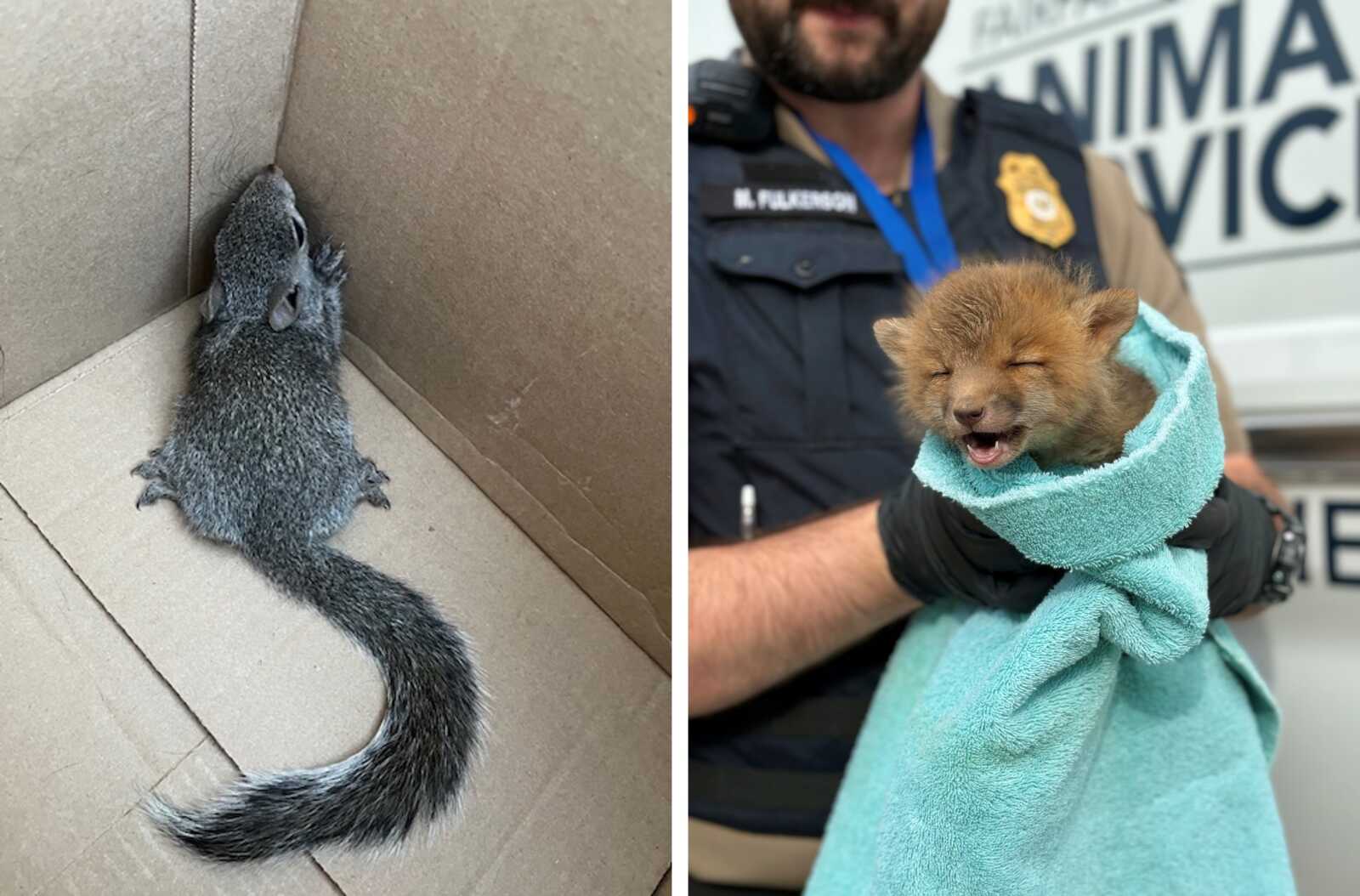
When a Fairfax resident turned on the engine of his car and saw every warning light come on, that was his first problem. The second was figuring out what to do with the baby squirrels curled up inside a nest in the engine bay.
“He called Animal Services for help,” Thomas Ingle, chief field services officer and deputy director of Fairfax County Animal Services, told FFXnow. “And when the animal services officer gets there, she realizes that there are babies in there and the mom is nowhere to be found.”
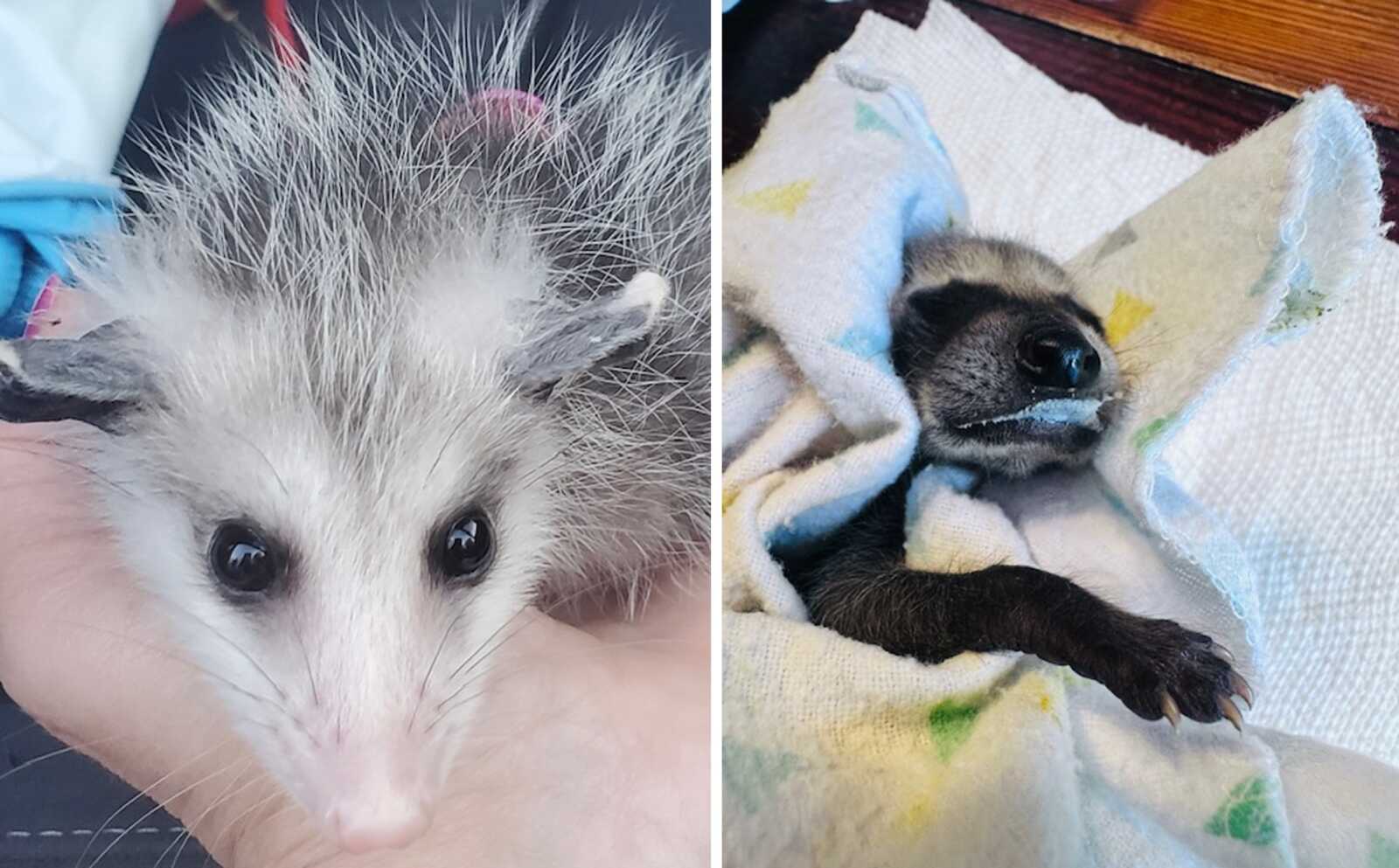
That call to Animal Services in March was emblematic of an issue that recurs every spring: As the weather warms up, more people encounter wildlife — and they don’t always know what to do when they see a baby apparently left on its own.
From March 1 through April 27 of this year, Fairfax County Animal Services fielded 920 calls relating to wildlife, Ingle said.
Private organizations and rehabbers see an increase as well. The Northern Virginia-based Wildlife Rescue League operates a help line and typically receives hundreds of such calls every season, often about an orphaned squirrel or displaced baby bunny.
Unlike with Fairfax car owner’s situation, many of the calls the league receives don’t require immediate human intervention, which can unintentionally backfire. Sometimes, the best advice is to wait and see, said Beth Axelrod, the league’s president.
“If it is a bird that is almost fully feathered and is just kind of hopping around on the ground, that is very natural behavior for a fledgling … They’re ready to jump out of the nest,” Axelrod said. “They jump out and their parents are usually hovering nearby trying to teach them how to fly and how to forage for food.”
Likewise, baby deer may be left alone for long periods of time while their mothers forage.
But some situations do require human intervention, said Linda Fiedler, the league’s help-line coordinator. Looking ahead, as turtles start to look for nesting sites, the league expects that many will need rehabilitation.
“Unfortunately, they often try to cross roads where cars can run over them or hit them, and so, they’ll come in with cracked shells and other injuries. Sometimes they can be saved, and sometimes they can’t. So, we always want people to be very aware that turtles are on the move,” Fiedler said. “If they see what looks like a rock in the road — it is not a rock. It’s probably a turtle, and they can stop and move that turtle, in the direction it’s going, to the other side of the road, and save it from being injured or killed by a car.”
Some of the most common needs right now, though, have to do with displaced cottontail bunnies, injured birds — and baby squirrels, Fiedler said.
Fortunately for the squirrels in Fairfax, the only intervention needed was a reunion with their mother, who had likely built the nest in the car for warmth.
First, the Animal Services officer moved the babies into a basket so they’d stay warm. Then, the officer played baby squirrel noises on her phone and placed it near the basket.
Sure enough, Ingle said, the mother squirrel came out. The officer watched from a distance as the squirrel slowly became more comfortable—then approached the babies.
“She starts ferrying her babies out of the basket,” Ingle said, “into a new hiding spot.”
Need help with a wildlife issue?
- The Wildlife Rescue League operates a regional wildlife helpline from 9 a.m. to 7 p.m.: (703-440-0800).
- Fairfax County Department of Animal Services’ non-emergency line is 703-691-2131.
