

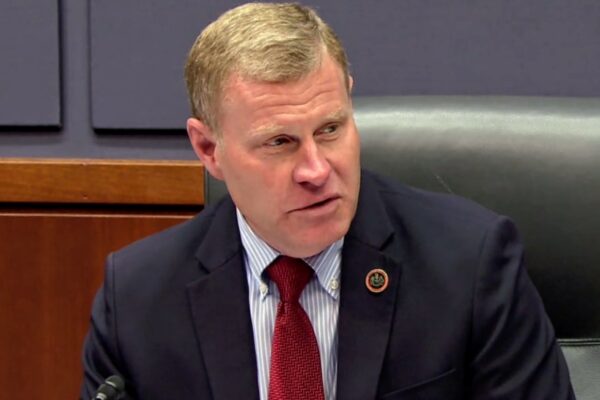
The Fairfax County Board of Supervisors informally adopted a $5.9 billion fiscal year 2027 budget this morning (Tuesday) that includes a small reduction in the real estate tax rate, more reserve funding and changes to proposed cuts.
The 8-2 vote during the “markup” session is a precursor to the board’s final adoption of a new budget next Tuesday, May 5, that will take effect on July 1.
Under the plan, the county’s real estate tax rate will decline from $1.1225 per $100 of assessed valuation last year to $1.12 per $100 this year.
The tax bill for an average county homeowner will still rise $337 year-over-year due to higher assessments, compared to $357 if the rate remained unchanged as suggested by County Executive Bryan Hill.
Board Chairman Jeff McKay said the ability to cut the rate was a result of the county’s new meals tax, which provided the local government an additional revenue source.
Effective as of Jan. 1, the new 4% tax on prepared foods, on top of an existing 6% sales tax, “has begun to deliver on its intended purpose,” McKay said during about 90 minutes of budget discussion.
At the meeting, board members approved a few last-minute budget changes to balance the spending plan, finishing with a $4.7 million balance that was sent to a Reserve for Economic Uncertainty.
Those voting to support the package acknowledged shortcomings but said it was a solid compromise of competing values.
The package will provide for the “safety, stability and well-being” of residents while delivering a degree of tax relief, Franconia District Supervisor Rodney Lusk said.
Multiple supervisors described leadership conditions at the federal government level as a shambles, noting that the impacts were hitting local jurisdictions across the region hard.
“We are in a time of chaos. We are the backstop for our community,” said Sully District Supervisor Kathy Smith, the board’s vice chair.
Smith acknowledged that no budget would please everyone.
“You’re going to have half the people who love it, half who don’t,” she said.
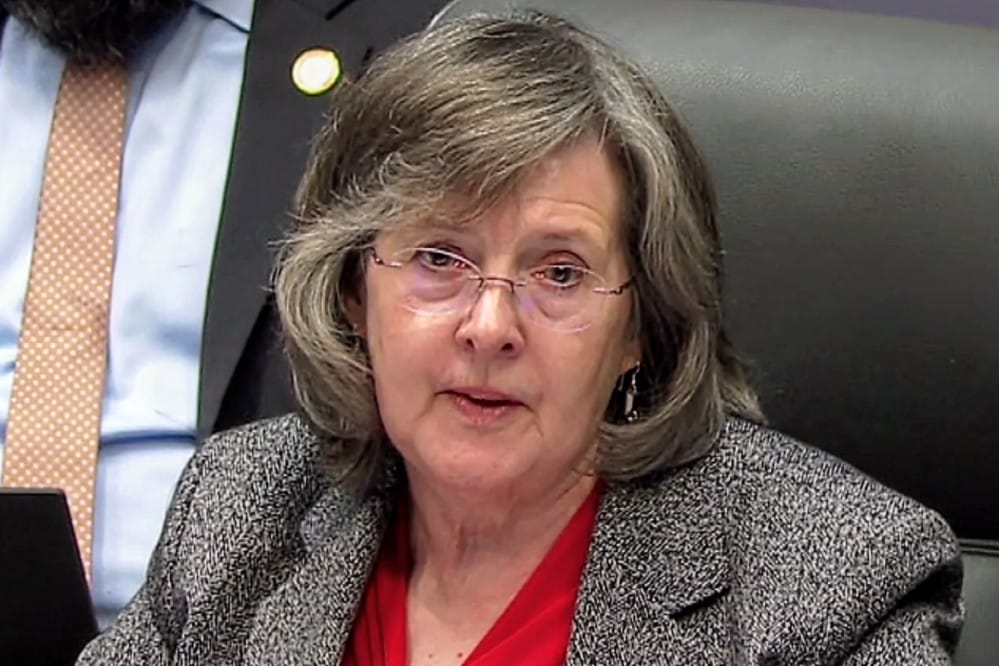
The votes against the package came from Springfield District’s Pat Herrity and Hunter Mill’s Walter Alcorn.
Herrity, the board’s lone Republican, objected to funding increases in the budget package and argued that the proposed real estate tax rate reduction “doesn’t cut it.”
“Here we go again — tax bills are still going up,” Herrity said. “Our taxpayers have not been a priority.”
McKay said he was hopeful future budgets would incorporate further tax rate cuts.
“People are suffering right now,” he acknowledged.
Alcorn opposed any tax rate cut, noting that the advertised budget included approximately $32 million in cuts to safety net services and other county programs.
“I cannot support a reduction of the real estate tax rate — even only a small amount — while also cutting services across several programs to some of our most vulnerable residents,” he said.
“The cuts go too far,” Alcorn said, while also noting that the county government is providing $43.8 million less for schools than what the Fairfax County School Board and superintendent requested.
As part of the markup session, funding was partially restored to four programs that had been proposed for deeper reductions or elimination altogether:
- $250,000 for home improvement initiatives for low-income residents
- $200,000 to a part-time preschool program that currently serves about 150 children across 13 classrooms in the county
- About $130,000 for home-delivered meals, allowing seven deliveries per week. The county had used federal relief funds for the pandemic to deliver up to 11 meals a week, but the advertised budget had proposed cutting that down to the five required by federal law.
- $310,000 for the BeWell health initiative, which provides wellness coaching to people with significant mental illnesses
Total funding for affordable housing will rise to $52.7 million in the new budget. That is less than advocates sought, but more than has been provided in the past.
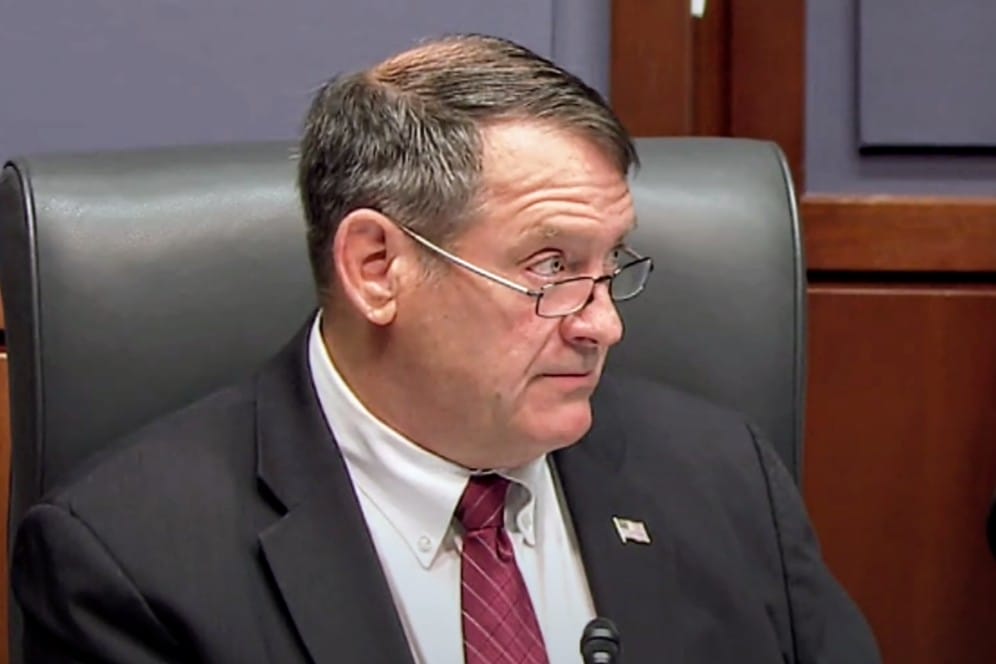
Like Herrity, Mount Vernon District Supervisor Dan Storck said he would’ve preferred a deeper reduction in the real estate tax rate. Unlike Herrity, that wasn’t enough to cause Storck to vote against the package.
Storck said the key to the budget plan was “making sure we leave no one behind,” and that it had largely accomplished that purpose.
Providence District Supervisor Dalia Palchik held substantially the same view.
“Overall, we have the right emphasis” in the budget, she said, praising what she termed a meaningful step in funding affordable housing.
Like several others, Braddock District Supervisor Rachna Sizemore Heizer said the final package represented reasonable tradeoffs given current conditions.
“We cannot forget those most in need — we cannot,” said Braddock District Supervisor Rachna Sizemore Heizer, a former School Board member elevated to the Board of Supervisors in a December 2025 special election.
“Budgets are never perfect,” she said. “We can’t do everything.”
Mason District Supervisor Andres Jimenez voiced anger at advocates for school funding, whose behavior he pegged as “disrespectful” and “mind-blowing sometimes.”
“We all care about students,” urging education advocates to “work with us” rather than hurl insults.
“We want to be helpful, we want to partner,” he said.
Among proposed funding reductions that were not rescinded: an elimination of crossing guards for county high schools, with contractors filling in for vacancies at elementary and middle schools, and a $7.2 million cut in Fairfax Connector service.
Hill proposed reducing Fairfax Connector service by 48,500 hours on 13 routes identified as “low-performing,” affecting an estimated 600 passengers per day.
Dranesville District Supervisor Jimmy Bierman said he “didn’t feel good” about the cuts, but both were based on fair cost-benefit analyses.
The budget as a whole is “relatively stable in otherwise chaotic times,” Bierman said.
Lusk also brought up the elimination of crossing guards, expressing concern but saying tools were available to improve pedestrian safety around schools.
After completing the markup process, board members forwarded fiscal year 2028 budget guidance to Hill and county staff. The guidance also focuses on a projected $15.86 billion in government capital spending over the next decade.
Jimenez, for one, did not envy staff’s task in starting the budget planning process all over again.
“We’ll be looking at tougher decisions next year,” he predicted.
