

More than 1,100 bills came out of this year’s Virginia General Assembly session, and many will take effect tomorrow (Wednesday).
After Democrats gained a trifecta with last year’s election of Gov. Abigail Spanberger and control of the Virginia Senate and House of Delegates, legislators’ bills focused on priorities like immigration enforcement, gun control, housing and tenant protections, reproductive rights and more.
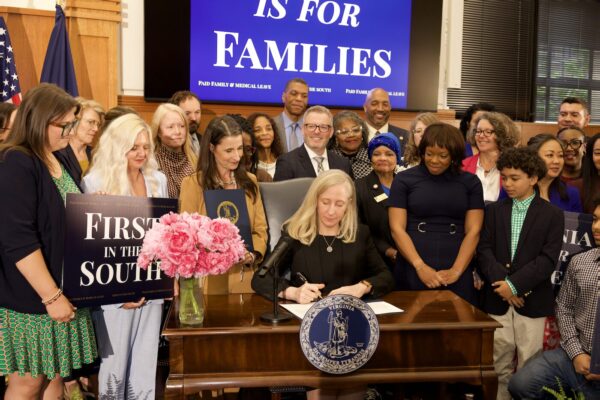
Democrats also passed Virginia’s first-ever paid sick leave, paid family and medical leave, and child care assistance programs for workers.
Additional changes will happen on Jan. 1, 2027, including the next minimum wage increase and the Faith in Housing bill that requires localities to allow by-right affordable housing based on faith-based organizations’ property.
Although Spanberger vetoed marijuana retail market legislation, the state budget compromise approved yesterday (Monday) by the House and Senate included an agreement to start recreational marijuana sales in Virginia on July 1, 2027.
Along with the bills passed this session, Democrats will send three constitutional amendments to voters this fall. On Nov. 3, voters will decide referendums on amendments codifying abortion rights and same-sex marriage as well as a restoration of voting rights to people convicted of felonies after they serve their sentences.
Another bill from Senate Majority Leader Scott Surovell (D-34) would’ve allowed a voter referendum on whether to authorize a casino in Fairfax County. But amid opposition from many residents and local leaders, Spanberger vetoed the legislation.
Here’s a look at major laws that will become effective on July 1:
Paid family and medical leave program
Fairfax County state Sen. Jennifer Boysko’s SB 2 will put Virginia’s first paid family and medical leave program into motion on July 1. However, contributions from employers and employees won’t begin until April 1, 2028 and benefits won’t launch until Dec. 1, 2028.
Currently, the federal Family and Medical Leave Act allows employees to get up to 12 weeks of leave and maintain insurance for qualifying family or medical events, but it does not require pay during the leave.
The new Virginia program will let employees take leave for a covered reason and receive 80% of their average weekly earnings — not exceeding the state’s average weekly net earnings. The limit for leave will be 12 weeks for family and medical leave and four weeks for recovery services, mental health treatment or domestic violence.
The legislation is one of two paid leave programs passed last session. The second — a paid sick leave program (SB 199 and HB 5) — will take effect on July 1, 2027.
Child Care Assistance Program
HB 18 and SB 3 create the Employee Child Care Assistance Program with matching state funds to incentivize employers to provide contributions for their workers’ childcare costs. The intent of the program is to address high child care costs and employee retention.
The approved state budget allocates $25 million for the program in fiscal year 2027, and the program is being administered by the Virginia Early Childhood Foundation.
Gun bills
State Sen. Elizabeth Bennett-Parker’s HB 93 and companion bill SB 38 seek to tighten regulations around gun transfers from a person facing a protective order or conviction of assault and battery of a family or household member.
The new laws stipulate that a person banned from possessing a gun can’t transfer the weapon to a person under 21 or someone who lives with them. The legislation requires the person to inform courts and law enforcement about who will receive the gun and allows for a follow-up if the transfer hasn’t happened.
Fairfax County state Sen. Dave Marsden’s SB 496 will make it a Class 4 misdemeanor to inadequately secure a gun left in an unattended vehicle.
Spanberger also signed Del. Garrett McGuire’s HB 1524, which prohibits the open carry of assault-style weapons in public areas, but a budget amendment accepted by the General Assembly on Monday (June 29) delays its effective date to July 1, 2027.
McGuire also sponsored a bill (HB 1525) to restore universal background checks for gun sales by prohibiting sales to people under 21. Spanberger had signed the bill with an emergency clause to enact it early, but a court injunction in Lynchburg halted plans to bring back background checks under the new state law. After the court ended the injunction, background checks are expected to return on July 1.
The most controversial gun-related bills that were set to take effect on July 1 — a ban on assault-style guns (SB 749 and HB 217) — are on pause as a court decides their outcome.
The bills, introduced by Fairfax County state Sen. Saddam Azlan Salim and Del. Dan Helmer, wouldn’t criminalize possessing assault-style weapons obtained before the effective date. However, any future import, sale, manufacturing, purchase or transfer of an assault-style gun would lead to a Class 1 misdemeanor.
Exemptions would be provided for inoperable, manually-operated or antique guns, as well as for weapons used for law enforcement and government duties.
Other bills from former Fairfax County state Sen. Adam Ebbin (SB 323) and Del. Marcus Simon (HB 40) will ban the manufacture, import, purchase, sale, transfer and possession of untraceable “ghost guns” without serial numbers on July 1, 2027.
Federal immigration agreements
Salim’s bill restricting local and state law enforcement agreements with federal immigration enforcement agencies (SB 783) will become effective on July 1. The bill also bans law enforcement officers from cooperating with operations involving civil immigration violations.
Exceptions are provided for when a valid judicial warrant or subpoena is presented and when a federal immigration detainer is presented for inmate transfers.
Salim had introduced several bills responding to backlash against the Trump administration’s immigration enforcement approach had been proposed in the last General Assembly session. Spanberger signed a ban on law enforcement officers wearing face masks (SB 352), while vetoing SB 351, which would’ve restricted federal immigration agents from conducting civil arrests in certain public places, including courthouses, schools and health care facilities.
The U.S. Justice Department is challenging the face mask ban and federal immigration agreements bills. A federal judge in Richmond issued a preliminary injunction against the mask ban on Tuesday (June 30), blocking the measure just hours before it was scheduled to take effect.
Vehicle noise
Fairfax County Del. Rip Sullivan’s HB 55 will allow localities in Northern Virginia to use monitoring equipment to fine owners of excessively noisy vehicles. An offense could lead to a civil penalty up to $100 but not a penalty to the driver’s license or car insurance. The bill will sunset on July 1, 2028 after a two-year trial period.
Styrofoam-type container ban
A state law passed in 2021 requires restaurants and other food service establishments to stop using polystyrene foam containers. Food vendors with 20 or more locations had to phase out the products by July 1, 2025, and remaining vendors have to stop using them on July 1, 2026.
Sealing criminal records
After a delay to give courts more time to prepare, Surovell’s SB 1466 and House Majority Leader Charniele Herring’s HB 2723 — known as the “Clean Slate” law — will automatically seal over 100,000 criminal records tomorrow.
Eligibility for sealed records will be open to people previously convicted of misdemeanors, such as shoplifting, trespassing, possession and distribution of marijuana, who haven’t reoffended in the past seven years. It will also allow petitions to seal records for certain misdemeanor and felony cases that don’t result in a conviction, though at least 10 years of a clean record is required for felony charges.
The new law will make housing providers and many employers unable to access such records via criminal background checks. Advocates believe the change will open housing and employment opportunities to help people move on after an offense, while critics say it will create risks for people unknowingly living near and working with people previously convicted of crimes.
This story has been corrected to reflect the new effective date of July 1, 2027 for Del. Garrett McGuire’s bill prohibiting openly carrying assault-style firearms. It has also been updated after a judge issued an injunction blocking the law enforcement mask ban from taking effect.
