


Fairfax County supervisors have directed staff to consider ways to reduce bureaucratic hurdles for those seeking to provide child care services in their homes to the public.
Getting approval from the county government “takes way too long,” Board of Supervisors Chairman Jeff McKay said at a Land Use Policy Committee meeting yesterday (Tuesday).
At the meeting, staff proposed two possible options.
One would remove the need for the county’s planning commission, Board of Supervisors and Board of Zoning Appeals to hold public hearings, making approvals an entirely administrative process. The second would keep one or more of those bodies involved, but ease some of the steps applicants are currently required to undertake.
Under the current arrangement, “the fear of going through the process” rebuffs those who might be interested in providing day-care services at home, Springfield Supervisor Pat Herrity said.
Herrity was among the supervisors who voiced a preference for shifting to a fully staff-driven administrative approval process, calling it the best way to unclog the pipeline of proposed home-based child care facilities.
“Like housing, the more day care you have, the more affordable it becomes,” he said.
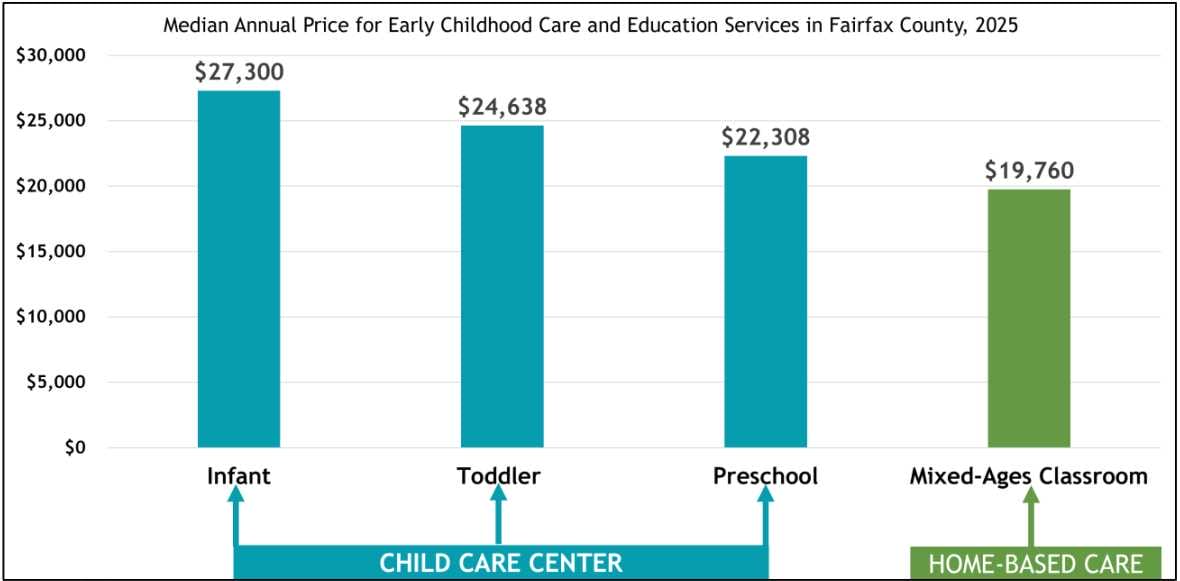
According to data presented at the meeting, the median annual cost of home-based day care in Fairfax County is $19,760, as of 2025. While eye-popping, it represents a bargain compared to the median cost of day-care facilities run out of commercial spaces:
- $22,308 for preschoolers
- $24,638 for toddlers
- $27,300 for infants
Beyond the cost savings, “many families prefer home day cares,” said Jacqui Kamp, a county planner who delivered the presentation to the board.
There are about 1,150 established day-care facilities in the county. Those serving up to four children are regulated by the county government, and those serving 5 to 12 children must obtain an annual license from the Virginia Department of Education.
Current county zoning law allows home-based day care for small numbers of children as a by-right use. But it requires providers to obtain either a special permit (SP) or special exception (SE) from the government to host more than seven children in a single-family detached home or more than five children in other types of residential properties.
State law caps the maximum in all cases to 12 children.
Supervisors Dalia Palchik (Providence District), Dan Storck (Mount Vernon) and Rodney Lusk (Franconia) joined Herrity in expressing a preference for a staff-based review process.
When day care costs are on par with college tuition, “we have a problem,” Lusk said.
“We should be doing what we can to address the affordability issue,” he said.
Several other supervisors said they were keeping an open mind regarding what changes could be made.
“I could live with either of these approaches,” Hunter Mill District Supervisor Walter Alcorn said of the two options on the table.
McKay agreed that he “could go along with either one,” adding that he “will be interested in the public input.”
McKay said that if the county decides to keep a layer of oversight above the staff level, it should rest with the Board of Zoning Appeals (BZA), not the planning commission or Board of Supervisors.
“It’s generally a lot quicker” to move through the BZA process, he said.
“Some of these are taking over 200 days,” Sully District Supervisor Kathy Smith said of applications going through the Board of Supervisors.
Smith said she was “very intrigued” about moving to staff review in order to streamline the process.
Under the current route, providers “have to go through all this process when all they want to do is provide child care,” Smith said.
A number of supervisors said a sticking point could be determining the appropriate base level of parking required for home-based day care. Currently, the amount of parking largely is determined as part of a process that culminates in a public hearing, allowing neighbors to weigh in.
Herrity expressed support for maintaining the current zoning requirement that home-based day care operations be in owner-occupied properties.
“This residency requirement is key,” he said. “Otherwise you’re going to have people buying homes to run day care businesses.”
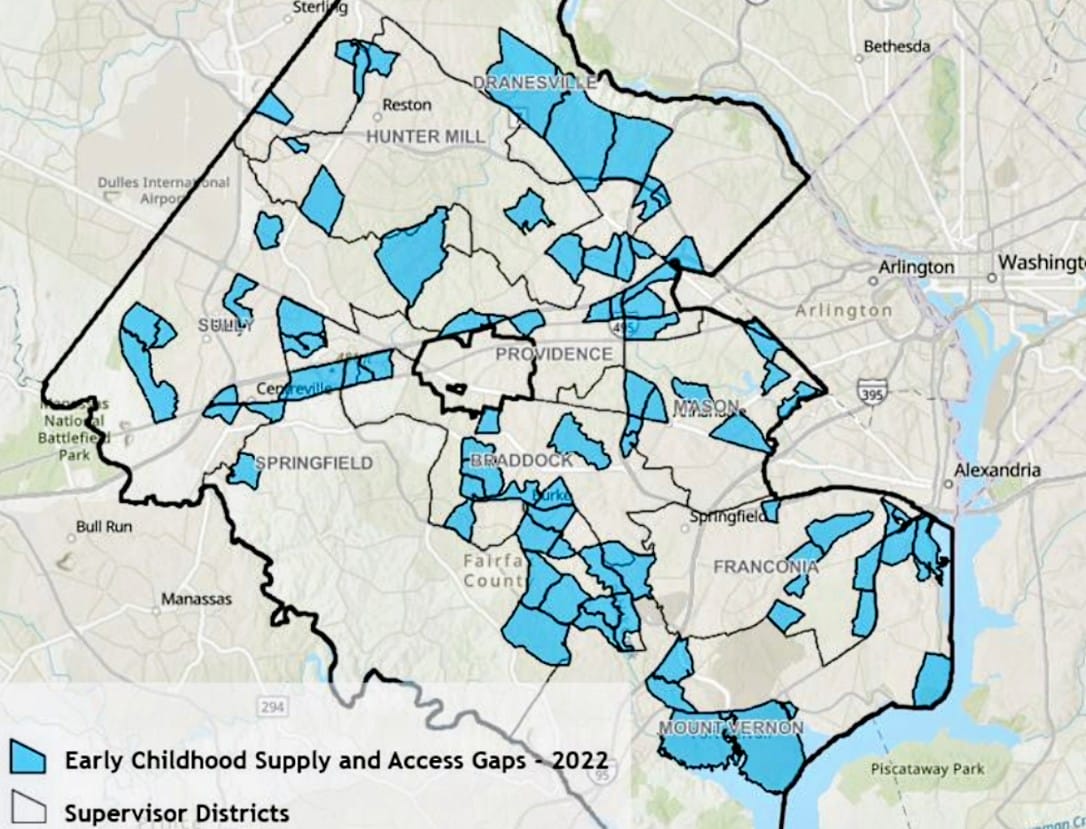
Reducing regulatory hurdles also might bring new providers into areas of the county where daycare is limited. The current required “can add time and cost for providers,” Kamp said.
Current plans call for county staff to draft a proposed amendment to the zoning ordinance by the end of summer, engage in community outreach through the end of the year and have a plan ready for a public hearing by early 2027.
Photo via Gabe Pierce/Unsplash
