

Homeowners in the City of Fairfax who want to allow elderly parents to move in, obtain rental income or perhaps even install a luxury “She Shed” can now add another dwelling on their property with less bureaucratic hassle.
The city council voted 4-2 on Tuesday (July 28) to approve code amendments permitting detached accessory dwelling units (ADUs) by right within city boundaries.
“It opens up an opportunity for some families,” Councilmember Stacey Hardy-Chandler said before voting to approve the measure. “I know of a neighbor who has an attached dwelling unit, and the prior owner of the house is living in that, and her children are living in the main house. It’s a wonderful arrangement … We’re talking about an opportunity that’s going to make a major difference for families that choose this option.”
While the city already allows attached units, the measure now allows homeowners who live at the main residence to install detached structures up to 20 feet high or the height of the main home, whichever is less. That’s about one-and-a-half stories high. Each home must also have two off-street parking spaces.
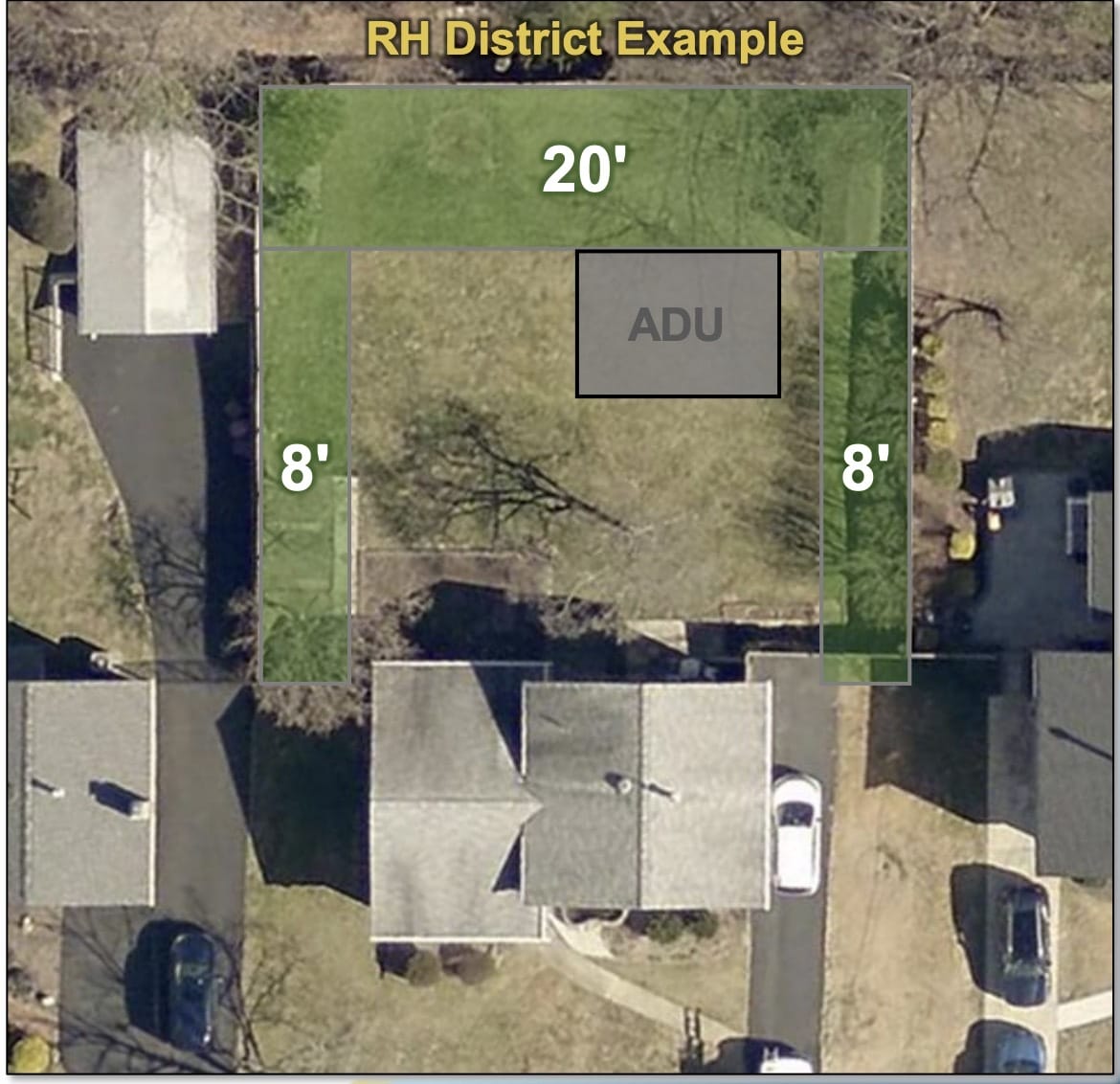
Other restrictions in place address the square footage: the ADU must be less than 50% of the main home’s size, and less than 35% of the designated floor area. The unit would need to have a setback of 8 feet from neighboring yards on the side and 20 feet from adjacent yards in the back.
Existing structures that don’t meet city standards for an accessory dwelling unit would be eligible for conversion through the Board of Zoning Appeals process.
Based on the cost of a dwelling unit and interest in neighboring localities, the city expects roughly 50 units over a period of a decade.
One council member argued that accessory dwelling units need additional scrutiny.
“Why are we so afraid of doing this by special use permit?” asked Councilmember Stacy Hall.
“To me, this is a really big decision that you are making as a homeowner that is impacting all of those around you,” she added. “I’m hopeful that there’s not going to be an extraordinary amount of these. But I don’t think it hurts to do the special use [process] … I think it gives … the neighbors around them a real opportunity to understand what’s going to be happening next to them and what they’re going to be living next to.”
Eric Forman, a senior planner with the city, said the council was largely reluctant to make people come to testify at a meeting and explain what they were doing to their home.
Councilmember Billy Bates said he would be concerned about the financial impact of adding a $600 fee to the cost of an addition, plus any costs associated with preparing the necessary documentation for a special use permit, which a homeowner would have to pay regardless of whether the unit was ultimately approved.
“I would have concerns about the burden that that fee might place on people who want to do this, and also, I would imagine that the process for that would be a lot more labor-intensive,” said Bates.
Fellow Councilmember Anthony Amos agreed that he’s “very hesitant on the special use permit, particularly because I just feel like that people have a right to their property, and they should be allowed to develop it within reason.”
A motion by Councilmember Thomas Peterson to delay the vote until September failed by a 3-3 vote. Peterson, who voted for the final measure, said his motion to delay was intended to give the public more time to digest the information presented by staff that same night.
Two residents spoke during a public hearing held before the final vote, one in favor and one against the proposal.
The council has been discussing the issue since 2024 and voted during a May work session to move the matter forward. Before the council meeting, the city planning commission also held a public hearing on June 22.
While commissioners unanimously voted to approve the measure, they cited the potential impact of detached ADUs on existing parking problems as a concern, as well as the city’s ability to enforce overcrowding and owner-occupancy requirements.
The Virginia legislature passed a law earlier this spring giving homeowners the right to build ADUs in districts zoned for single-family homes, effective July 1, 2027.
