

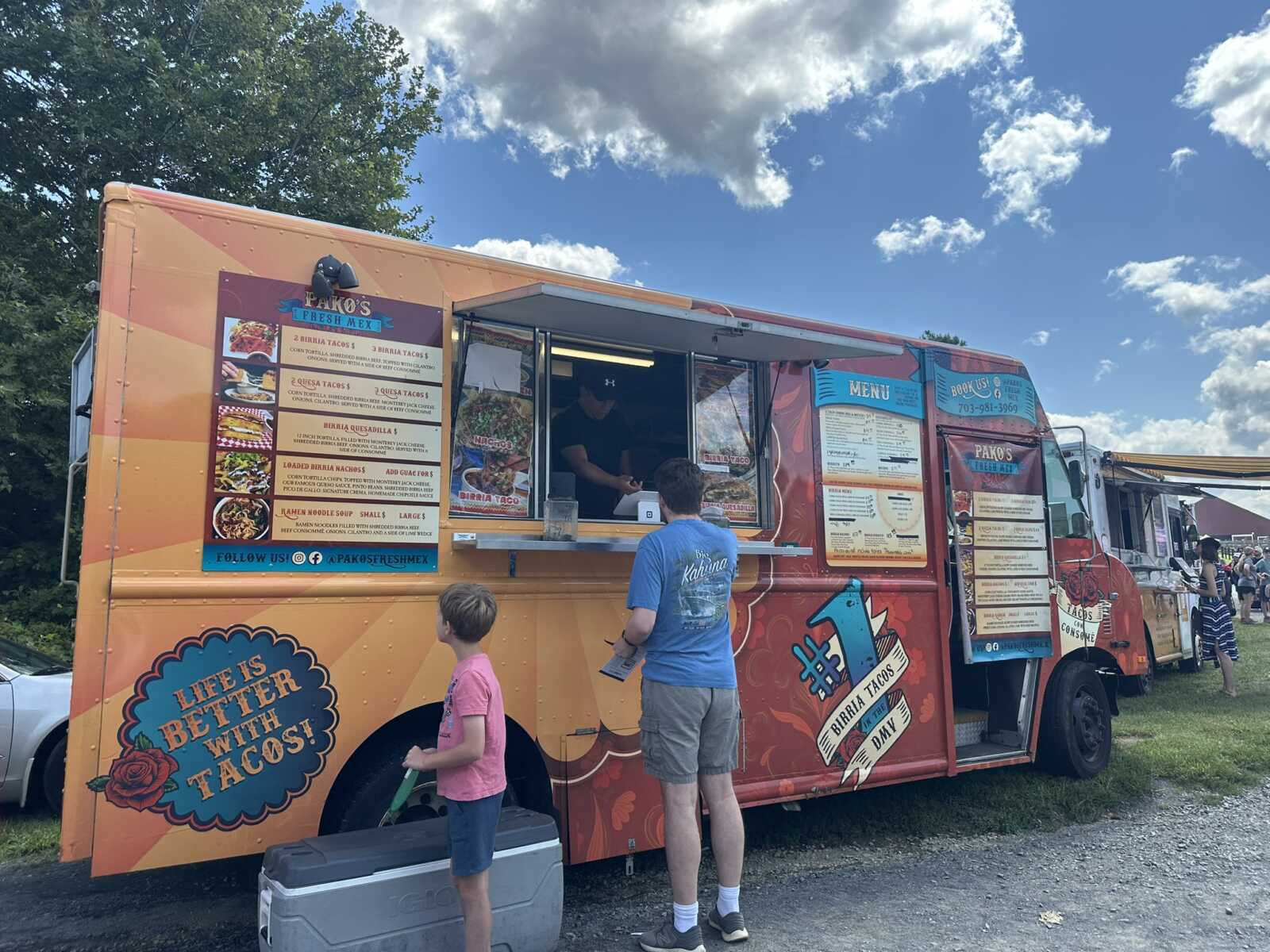
Fairfax County is proposing a revamp of its zoning requirements for food trucks, child care centers and other ancillary uses in commercial, industrial and some residential zoning districts.
As shared with the Board of Supervisors at its Land Use Policy Committee meeting on Sept. 1, the revamp would affect the regulations for associated services uses, food trucks, recycling centers, vehicle sales and specialized instruction centers.
“These seem all modest in my mind,” Board Chair Jeff McKay said. “Frankly, I think some of these are long overdue … I feel like we’re catching up to real-time demand and consumer interest.”
The first proposed zoning code change centers around what the county calls “associated services uses” in certain business districts and two residential districts. These are services intended to serve people in a specific building, like a restaurant or laundromat for an office building or a child care center in an apartment building.
The current regulations tie operating hours to the hours of the main use of the building, vaguely require the business to primarily “provide goods and services” to the building where it’s located, and lack a clear definition for an industrial or office complex. They also set limits across the board for size.
But county staff say that the businesses now advertise online to the wider community, so they are serving more than just the employees or residents in the building. Also enforcing the same operating hours is “no longer viable” from a market standpoint.
County officials are proposing to eliminate the overall “associated services” definition and make regulations more specific to potential uses, laying out what is allowed by right or with only a staff approval and what requires a permit approved by the Board of Supervisors.
The proposal would:
- Allow child care centers by right in high-density residential districts with up to 60 children. To serve more children, the center would require a special exception permit.
- Prohibit restaurants in high-density residential districts, while allowing up to 2,500 square feet by right in commercial and industrial zoning districts, as long as the business takes up no more than 10% of the building. Larger restaurants would require a special exception permit. Hours would also be limited to 6 a.m. to 10 p.m. The same rules would apply to carry-out only restaurants.
- Allow business services in industrial districts with a 2,500-square-foot size cap and hours of operation from 6 a.m. to 10 p.m.
- Cap garment cleaning establishments at 2,500 square feet
- Allow convenience stores in commercial zones at a maximum of 2,500 square feet. It would require a permit to have a store in an industrial zone.
The county is also considering making specific regulations around size for specialized instruction centers — facilities primarily devoted to vocational, professional, musical or performing arts. Examples are businesses that provide tutoring, music lessons, art classes and ballet.
The current regulations allow the centers by right in all commercial districts and four industrial zones no matter the size. They are allowed with special exception permits in one industrial district and all residential districts.
The proposed regulations would create two instruction center categories, differentiated by whether the site is smaller or larger than 6,000 square feet.
Small facilities would be allowed in most residential districts with a special-use permit and allowed by-right in all commercial districts and all but one industrial zone. Large facilities would be prohibited in residential zones, permitted by-right in six out of eight commercial zones and require a special-use permit in five industrial zones.
When it comes to food trucks, the county is considering making changes to the amount of time they’re allowed to operate in specific districts. Currently, the trucks are capped at four hours a day and 32 days per year. Staff propose keeping the limit at four hours in residential areas, but expanding it to six hours in commercial and industrial districts and non-residential areas in large residential districts.
“It’s great to see this here,” said Mason District Supervisor Andres Jimenez. “I think that this gives food truck owners and future food truck owners an ability to work an entire day.”
Another proposed change would allow outdoor storage at recycling centers in one specific industrial zone (the I-5 District) where it is currently prohibited.
Finally, the county is proposing changing the prohibition on vehicle sales in two commercial and three industrial districts to a requirement for a special exception permit.
The Fairfax County Planning Commission’s Land Use Process Review Committee is scheduled to discuss the proposal on Oct. 8. Public outreach meetings are expected across the coming fall and winter, with public hearings anticipated for early 2027.
