


Fairfax County officials plan to launch a 90-day pilot program in January to test automated technology that will target drivers of excessively loud vehicles.
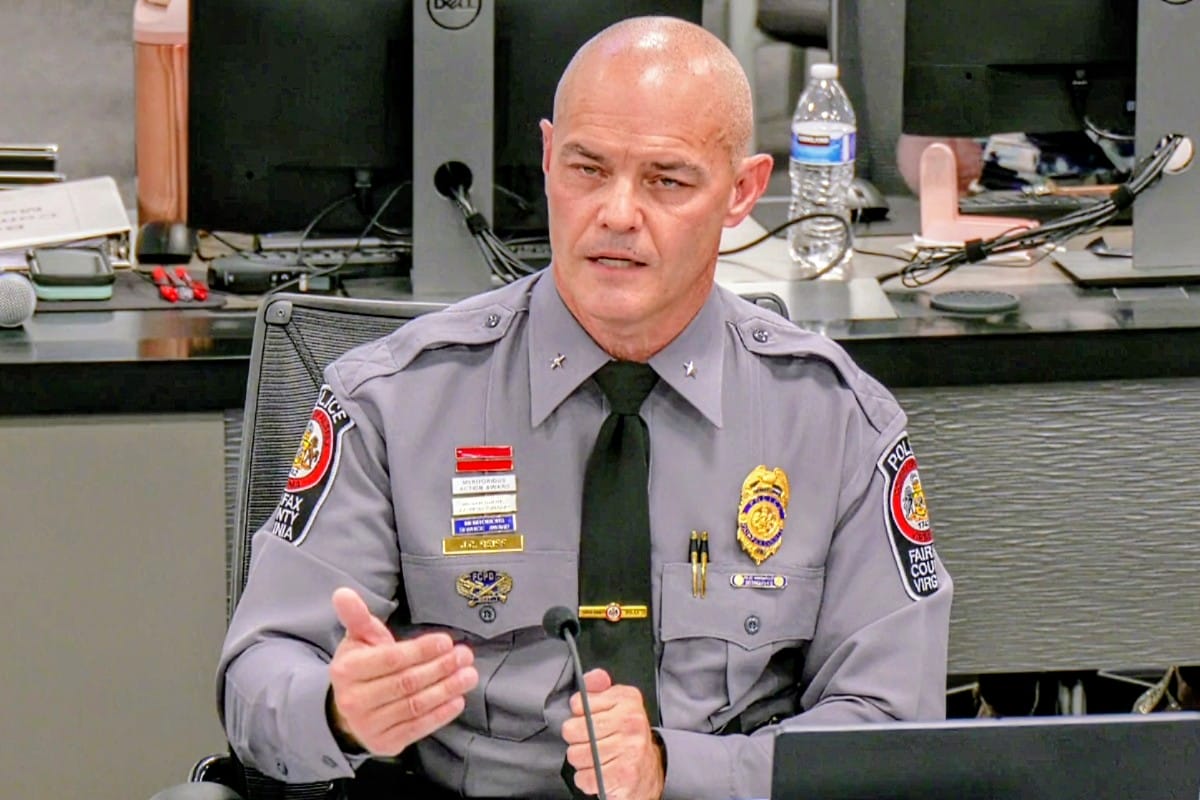
Fairfax County Police Department officials outlined plans for the program yesterday (Tuesday) to members of the Board of Supervisors, which responded generally favorably.
Although only two stretches of roadway will be monitored during the initial three-month trial period, “this is the first step” toward a larger rollout of noise abatement efforts, said Franconia District Supervisor Rodney Lusk, who chairs the Board’s Safety and Security Committee.
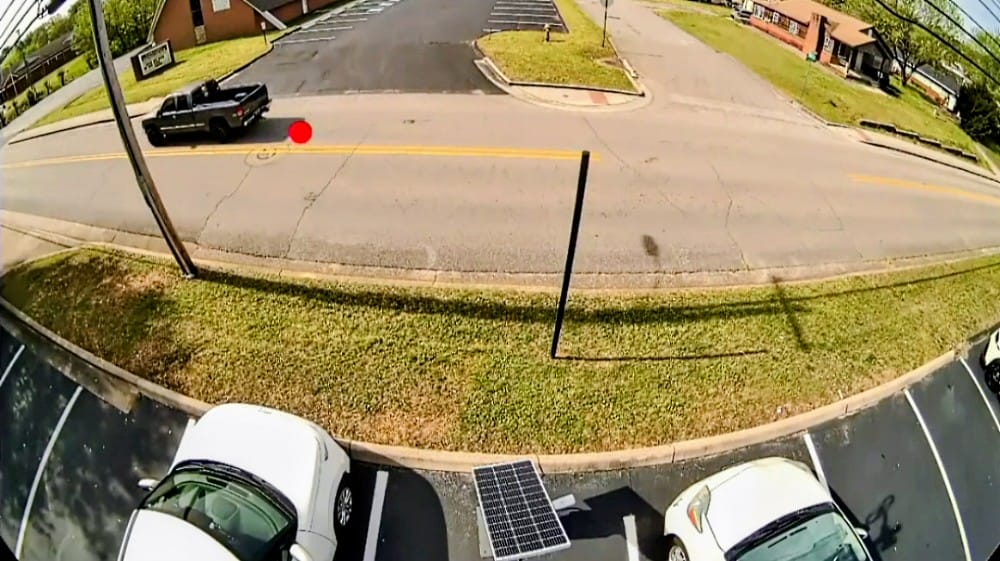
Using powers delegated to certain localities, including those in Northern Virginia, by the General Assembly, Fairfax County police plan to install electronic noise-monitoring equipment at two locations: Westpark Drive near Jones Branch Drive in Tysons and Richmond Highway near Lockheed Blvd in Hybla Valley.
Fairfax officials are contracting with Tennessee-based Blue Line Solutions for the 90-day program, which will begin with 30 days of warning notices followed by 60 days of fines.
Supervisor Dalia Palchick (D-Providence), whose district includes the part of Tysons where equipment will be located, said she appreciated moving forward on the noise-monitoring effort.
“My community will be happy,” Palchik said. “In my office, it’s the number-one public safety complaint I get.”
After the 30-day warning period, citations of $100 will be issued for vehicles determined to be louder than 95 decibels. They can be challenged in Fairfax County General District Court.
The actual start date will depend on a number of factors, some of which are out of the county government’s control. The program needs to be reviewed by the Virginia Department of Transportation, and power sources for the monitoring equipment must be secured from Dominion Energy.
The equipment to be installed by Blue Line Solutions incorporates four microphones to identify the location of noise, a fifth microphone to measure sound pressure from identified vehicles, and two high-definition cameras providing independent verification through video and still shots.
Signage saying “EXHAUST NOISE ELECTRONICALLY ENFORCED” will be placed no closer than 1,000 feet from the monitoring equipment to alert drivers. Blue Line Solutions will be responsible for an initial review of the audio and video evidence, with the FCPD providing a secondary review before issuing any warnings or citations.
The evidence will be retained no longer than 60 days after a citation is paid or appeals play out, and can’t be used for any purpose beyond noise monitoring, police officials said.
Fairfax police already have the power to write tickets for vehicles exceeding the 95-decibel threshold, issuing nearly 1,200 citations last year, but enforcing the noise restriction is challenging, given staffing constraints, local leaders have said.
Legislation approved in Richmond earlier this year provides a two-year window for localities in Northern Virginia and several other corridors of the commonwealth to use the monitoring equipment to augment officer citations.
State legislators then will determine whether to extend the pilot program, kill it or give electronic-monitoring authority to localities on a permanent basis.
Fairfax County officials aggressively pushed for the legislation in both 2025 and 2026. Del. Rip Sullivan (D-6) successfully shepherded a bill through the General Assembly in 2025, but saw it vetoed by then-Gov. Glenn Youngkin (R).
Trying again in 2026, Sullivan again saw the measure adopted largely on a party-line vote in the legislature. It found a more receptive audience in the new governor, Democrat Abigail Spanberger, who signed it.
After gaining data from the 90-day study, Fairfax officials anticipate rolling out the monitoring initiative countywide throughout 2027.
“My hope is we’re able to expand this,” Board Chair Jeff McKay said at the Sept. 22 meeting.
The Board’s lone Republican, Springfield District’s Pat Herrity, said he and his colleagues would be thinking about expansion opportunities within their districts.
“We’ve all got places [the equipment] can be,” Herrity said.
Monitoring cameras will only be triggered when sensors are alerted to excessive speed. A number of supervisors wanted clarification on how the data would be secured and steps being taken to prevent information from being accessed or released without authorization.
County Executive Bryan Hill said that information would be clarified and made available before the pilot program starts.
“We’ll get that information and share it with the Board,” he said.
Privacy and misuse concerns that have recently gained traction locally and nationally led the Board of Supervisors to put a hold on expanding the FCPD’s use of automated license plate readers from Flock Safety last week.
For its work on the pilot program, Blue Line Solutions will receive $9,500, plus 15% of all fines that are collected during the tryout period. County officials are preparing a request for proposals from firms that wish to be part of any future expansion that will come after the initial three-month pilot period is over.
As Fairfax County moves forward with testing automated vehicle noise monitoring, at least one of its neighbors will be watching its program closely.
Arlington officials say they do not plan on moving forward for now. In response to a FFXnow inquiry, an Arlington County spokesman gave this reasoning:
“Given that this would require some notable level of initial investment and that the authority to administer such a project technically sunsets in 2028, unless extended, it is difficult to justify our participation this year.
“However, there is interest in considering the program in the future. The county will keep discussing this internally and monitoring other jurisdictions’ experiences to inform a future decision on whether to pursue participation.”
In addition to monitoring equipment affixed to poles, Fairfax officials aim to ultimately create mobile units that can be moved from place to place across the county.
Lusk said the efforts would provide a tool toward addressing a concern voiced by many in the community.
“This is one solution,” he said. “Obviously, it’s not the only one.”
