

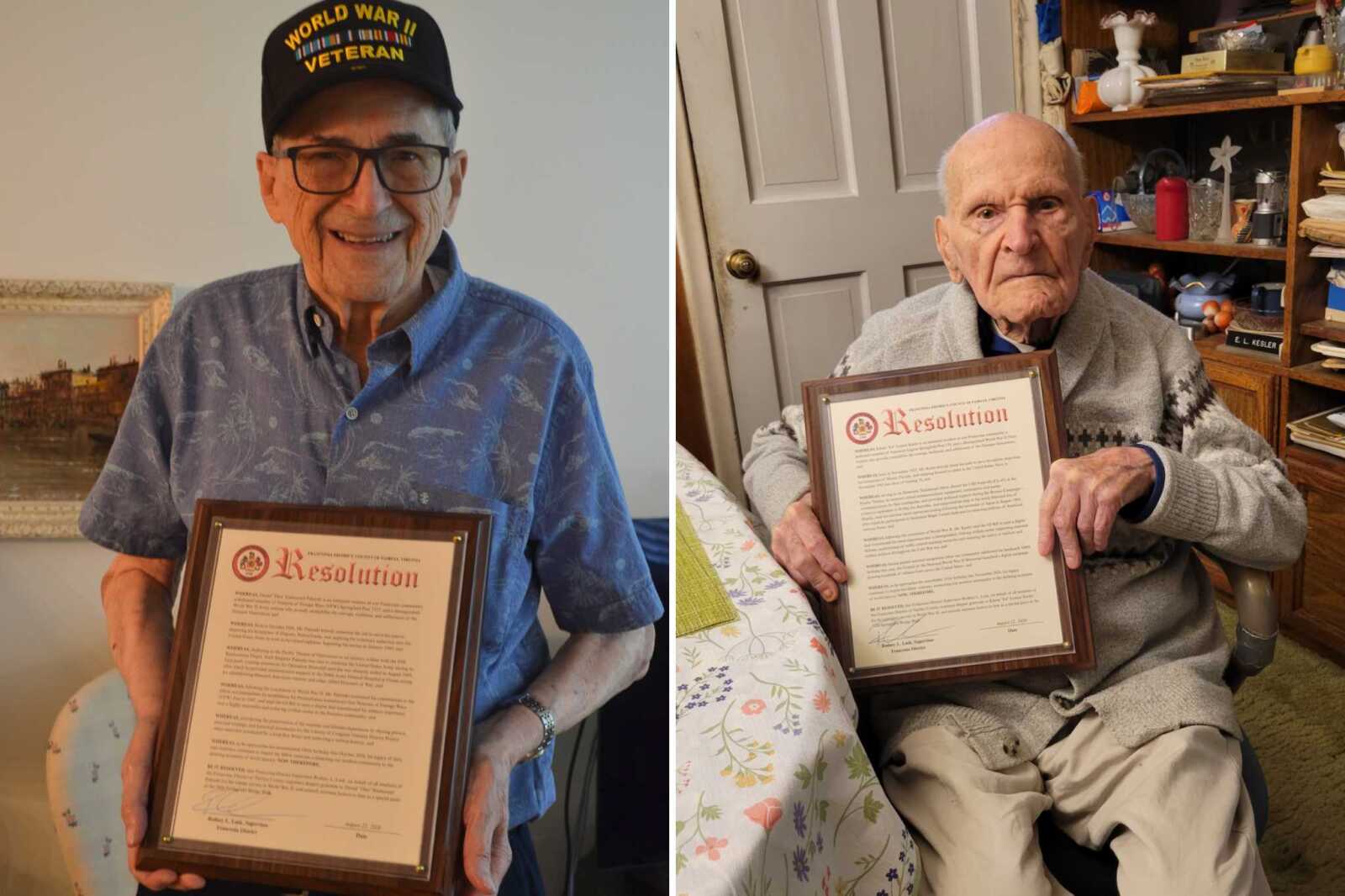
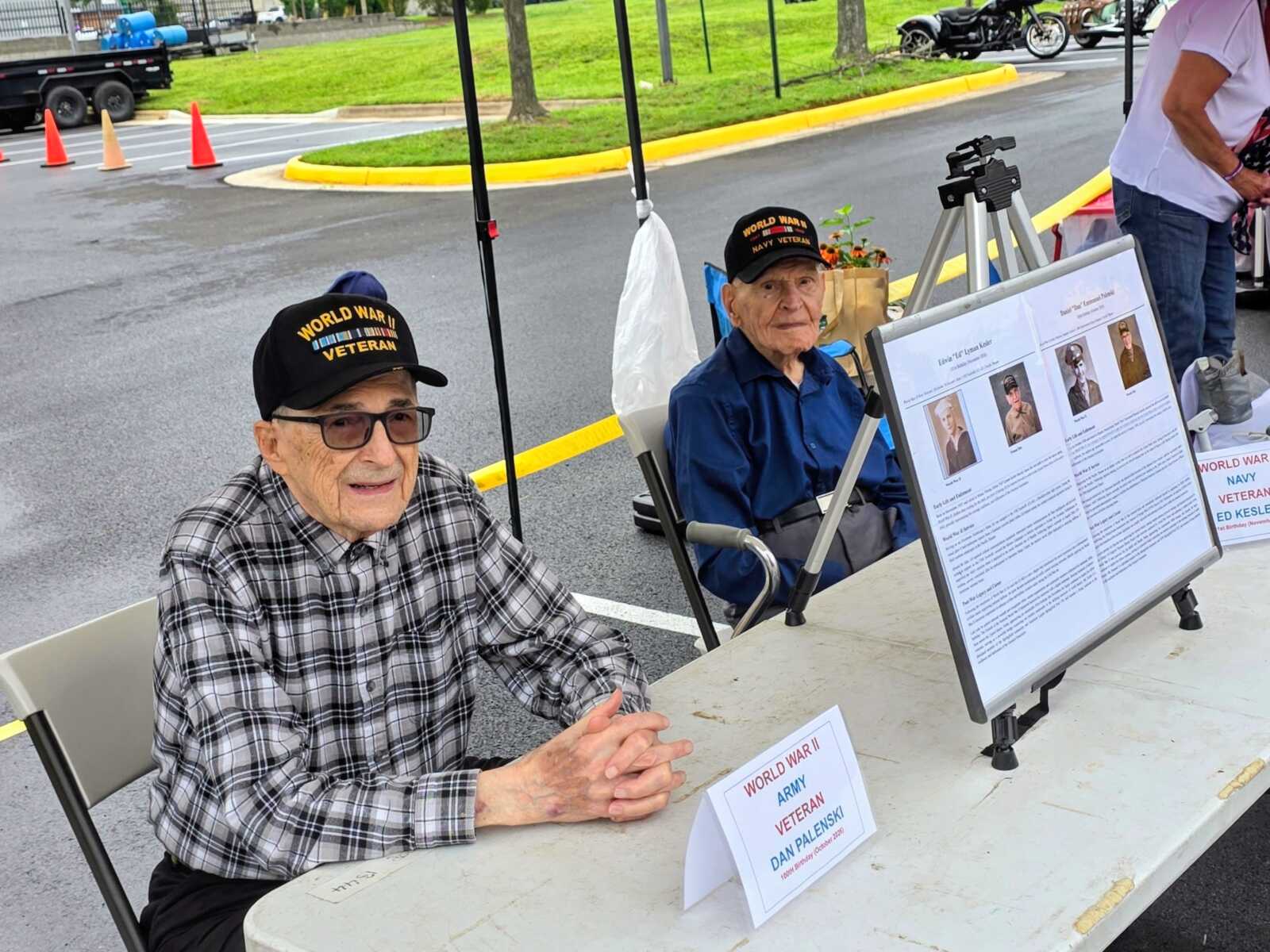
Ed Kesler and Dan Palenski may have been born a thousand miles apart, but they have a few things in common: Both are celebrating birthdays this fall, and both were recently honored by Fairfax County for their service in World War II.
Kesler, a Rose Hill resident, is turning 101 on Nov. 26, while Palenski, a resident of the Greenspring Senior Living Community in West Springfield, is turning 100 on Oct. 17.
In recognition of their service, the Fairfax County Board of Supervisors recently issued proclamations celebrating their birthdays, during what happens to be the 85th anniversary year of the U.S. joining the war effort.
Life before service
Born in Florida, the son of “a pioneer in aviation,” Kesler insists his “dad’s story is more interesting than mine.”
His father served in the “Great White Fleet” that made a 14-month-long voyage throughout the world as a show of American naval power and then enlisted again after World War I as a machinist mate supporting the Navy’s burgeoning aviation efforts.
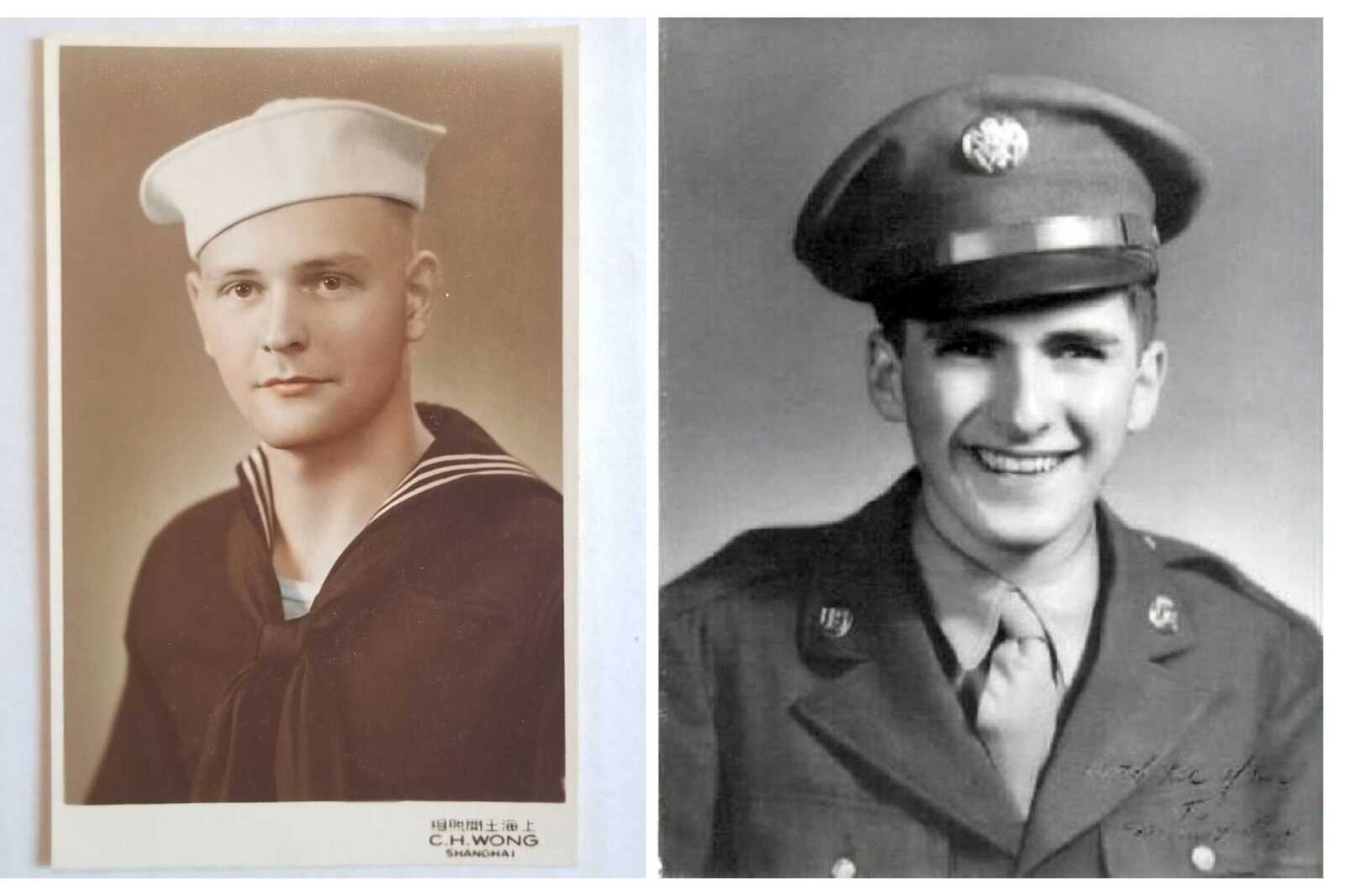
The family moved around, and after attending high school in New Hampshire, Kesler enlisted in the Navy in November 1943, four days before his 18th birthday. Not many of his peers had a high school degree, so Kesler was an attractive candidate for a new training program for radio technicians.
“Being a … high school graduate, I stood out like a sore thumb,” Kesler recalled during a recent interview. “And they said, ‘Aha! Here’s a likely customer.'”
Likewise, Palenski, who grew up in a coal mining town in northeastern Pennsylvania, enlisted as soon as he turned 18.
When Palenski was growing up, the Depression had hit the family and the surrounding community of mostly Polish immigrants and their families hard.
“The coal mines, where my father worked, were shut down,” Palenski recalled. “So, just about everybody was unemployed and became very poor.”
“We were a family of five children and seven [people total], and at that point in the country there were no social safety nets,” he added. “So, my family’s little bitty savings they had were already gone … There were days when we had nothing to eat. And I still remember hearing my mother crying during the night to my father [that] she doesn’t have any food to put on the table for the next day for any of us.”
Once New Deal-era programs started kicking in, things started to improve a little. Palenski says his family still “had no luxuries, but we had the necessities.”
Together with a group of tight-knit friends who grew up on the same block, Palenski would explore the woods and small lakes in the area. The community worked hard to support the war effort through initiatives like drives for war bonds and purchases of war stamps.
“When Pearl Harbor came, of course everybody was shocked by the event,” Palenski said. “But at the same time, it inspired real strong patriotism.”
Life in the military
Before Kesler could depart for service on the USS Nashville, he had to go through eight weeks of boot camp, followed by “pre-radio” training which involved skills like mathematics.
He made a friend who was smart, but unprepared for the program. Kesler spent several Saturdays tutoring him.
“He got assigned to submarine duty,” Kesler said, noting that his friend’s height made that an unusual choice. “… Submarines are notorious for needing short people.”
After getting out of the service, Kesler tried to reconnect: “I called his home phone, and his mother told me that he’d been killed.”
After completing more training to become a third-class radio technician, Kesler was sent to a “holding unit” in California, where sailors waited until both the crew and the USS Nashville — which was being repaired after taking damage from a kamikaze attack — were ready.
On board the light cruiser during what would turn out to be its final wartime campaigns in the Pacific, Kesler spent his days repairing communications equipment, intercepting enemy communications for intelligence, and providing other technical support.
“We had one radio on [the] transmitter and receiver, that they used.” Kesler recalled. “They called it a TBS [for] talk between ships … It was sort of an oddball frequency that on shore, was used by the taxicabs. And ours had been using it for talking between ships for many years, and they just kept using it, and the radios were sort of ancient.”
“You could talk to a ship several hundred miles away, or you might not even be able to talk to the ship,” he added.
Amid the day-to-day work, Kesler was part of one historic campaign: the Nashville provided fire support for the major Australian offensive operations landing at Brunei Bay, Borneo.
During the last days of World War II, Palenski was also serving in the Pacific. He had joined the Army in January 1945 and was assigned as a rifleman in the infantry.
After receiving general absolution — essentially, a ritual that forgives sins for a large group of people in place of individual confessions — from a Catholic chaplain, Palenski boarded the USS Westmoreland. He joined around 2,500 troops traveling to Oahu, Hawaii, and found that he had “good sea legs.”
At the camp on Oahu, tents were set up in the middle of a pineapple field. There, Palenski and the other troops received rifles and combat gear, and began training for the invasion of Japan. A stationary mock transport ship was placed nearby.
“We wore full combat gear and equipment, and climbed down rope ladders that were placed on the side of the ship into small beach landing craft, which were swirling up and down in the ocean below,” he recalled in a written account for his family. “It was tricky to say the least.”
Palenski continued:
“Some guys did get seriously hurt when they had poor timing and let go of the rope ladder too soon, i.e., they let go of the rope ladder while the landing craft was going down instead of up. Timing was essential. There were no seats on the landing boats. After each boat was filled with standing infantrymen, the boats headed for the beach. The front of the landing boat had a big ramp that opened and we had to run off the boat and hit the beach.”
Palenski departed from Pearl Harbor aboard a Navy landing ship tank, and spent 18 days at sea before arriving in Saipan, in the Mariana Islands, on July 27, 1945.
Less than two weeks later, the United States dropped an atomic bomb on Hiroshima, Japan. By Aug. 15, 1945, Japan had surrendered — and Palenski could turn his thoughts from an invasion and toward going home.
Kesler was part of the effort, called Operation Magic Carpet, to realize that vision of bringing millions of American military service members home.
After the war
After World War II, Kesler used the GI Bill to earn a degree and launched a civilian career supporting national defense. He worked to modernize air traffic control networks.
Palenski returned home, found a job first with the government and then in financial management, including with Washington-area airports and the Navy.
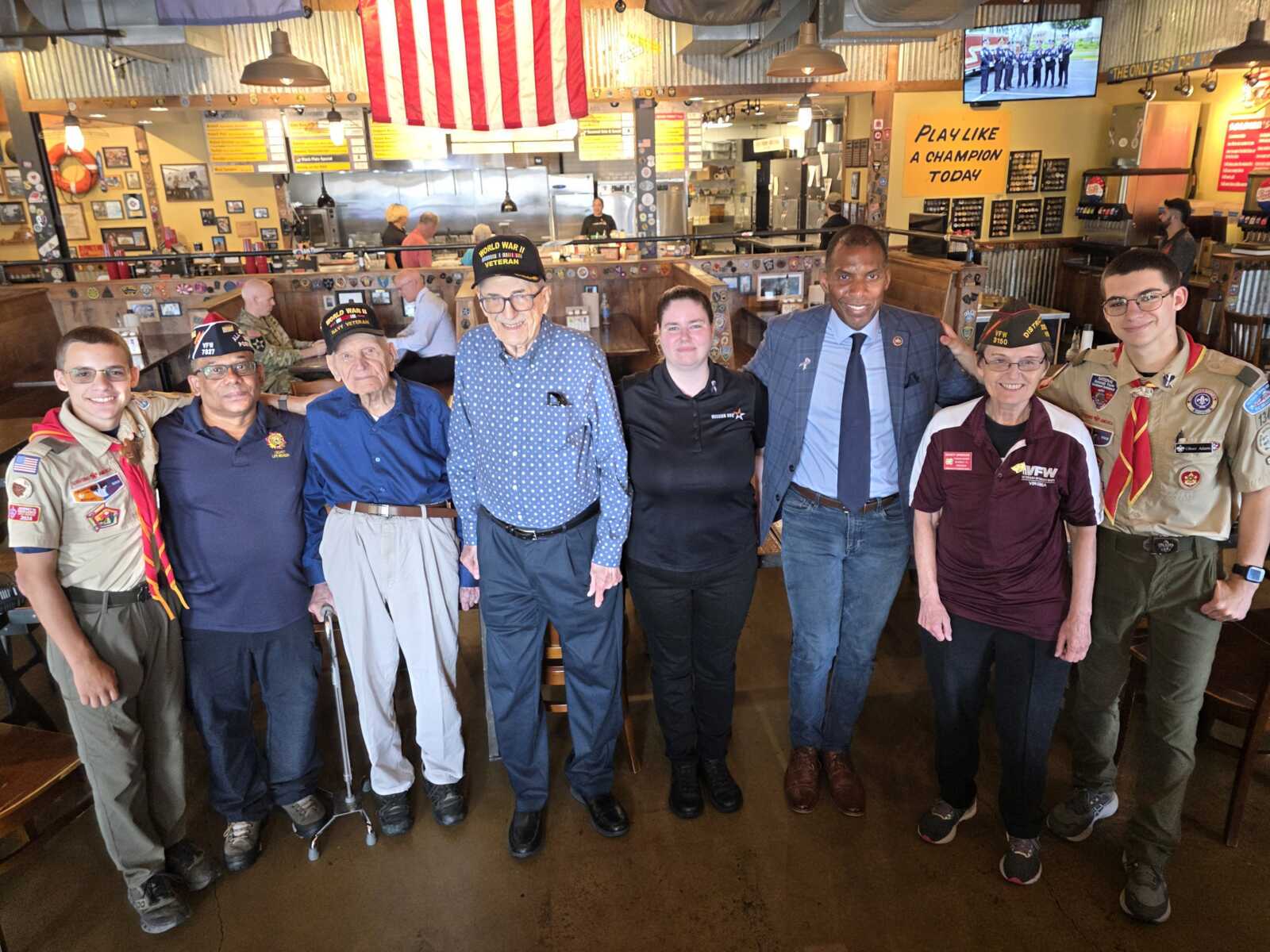
Over the decades, both men have lived full lives, getting married (twice for Palenski), raising families, and sharing their experiences through organizations such as the Veterans of Foreign Wars and Scouts of America.
“Before it is all said and done,” Palenski wrote, “I want to say that I am extremely proud that I was able to serve my country in the military during wartime.”
