
As the No Casino Coalition embarks on its second year of lobbying, it has learned some lessons in political realities.
Among them: Be careful when accepting help from anonymous sources.


As the No Casino Coalition embarks on its second year of lobbying, it has learned some lessons in political realities.
Among them: Be careful when accepting help from anonymous sources.

Advocates for a referendum to allow a casino in Tysons have a formidable ally in the General Assembly this year.
State Senate Majority Leader Scott Surovell (D-34) is carrying the 2025 bill to add Fairfax County to Virginia’s short list of casino-eligible localities, taking over from Sen. Dave Marsden (D-35), who introduced legislation in 2023 and 2024.

Almost two years after talks of a casino in Fairfax County’s Silver Line corridor emerged, prospective developer Comstock Companies has publicly commented for the first time on its plan for a gaming and entertainment hub in Tysons.
The proposal represents “an opportunity to bring an entertainment anchor” to Tysons, Comstock Executive Vice President for Development John Harrison told community members Tuesday (Jan. 7) at an online forum hosted by the Fairfax County NAACP.

A proposed casino in Tysons and calls for the state to provide more money for education and social services dominated a 3.5-hour public hearing hosted Saturday (Jan. 4) by Fairfax County’s delegation to the Virginia General Assembly.
About 70 people, speaking for themselves or on behalf of organizations, each had three minutes to make their case for priorities in the 2025 legislative session, which convenes tomorrow (Wednesday).
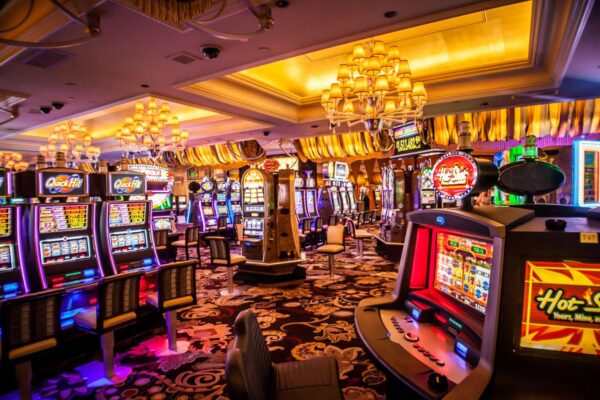
Fairfax County elected officials intend to take the same position on a proposed Tysons casino in 2025 that they held during the 2024 legislative session.
While some individual members have expressed explicit opposition to the possibility, the Fairfax County Board of Supervisors as a whole has hedged its bets: it has concerns but isn’t averse to getting the power from Richmond to conduct a referendum on the matter.

With just seven weeks before the start of the 2025 General Assembly session, supporters and opponents of a proposed casino operation in Tysons are dusting off their arguments and ramping up their efforts.
In the latest round in the fight, advocates on both sides of the issue used a public hearing on the county’s draft 2025 legislative priorities and the public comment period at the Fairfax County Board of Supervisors meeting on Tuesday (Nov. 19) to focus attention on the matter.

A battle is brewing once again over the prospect of a casino in Fairfax County.
As opponents continue to organize, including under a No Fairfax Casino Coalition that mostly consists of homeowners’ and citizen associations, several labor unions have now come out in support of the casino and entertainment district envisioned in Tysons by the developer Comstock Companies.

Though the Virginia General Assembly won’t convene for another six months, Reston Association is starting to lay the groundwork for a major advocacy push.
The homeowners’ association recently issued a request for proposals seeking research and communications firms that could assist it in lobbying state lawmakers, particularly regarding the expected return of legislation to make Fairfax County eligible for a casino.

The deal to bring the Washington Capitals and Wizards to Alexandria’s Potomac Yard is officially dead, and the developer says suggestions that an arena could be built in Tysons instead were the final nail in the coffin.
Alexandria City officials revealed yesterday (Wednesday) that they had ended negotiations with developer JBG Smith, Wizards and Capitals owner Monumental Sports & Entertainment, and other stakeholders for a stadium in the proposed Potomac Yard Entertainment District. About an hour later, Monumental owner Ted Leonsis and D.C. Mayor Muriel Bowser announced that the two professional sports teams will stay at Capital One Arena in Chinatown after all.

A McLean resident has pleaded guilty to spending federal COVID-19 relief funds intended for his home business on personal expenses, including gambling and real estate payments.
Mehdi Pazouki, 65, pleaded guilty in federal court on Friday (Feb. 23) to defrauding the Small Business Administration of approximately $455,000 in loans created to help businesses survive during the pandemic, according to the U.S. Attorney’s Office for Eastern District of Virginia.