

Fairfax County elected officials intend to take the same position on a proposed Tysons casino in 2025 that they held during the 2024 legislative session.
While some individual members have expressed explicit opposition to the possibility, the Fairfax County Board of Supervisors as a whole has hedged its bets: it has concerns but isn’t averse to getting the power from Richmond to conduct a referendum on the matter.
“Fairfax County has not historically opposed legislation that provides local governments with a new option or authority, even if we do not intend to exercise that new option or authority,” Board of Supervisors Chairman Jeff McKay wrote to Virginia General Assembly leaders in January.
At a Tuesday (Dec. 10) meeting with the 22 members of the county’s legislative delegation, McKay said he and the rest of the board stand by the sentiments expressed in the January correspondence.
“Our position remains absolutely the same as was mentioned in that letter,” McKay said during the 90-minute session.
McKay was the only person to publicly comment on the contentious casino issue at the Dec. 10 forum.
After the Virginia Senate deferred a bill to make Fairfax County eligible for a casino this year, both backers and opponents are gearing up for another battle during the General Assembly’s 2025 legislative session that opens Jan. 8.
The legislation introduced by Sen. Dave Marsden (D-35) in the 2024 General Assembly session would’ve given Fairfax County officials the ability, if they chose, to hold a voter referendum on whether to authorize a casino.
In his January letter, McKay noted that Fairfax County, unlike other jurisdictions across the commonwealth that have held casino referendums, “did not seek such authority and has not been substantively involved in the development of the casino concept.”
“[S]ince a community-engagement process was not conducted prior to the bill being introduced, as it was in other jurisdictions, we believe the bill in its current form is likely to result in strong community opposition,” McKay wrote.
Local leaders have also been skeptical of supporters’ arguments that a casino could buoy the county’s flagging commercial tax base, noting that provisions in state law would funnel more than 70% of tax revenue from a casino to the state rather than local coffers.
Marsden’s 2024 measure was killed off in committee on Nov. 19, a vote that he characterized as a formality. The senator has stated he plans to reintroduce the bill, or similar legislation, to make Fairfax County eligible for a casino, but he didn’t speak to the matter at the Dec. 10 work session.
As of press time, Marsden hasn’t introduced any new legislation for next year, and he told FFXnow that he had no updates yet on a potential casino bill. His 2024 legislation would have required that any casino in Fairfax County be:
- Located within one-quarter of a mile of an existing station on Metro’s Silver Line
- Be part of a coordinated mixed-use project development
- Be outside the flight path of Washington Dulles International Airport
- Be outside the Capital Beltway, and
- Be within two miles of a “major shopping destination” containing at least 1.5 million square feet of interior space
While those parameters allow for several options, Marsden previously said the developer Comstock was eyeing 8546 Leesburg Pike, a 2.75-acre parcel in Tysons formerly occupied by an auto dealership, for the casino development, which is being envisioned as an entertainment district with a performing arts venue and a hotel.
However, a person familiar with the project told FFXnow in October that a specific site hasn’t been determined yet. Comstock reportedly was originally circling the Wiehle-Reston East Metro station area as a potential location but backed off that idea earlier this year.
Virginia currently has five localities eligible for a casino, with the City of Petersburg joining the list this year. Petersburg voters approved a referendum on Nov. 5 permitting a $1.4 billion casino project on a 100-acre tract adjacent to I-95, making it the fifth approved by voters in Virginia localities since 2020.
The developer of the Petersburg project says the facility will support about 1,500 jobs at an average annual salary of $70,000 when it opens in early 2026. The city’s most recently reported median household income in 2022 was $46,930.
Richmond was previously eligible for a casino, but state lawmakers agreed to drop it from the list after voters twice rejected referendums for a project in the city’s Southside.
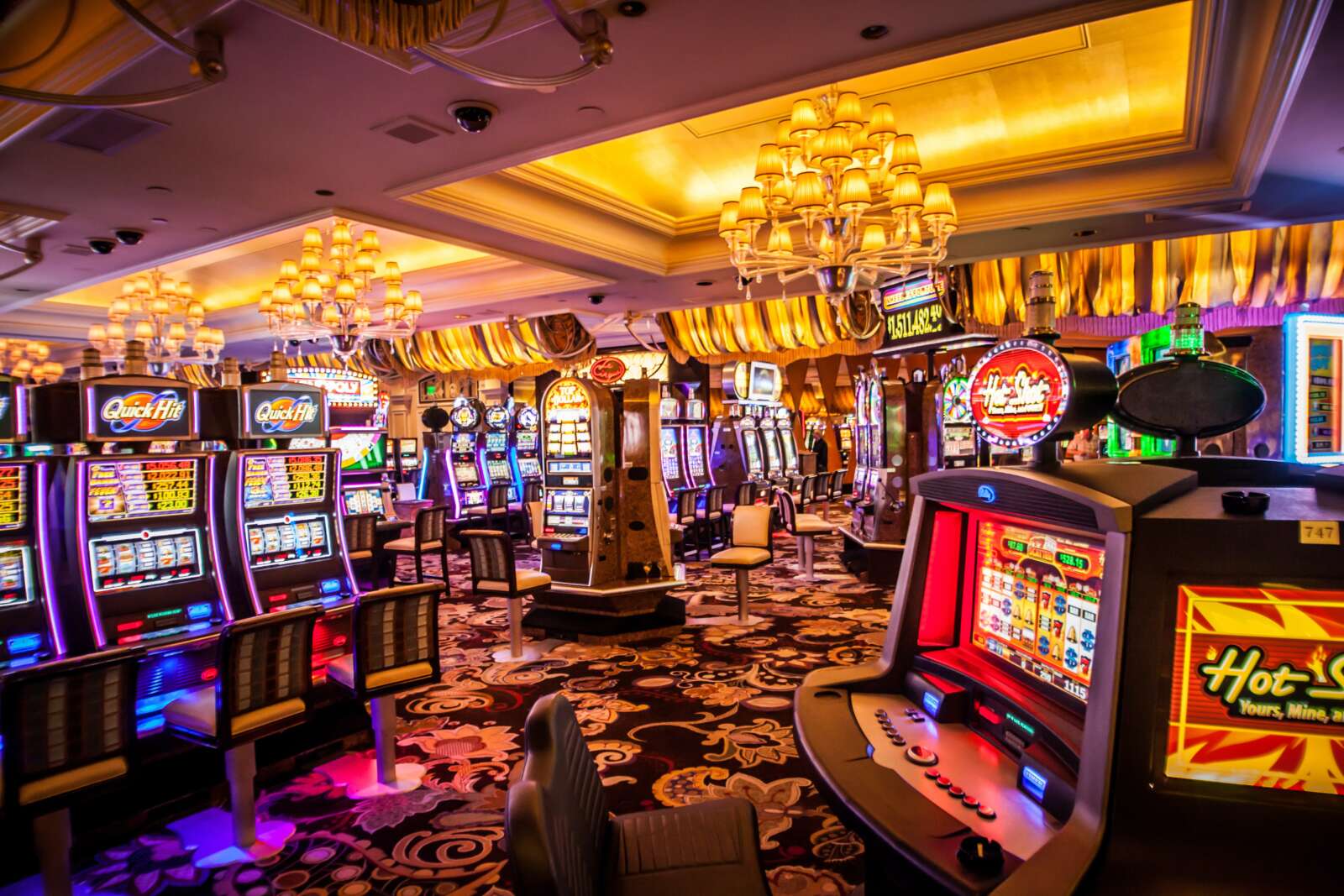
Photo via Kvnga/Unsplash
