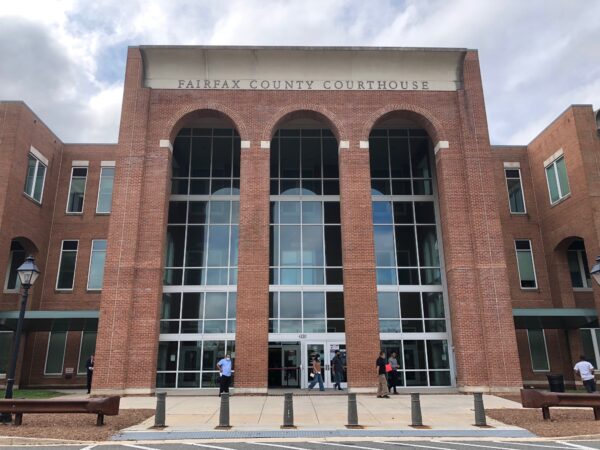
Sen. Scott Surovell presents his bill to make Fairfax County eligible for a casino to a House Appropriations subcommittee in February 2025 (via Virginia General Assembly)
Lawmakers deciding on a controversial bill to develop a casino and entertainment complex in Tysons Corner tabled a decision Wednesday after House leadership moved the bill between House committees for consideration.
Senate Majority Leader Scott Surovell’s Senate Bill 982 would have added Fairfax County to the list of Virginia localities eligible to develop a casino that backers say would bring jobs and revenue for the county and commonwealth.
A rainy evening rush-hour on Maple Avenue in Vienna (staff photo by Angela Woolsey)
FCPS Reopens After Snow Day — After earlier snow, warmer temperatures yesterday (Wednesday) “have been good for area road conditions and for the clearing of sidewalks. With that in mind, all Fairfax County public schools and offices will open on time tomorrow, Thursday, February 13, 2025. We look forward to seeing everyone at school.” [FCPS]
Metrobus Resumes Regular Service — “Metro plans to resume normal Metrobus service starting at 4 a.m. on Thursday, Feb. 13. All 193 routes will operate on a regular schedule, reflecting improvements in road conditions across the region. In addition, Metrorail and MetroAccess will be running normal service.” [WMATA]
Bodies of DCA Crash Victims Illegally Filmed — “An airport dispatcher admitted to illegally recording surveillance footage showing deceased victims after last month’s fatal midair crash, police say.” The Maryland man allegedly took “photos and videos of crash victims being transferred from a first-responder boat to a staging area at Reagan National Airport,” according to a criminal complaint. [ARLnow]
Reston Man Convicted in Sex Crimes Cases — “A Reston man has been sentenced to at least seven years in prison for multiple sex crimes in Arlington. Matthew Coble’s sentencing, handed down Friday by Circuit Court Judge Daniel S. Fiore II, follows his convictions for aggravated sexual battery and indecent liberties with a minor.” [ARLnow]
Cyberattack on Va. Attorney General’s Office — “A ‘sophisticated cyberattack’ struck the offices of Virginia Attorney General Jason S. Miyares on Wednesday, forcing the agency to shut down computer systems and resort to paper court filings as Virginia State Police and the FBI investigate.” [Washington Post]
Taste of Annandale Planning to Begin — “The community is invited to a meeting on March 5 to help plan the next Taste of Annandale. The meeting will be at 6 p.m. at the Mason Government Center. The 2025 Taste of Annandale is scheduled for Sept. 20 at the Eileen Garnett Civic Space at 7200 Columbia Pike.” [Annandale Today]
Tysons Couple Celebrates 65th Anniversary — “Like something out of a romance novel, Ed, 80, and Helen Okunak, 81, have been going strong since 1960. The Tysons residents first dated as juniors at Lyndhurst High School in New Jersey.” [Northern Virginia Magazine]
It’s Thursday — Expect rain to subside before 10am, followed by increasingly sunny skies and a high of 52. A south wind will shift northwest at 6-13 mph and gusts up to 23 mph. 60% chance of precipitation. Thursday night will be mostly clear with lows around 26. [NWS]
State Sen. Adam Ebbin presents Senate Bill 876 to amend Virginia FOIA rules before the House open goverment subcommittee (via Virginia General Assembly)
Concerns by Fairfax County officials helped convince state lawmakers to take a deeper look at proposed changes to Virginia’s Freedom of Information Act (FOIA) rules intended to make decision-making at the local-government level more transparent.
The measure patroned by state Sen. Adam Ebbin (D-39) had sailed through the Virginia General Assembly’s upper chamber unanimously on Jan. 31.
Center Street in Vienna after the Feb. 11, 2025 snowstorm (photo by Amy Woolsey)
Based on initial measurements, yesterday’s snowstorm didn’t quite measure up to the one that passed through in January, but combined, they’ve given the D.C. region its snowiest winter of the 2020s.
In Fairfax County, snowfall amounts ranged from 5.2 inches in the Town of Herndon, as of 7 a.m., to 8.5 inches spotted in Hybla Valley at 2:30 a.m., according to preliminary estimates reported by the National Weather Service at 10:28 a.m. today (Wednesday).
The Trump administration’s sweeping efforts to whittle down the federal workforce have found favor with at least one Fairfax County elected official.
Springfield District Supervisor Pat Herrity, the only Republican on the county board, revealed earlier this week that he “fully” agrees that the federal government’s “size and scope” needs to be reduced, claiming that there’s a “broad consensus across America” in support of a downsizing.
Comstock is proposing to build a casino-anchored entertainment district on a vacant lot near the Adaire Apartments and Spring Hill Metro Station in Tysons (staff photo by Angela Woolsey)
Discussion of legislation permitting a referendum on a Tysons casino has moved to the powerful House Committee on Appropriations.
Members of the House Committee on Local Government were directed by Speaker Don Scott (D-88) yesterday afternoon (Tuesday) to send the bill to the chamber’s appropriations committee without acting on it.
Drivers in snow approach a Washington & Old Dominion Trail crossing in Vienna (staff photo by Angela Woolsey)
National Airport Runways Reopen — “Two runways were reopened at Reagan National Airport and a section of the Potomac River was restored Tuesday following a deadly midair collision last month, according to officials … In addition to the reopening of Runways 4/22 and 15/33, the Federal Aviation Administration has increased the hourly arrival rate to 28 aircraft for DCA.” [WTOP]
VHSL to Ban Transgender Female Athletes — “The Virginia High School League (VHSL) has announced that it will comply with the executive order banning transgender athletes assigned male at birth from competing in girls’ sports … This announcement comes after Gov. Glenn Youngkin posted on Facebook urging the league to comply” with the order signed by President Donald Trump on Feb. 5. [Northern Virginia Magazine]
Bird Flu Spiking in Virginia — “Virginia is facing the worst bird flu spike since the nationwide outbreak started in 2022, USDA data shows … The Commonwealth has the seventh highest number of birds in the U.S. affected by avian influenza, per confirmed reports from Jan. 4 to Feb. 3.” [Axios Richmond]
Carjacking Attempted Near Huntington Metro Station — “Detectives from our Major Crimes Bureau have charged a 30-year-old man with carjacking in Huntington. On February 9, at 10:45 p.m., officers responded to the 5700 block of Metroview Parkway in Huntington for a robbery. The victim reported that a man assaulted him and attempted to take his vehicle.” [FCPD]
Fresh World Supermarket Nears Opening — “The much-anticipated international supermarket at the Mount Vernon Square retail center is officially slated to open the second week of March, said Joshua Kim, property manager of Mount Vernon Square … More details on the grand opening will be forthcoming.” [On the MoVe]
County Offers Free Tax-Prep Resources — “Eligible residents and their families can get free assistance filing their federal and state income taxes at locations around the county through the AARP Foundation’s Tax-Aide program and the Volunteer Income Tax Assistance (VITA) Program.” [Fairfax County Government]
Environmental Improvements Recommended for MasonDistrict — A Greener Mason Advisory Committee convened last April presented a final report at a community meeting on Monday (Feb. 10). “The committee was charged with proposing both long-term and short-term actions for making the environment in Mason District more sustainable, greener, healthier, and more attractive.” [Annandale Today]
It’s Wednesday — Snow, freezing rain, and sleet are expected, with rain becoming likely after 4pm. The day will be cloudy with a high near 36. Precipitation probability is 70%. For Wednesday night, rain will persist mainly before 4am, with a low around 34 and a 100% chance of precipitation. [NWS]
Snow falling at Cunningham Park Elementary School in Vienna (staff photo by Angela Woolsey)
With winter weather currently blanketing the D.C. region, Fairfax County Public Schools has declared tomorrow (Wednesday) a snow day.
All schools and offices will be closed tomorrow, and activities on school grounds have been canceled. Students were dismissed three hours early today (Tuesday) in anticipation of snow starting to fall this afternoon into the evening.
Virginia’s attorney general is apparently seeking to revive a Fairfax indecent exposure case against a person who was subsequently charged with allegedly exposing himself in a girls’ locker room at Washington-Liberty High School in Arlington.
In a Feb. 11 letter to Fairfax County Commonwealth’s Attorney Steve Descano, Attorney General Jason Miyares accused the county’s top prosecutor of undermining public safety after a case charging Richard Kenneth Cox with indecent exposure at a Planet Fitness in Fairfax City was dismissed last summer.
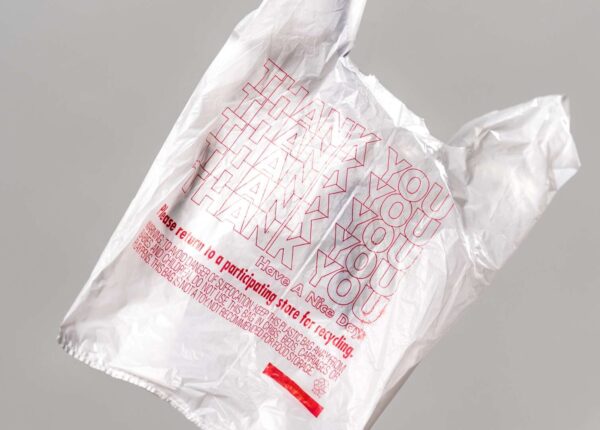
A plastic grocery bag (via Christopher Vega on Unsplash)
Its future remains uncertain, but legislation in Richmond could bring the towns of Herndon, Vienna and Clifton more money to spend on environmental and social-service initiatives.
A bill patroned by Del. Marty Martinez (D-29) would allow Virginia towns to get a portion of the plastic bag tax revenue collected by their surrounding county. After passing the House of Delegates on a 52-45 vote on Jan. 23, the measure advanced from a Senate Committee on Local Government on a party-line tally of 8-7 on Monday (Feb. 10).