

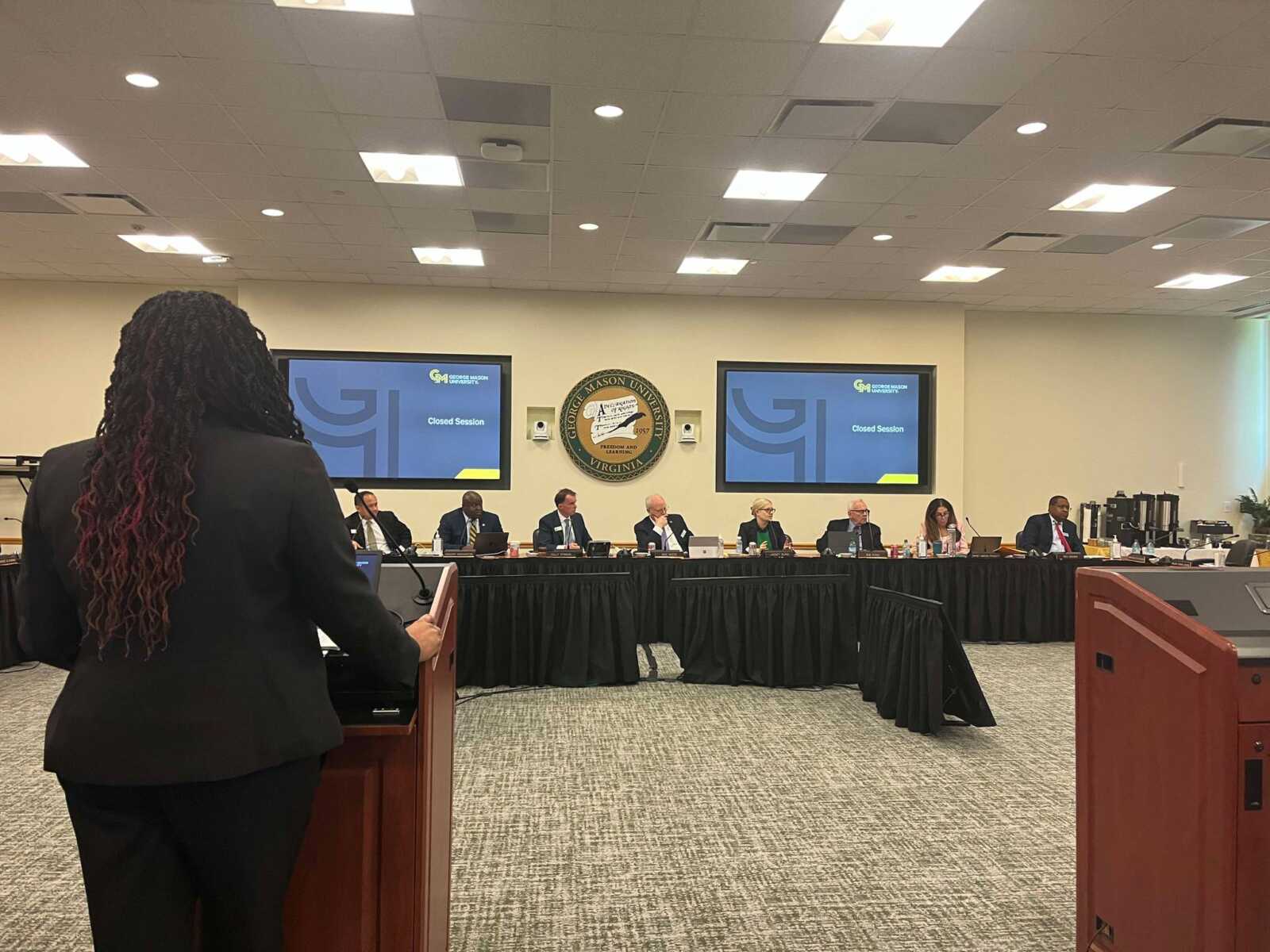



George Mason University Board of Visitors meetings aren’t typically jam-packed, but a battle over diversity programs among the school’s leadership has stirred up the university’s student body.
At a meeting yesterday (Thursday), board members questioned university staff on whether the school is complying with the Trump administration’s crackdown on diversity, equity and inclusion initiatives in education.
Building on an executive order issued by President Donald Trump on Jan. 21, a day after his inauguration, the U.S. Department of Education sent letters to educational institutions across the country in February threatening to withhold federal funds unless they eliminate any programs or policies intended to address racial disparities.
Similar instructions were also sent to public schools at the K-12 level.
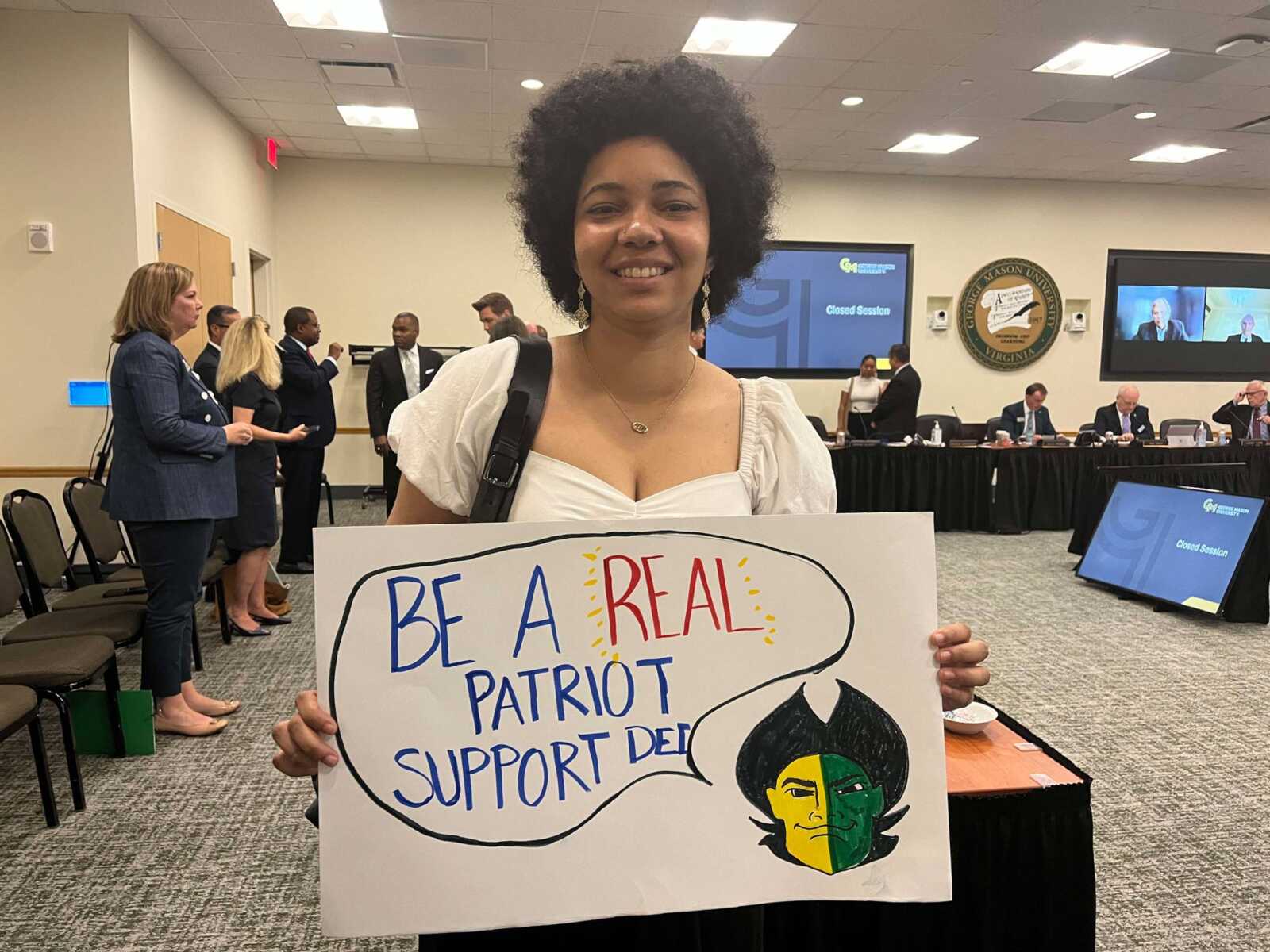
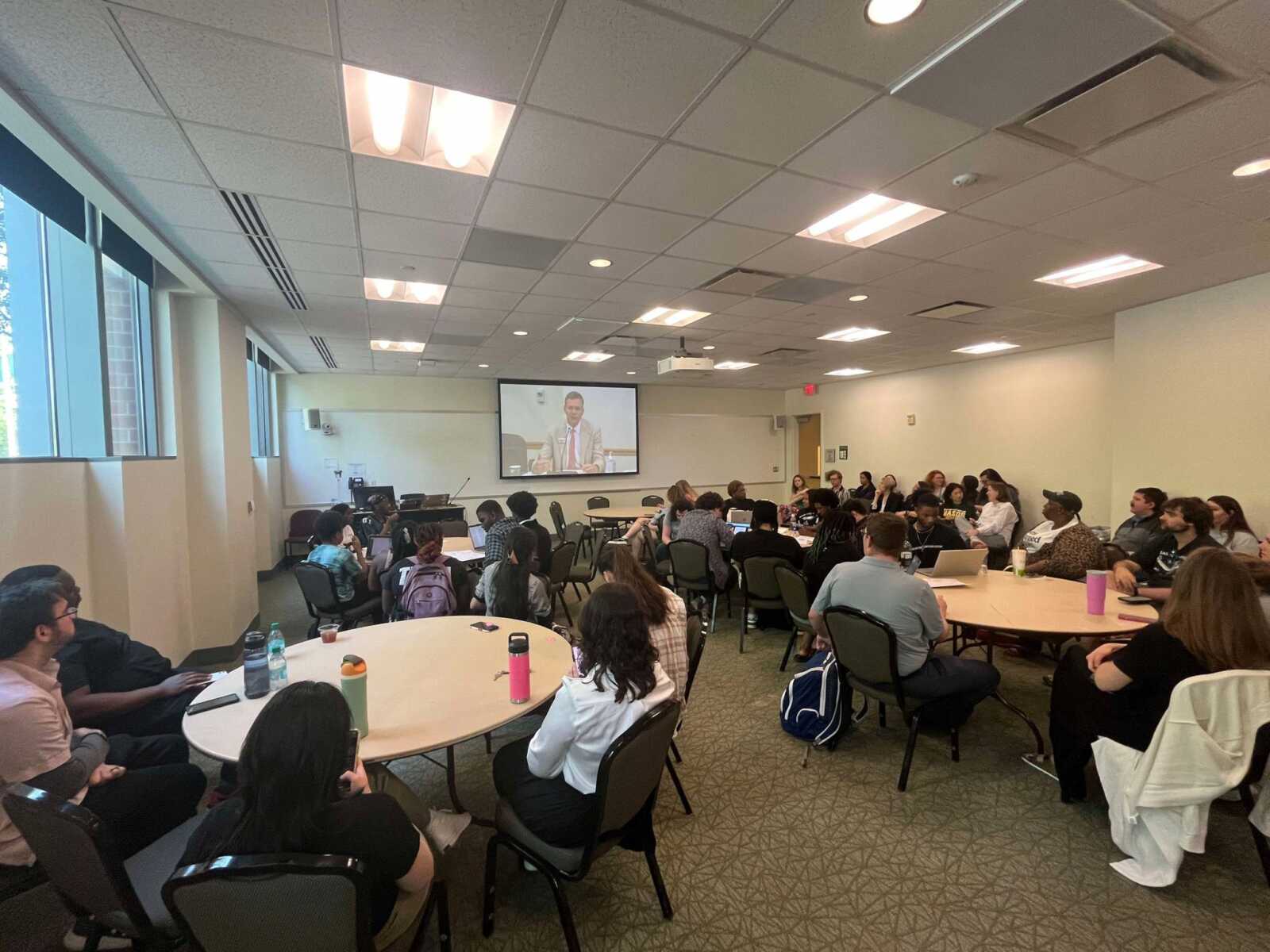
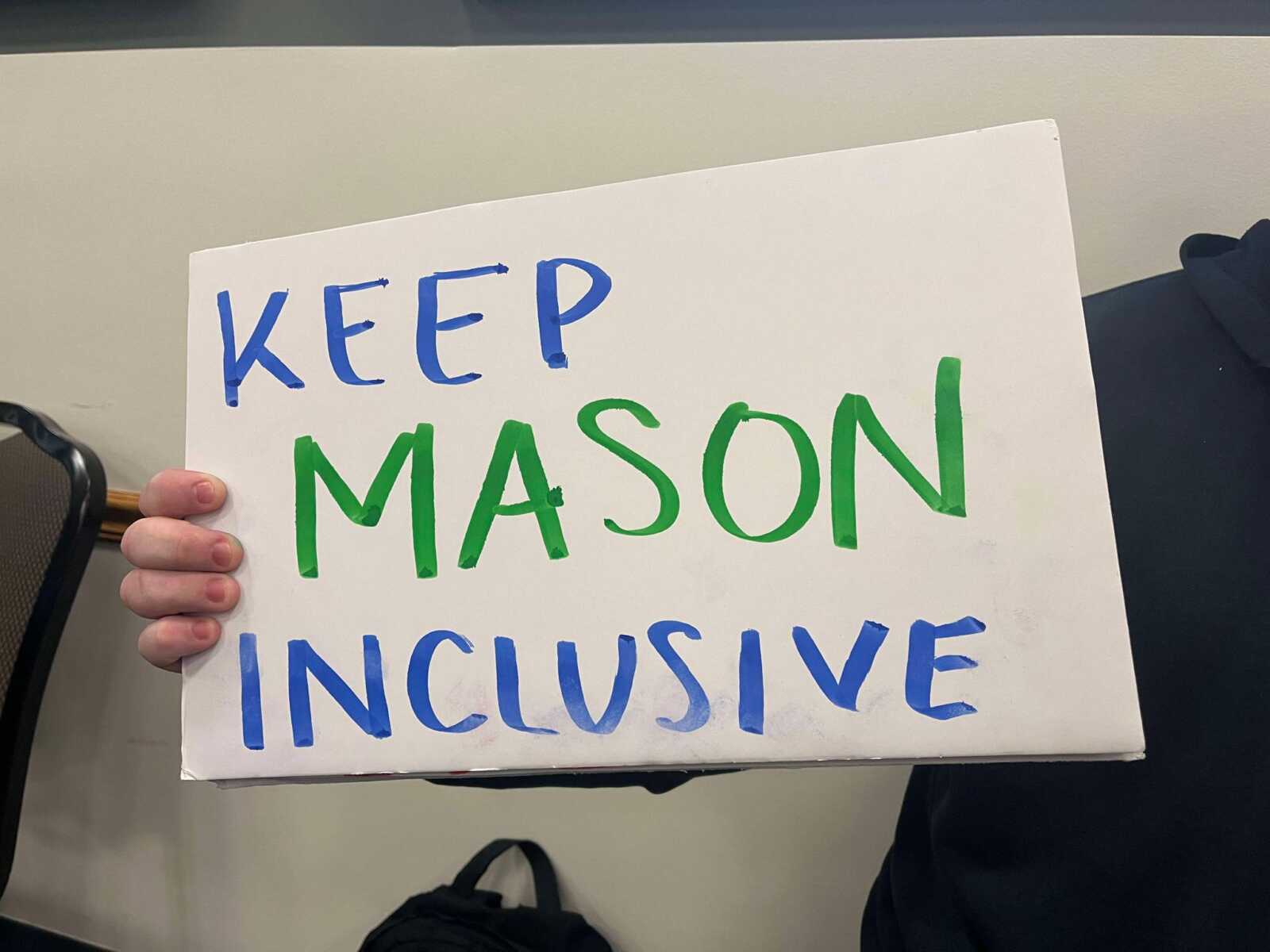
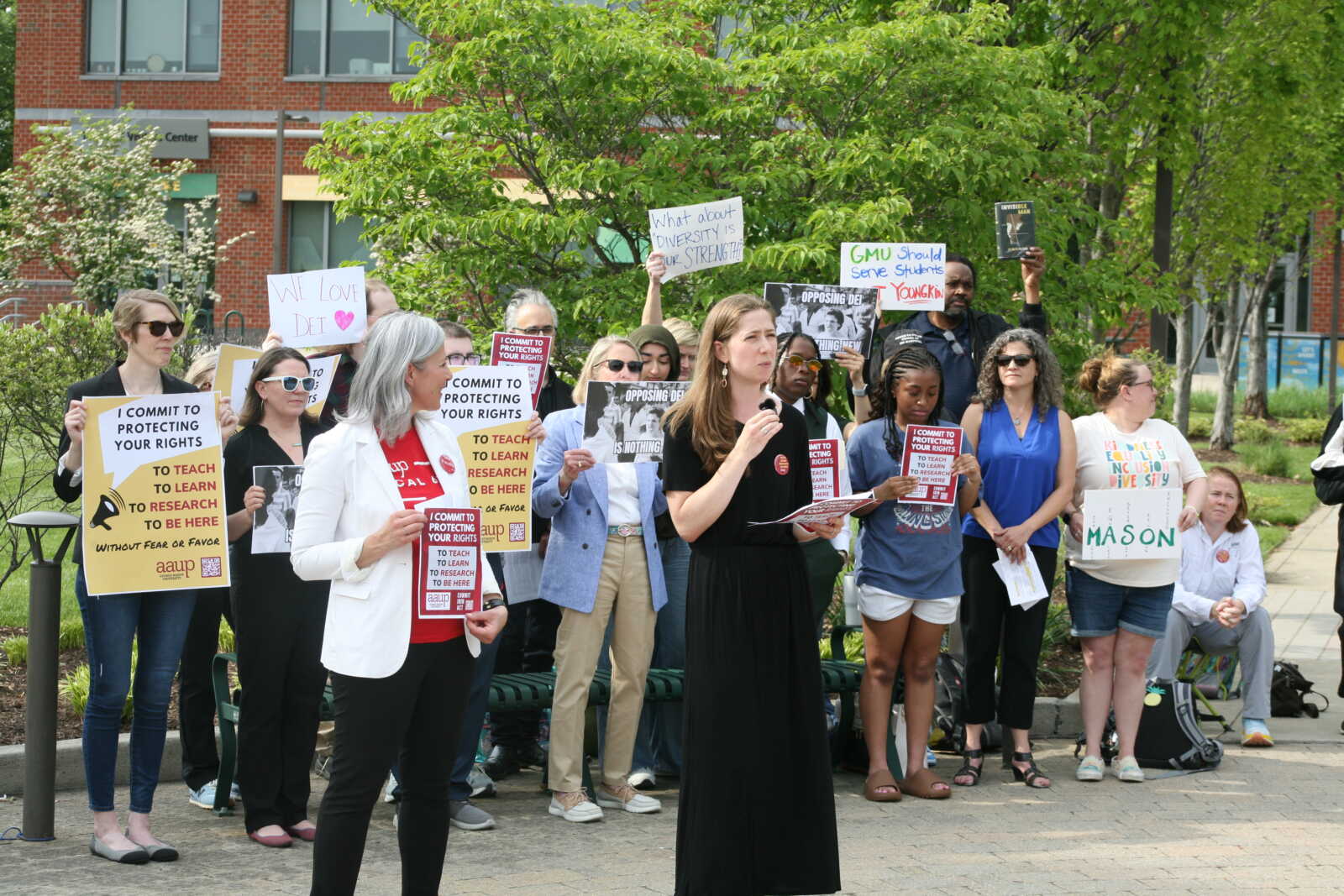
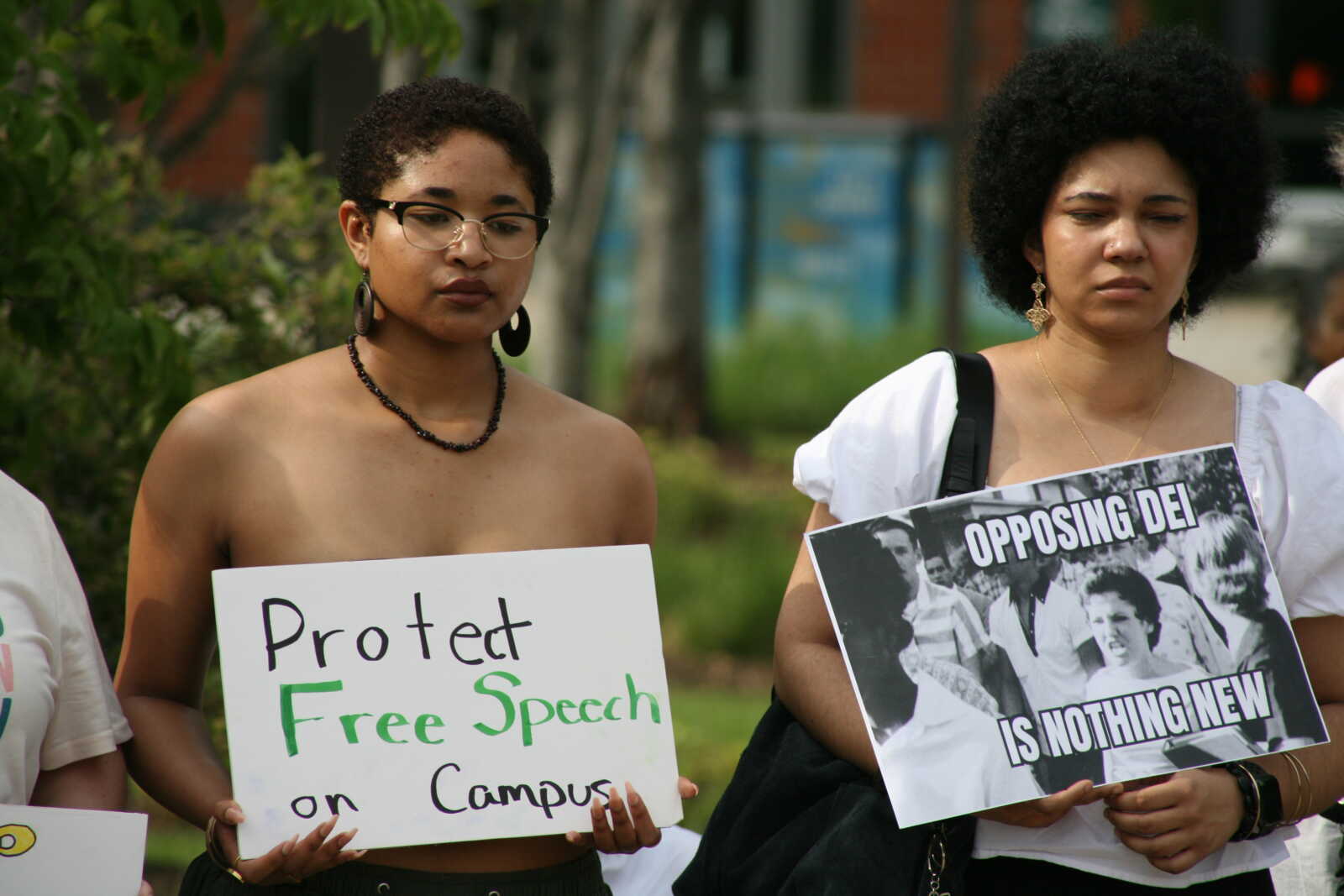
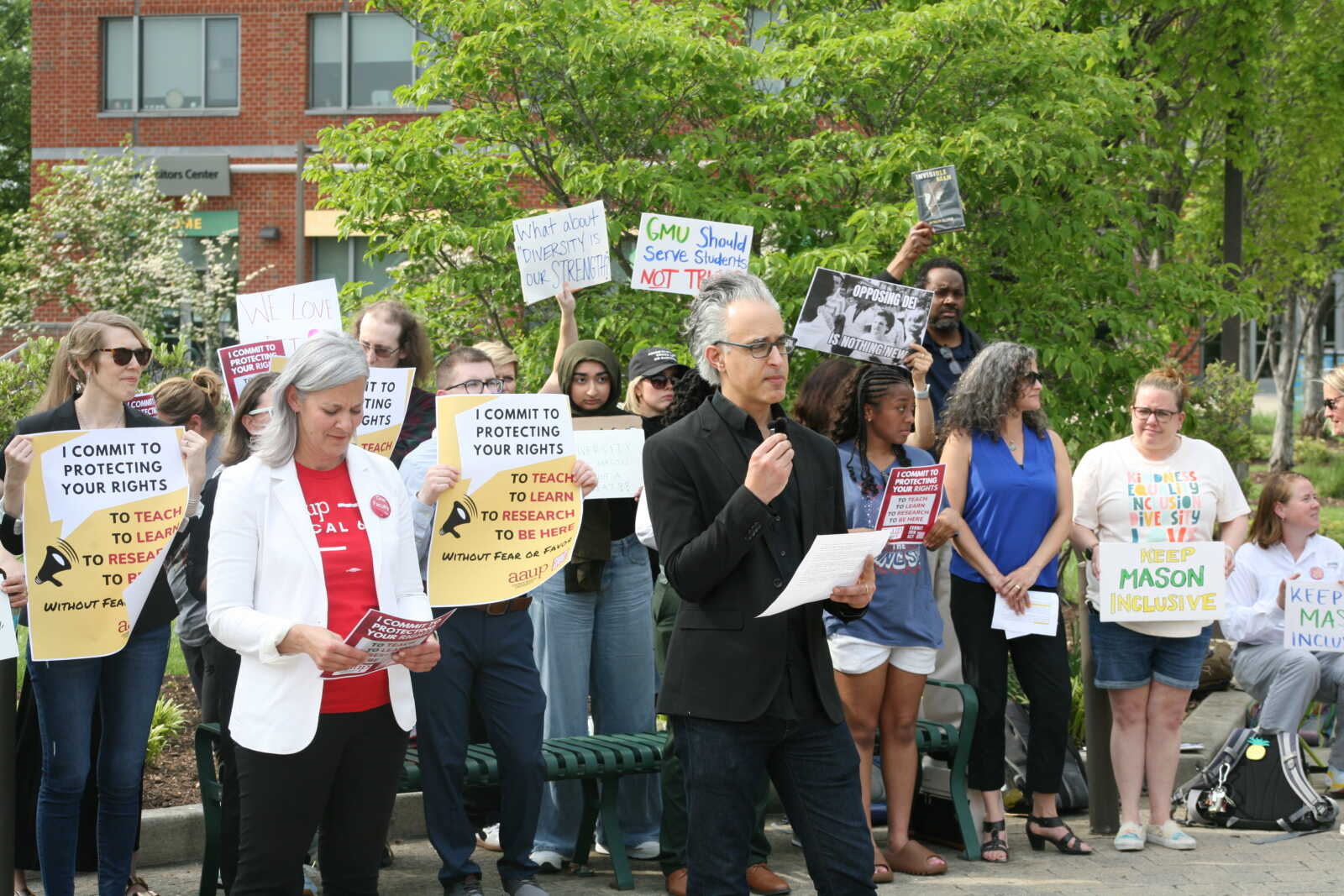
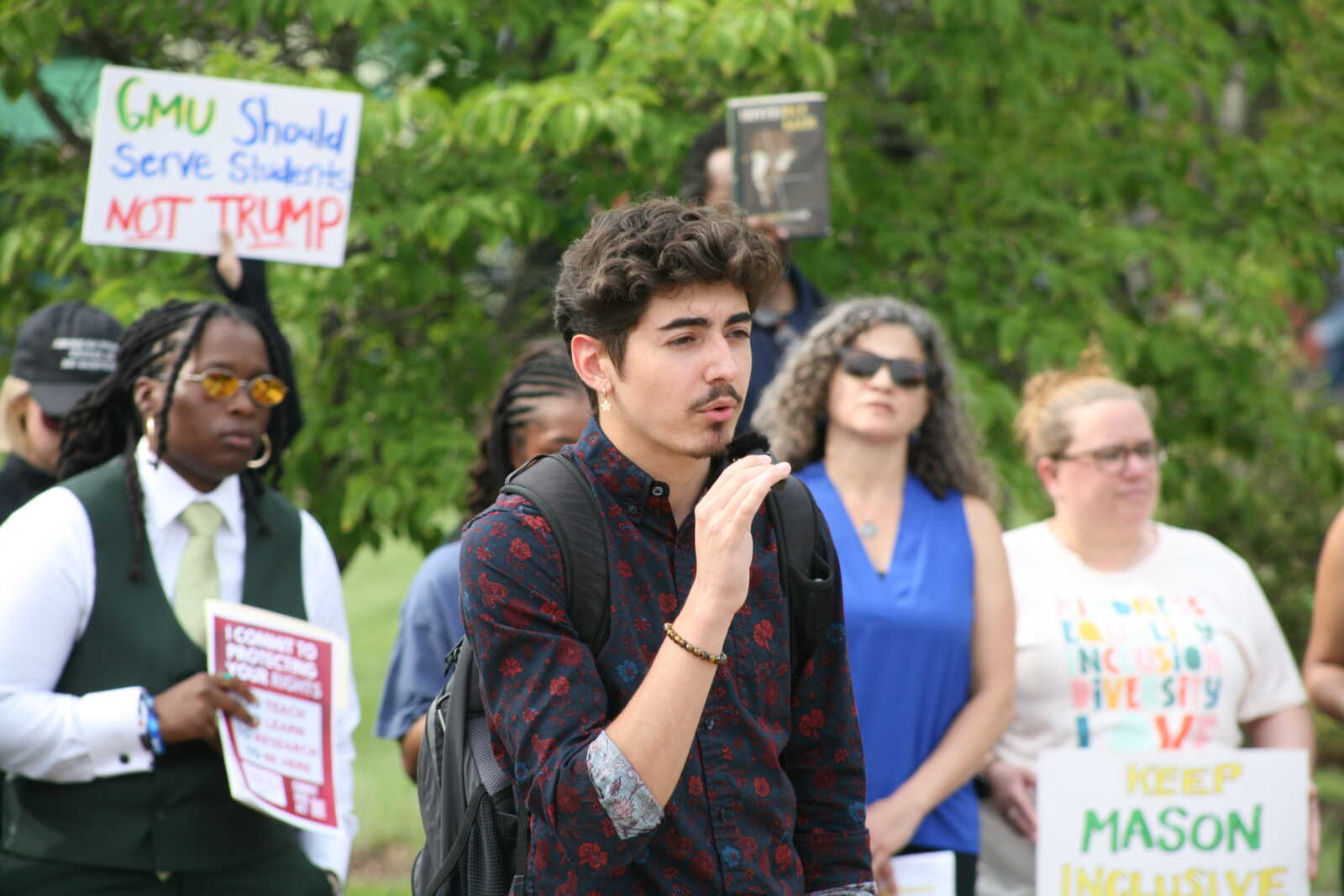
With GMU’s Board of Visitors scheduled to vote yesterday on a resolution barring the university from considering race, including in admissions and hiring, students and a handful of non-student supporters filled both the meeting room and an overflow room in Merten Hall (4441 George Mason Blvd) at GMU’s Fairfax campus, many carrying signs supporting the school’s diversity programs.
Sharnnia Artis, GMU’s vice president for access, compliance and community, outlined several programs that had been dissolved or eliminated since January in response to the Trump administration’s demands, including:
- The Office for Diversity, Equity and Inclusion, which was renamed the Office of Access, Compliance, and Community
- Promotion of third-party opportunities that use race-conscious criteria
- Institutional partnership with The PhD Program
- Use of Affirmative Action Plans for Women and Minorities
- Use of diversity statements in hiring and promotion
- Director of Supplier Diversity position
Several jobs within those offices have been eliminated or “realigned to reflect broader institutional priorities.” Additionally, Artis said at least six research projects related to diversity were terminated.
As of April 11, GMU researchers had seen a total of 20 projects paused or terminated “due to changes in federal funding,” Stephanie Aaronson, deputy vice president of communications and digital strategy for the Office of University Branding, previously told FFXnow.
Additionally, Artis said the school has paused 112 GMU Foundation-managed scholarships and the Black Male Success Initiative.
Artis said the school had undergone external review from the State Council of Higher Education for Virginia, but some on the Board of Visitors said the school would still benefit from having additional outside agencies double-check the school.
Visitor Reginald Brown suggested having a law firm or some other outside agency review GMU’s changes and ensure the school is in compliance with new federal guidelines.
“We have to take seriously the obligation to follow the law or we’re going to lose a lot of federal funding,” Brown said. “I definitely saw evidence of changes outlined here. Whether they went far enough or didn’t, I don’t mean this in a negative way, but we all carry our biases with us.”
Rector Charles Stimson, at one point, asked Artis about GMU hosting Nolan Cabrera, a University of Arizona professor who studies racism on college campuses. Stimson highlighted Cabrera’s comments that DEI concerns are “a manufactured crisis” and that “the attack on DEI is the real cancel culture,” then asked Artis if she agreed.
“I don’t have to always agree, I just have to provide a space where we can have different opinions,” Artis said. “We have many different conferences that we support with different perspectives.”
GMU President Gregory Washington came to Artis’s defense.
“Let’s be real, at that conference, there weren’t two sides,” Brown said. “The office didn’t create space for people who didn’t believe in DEI. I’m a free speech absolutist: people should be able to say what they want to say, but they need to confront each other in a university environment.”
Washington, however, countered that it’s not uncommon for a panel of speakers to share the same perspective or political alignment.
“We had a conference at the Mercatus Center called If Nativists Have Their Way, and all the speakers in that conference had the same perspective. Sometimes that’s how university conferences go,” Washington said. “I think it’s problematic when we try to [govern] how university faculty set up their conferences. We have a strong cohort on the right and a strong cohort on the left… I could pull up 10 conferences with five on each side.”
In general, Washington and others on the Board of Visitors expressed agreement with Brown that the school could benefit from having additional external review of the school’s compliance with federal requirements.
“I think we’re in agreement that compliance is important. We’re not looking to have federal funds taken away from us, but I think we’ve wasted a lot of time this year talking about things we didn’t need to talk about,” said student representative Carolyn Faith Hoffman. “We could have talked more about student funding or tuition… and yet we’re here belaboring the same point when we’re clearly in compliance for federal funding.”
Stimson and Brown were both appointed by Republican Gov. Glenn Youngkin, who has politically tied himself to fights against diversity initiatives. Recent controversial votes at the Board of Visitors meetings, like a resolution combatting antisemitism that had language that could limit criticism of Israel, have often broken down along political lines.
The board went into a closed session for further discussion but left the anti-diversity resolution tabled for another day.
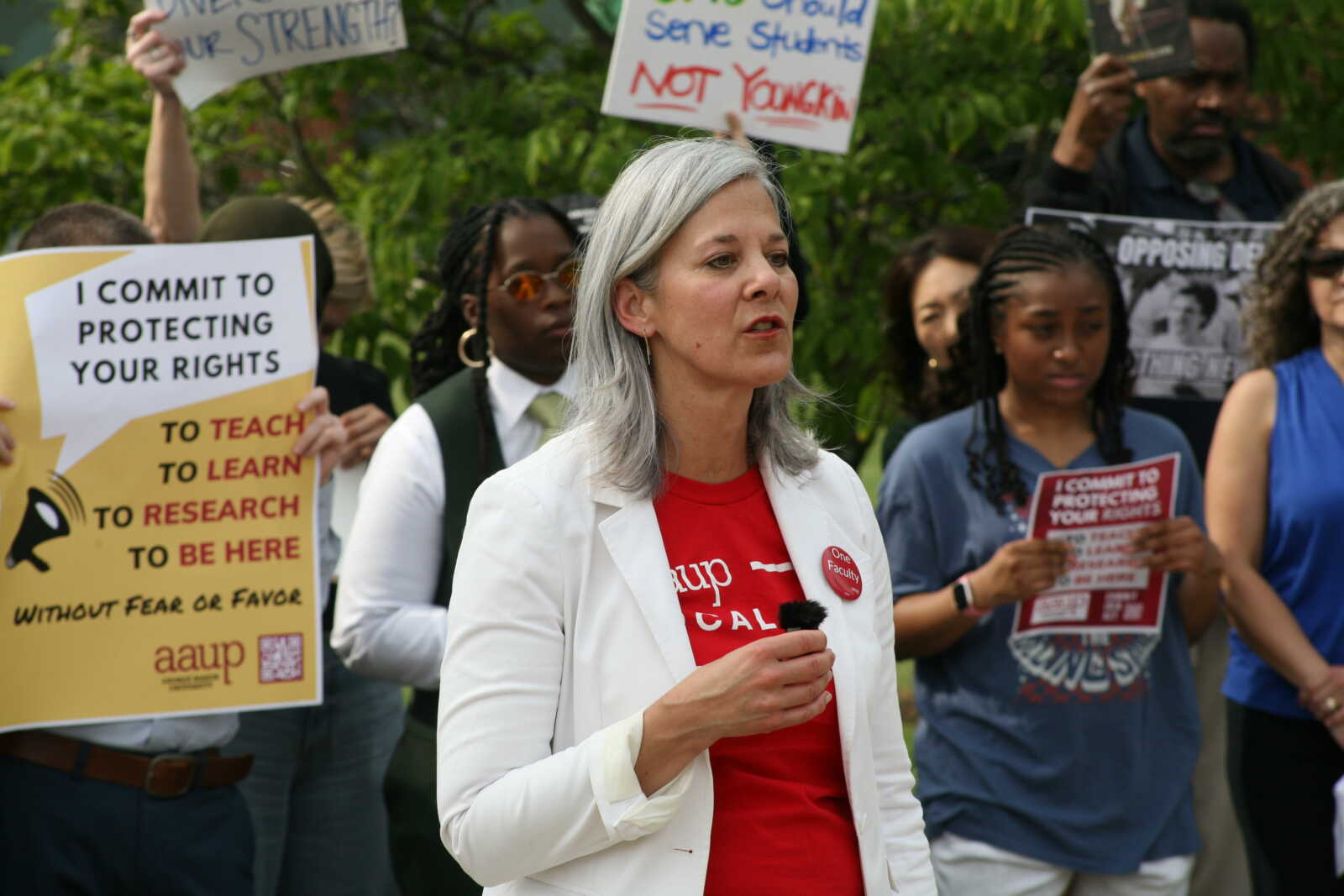
Outside, students and faculty from the school’s chapter of American Association of University Professors (GMU-AAUP) expressed mixed feelings on the meeting. While some celebrated the showing from students and faculty, others said the discussion being tabled would give school leadership a chance to approve changes in the future with fewer observers.
Faculty and some students read anonymous letters written by international students at the campus who said they were afraid to publicly speak out on topics after the Trump administration moved to strip hundreds of students of their visas — including 15 students at GMU.
The Trump administration has reportedly begun restoring records for students whose visas had been revoked after several students filed lawsuits. Fourteen of the affected GMU students had their records restored, but eight of them had already left the country, a university spokesperson told Virginia Public Media on Wednesday (April 30).
“I don’t see today as a win,” a student said. “It’s another example of the [Board of Visitors] choosing not to prioritize our students… They don’t care about our perspectives. The only thing that came out today that I appreciated was seeing students, faculty and staff together.”
The name of the American Association of University Professors has been corrected.
