

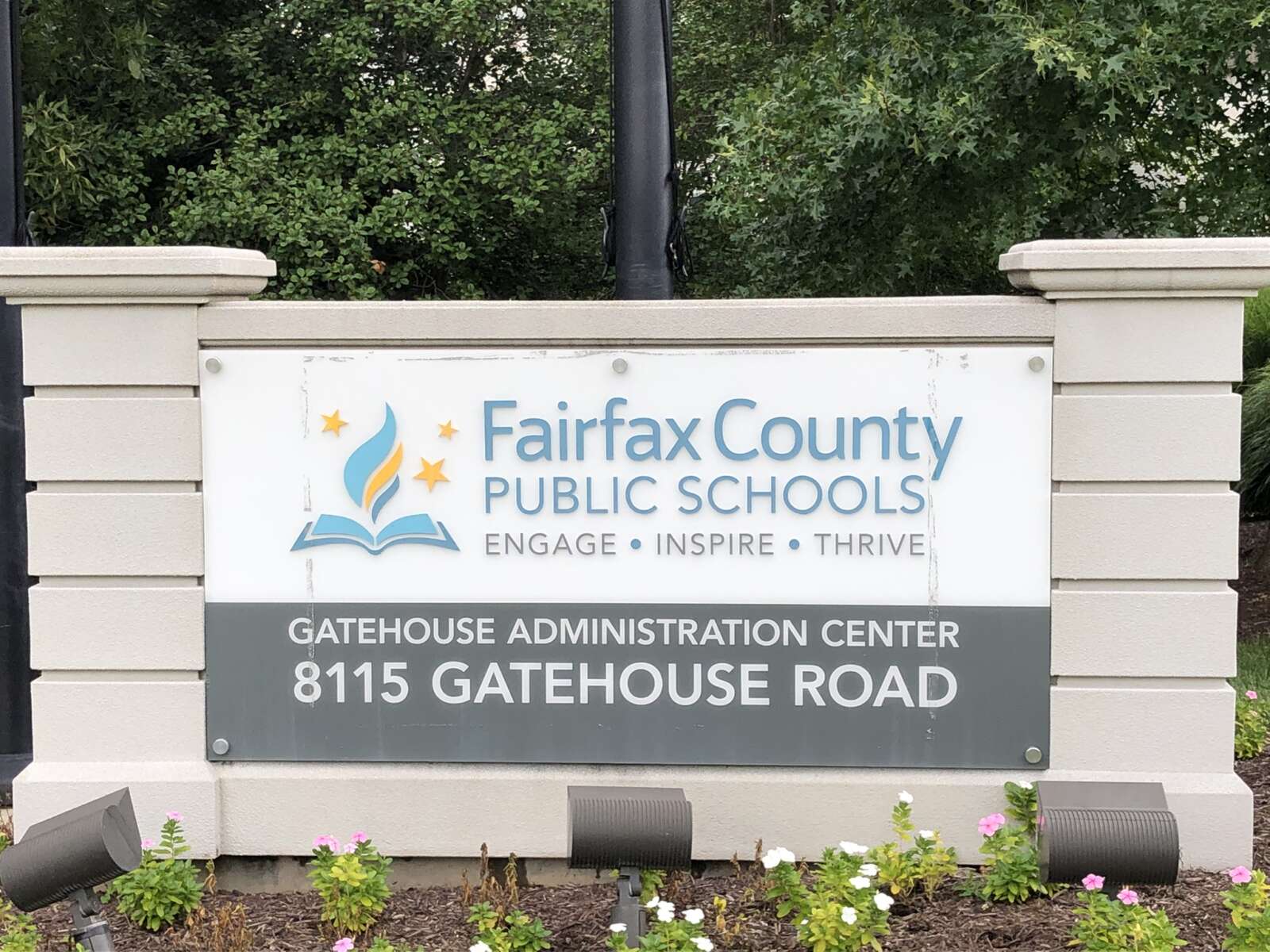
Fairfax County Public Schools is one of two Virginia school divisions that reportedly declined to sign a form committing it to complying with federal anti-discrimination laws and a U.S. Supreme Court ruling that barred race from being considered in college admissions.
Superintendent Michelle Reid instead sent a “modified certification and assurance document” to Virginia education leaders last week affirming FCPS’ compliance with Title VI of the Civil Rights Act of 1964, the Virginia Mercury reported yesterday morning (Tuesday).
A copy of the “modified” document wasn’t provided by press time, but in a statement to the Mercury that it later shared with FFXnow, FCPS said its policies remain “consistent with all applicable state and federal laws,” including Title VI and interpretations of its regulations by the U.S. Supreme Court and the Fourth Circuit Court of Appeals.
“Here in FCPS, we believe our diversity is a strength and that each and every child deserves access to a world-class education,” Reid said. “The power and promise of public education come to life every day in our schools through the tireless dedication of our staff and the transformative moments of learning that our students experience.”
Certification request stems from anti-diversity push
The Education Department sent letters on April 3 requiring all K-12 school districts to certify compliance with Title VI — which prohibits discrimination based on race, color or national origin — and the 2023 case Students for Fair Admissions v. Harvard in order to continue receiving federal funds.
Giving state education agencies 10 days to comply, a deadline that was extended to April 24, per the Mercury, the directive aligns with President Donald Trump’s push to dismantle policies and programs that promote diversity, equity and inclusion.
Universities and colleges have also faced pressure from the current White House administration to roll back diversity initiatives.
“When state education commissioners accept federal funds, they agree to abide by federal antidiscrimination requirements,” DOE Acting Assistant Secretary for Civil Rights Craig Trainor said in an April 3 press release. “Unfortunately, we have seen too many schools flout or outright violate these obligations, including by using DEI programs to discriminate against one group of Americans to favor another based on identity characteristics in clear violation of Title VI.”
Loudoun County Public Schools also declined to sign the certification, providing alternative documentation instead, according to the Mercury.
In a letter to the community, Loudoun Superintendent Aaron Spence noted that schools already confirm their commitment to federal laws whenever they apply for funding. He took issue with the vagueness of DOE’s request, which is facing multiple legal challenges:
LCPS is unaware of any federal or state laws prohibiting the mere existence of diversity, equity, or inclusion programs and initiatives, so clarity around what USDOE perceives to be illegal and why it is necessary for LCPS to submit additional assurances beyond those already attested to by LCPS would be essential before LCPS could consider signing the requested certification. We cannot — and should not be asked to — certify we are not engaged in behaviors that have not been clearly defined. Doing so would not be prudent.
While the Civil Rights Act of 1964 was enacted to protect people of color, specifically Black people, from Jim Crow-era segregation, the Supreme Court ruled in the Harvard case that policies allowing higher education institutions to factor race into admissions decisions are unconstitutional after Students for Fair Admissions, a conservative legal nonprofit, claimed they discriminate against Asian students.
A lawsuit against the Fairfax County School Board similarly argued that admissions policy revisions at Thomas Jefferson High School for Science and Technology harmed Asian students. FCPS ultimately prevailed when an appeals court found the Coalition for TJ failed to prove “discriminatory intent” and the U.S. Supreme Court declined to pick up the case.
Since the changes were implemented in 2021, FCPS has reported some progress in its effort to diversify the elite magnet school, announcing on Monday (April 28) that the 550 students offered admission for the upcoming school year include applicants from every middle school.
A majority of offers went to Asian students (62.7%) — a rate in line with recent years but down from 73% in 2020 before the admissions policy changes — followed by white students (21.6%). FCPS made offers to approximately 24 Black students (4.4%) and 30 Hispanic students (5.5%).
In 2020, only 16 of 208 Hispanic applicants were accepted to TJ, and fewer than 10 Black students received offers, a number deemed too small to report.
Threat to federal funding not new
FCPS leaders were already bracing for the possibility of losing federal aid after the Trump administration signaled plans to gut the Education Department and threatened to withhold support for schools that let transgender girls compete in female athletics programs.
While the Virginia High School League, which governs school sports across the state, revised its policies to reflect Trump’s directive, FCPS hasn’t indicated whether it will follow suit. FCPS and other Northern Virginia school systems are under investigation by DOE over their policies supporting transgender and nonbinary students.
An FCPS spokesperson indicated that the school system continues to support student choices regarding how they participate in sports. One transgender girl attending Falls Church High School opted to compete on the boys’ track and field team, according to a Washington Post profile.
“FCPS continues to follow state and federal laws in supporting and allowing all our student athletes to participate in athletics as they choose,” the spokesperson said in a statement to FFXnow. “We appreciate the value of athletic participation for the healthy development of our young people.”
The school board has advocated for increased local funding, but the Fairfax County government is facing budget cuts and economic uncertainty of its own.
