


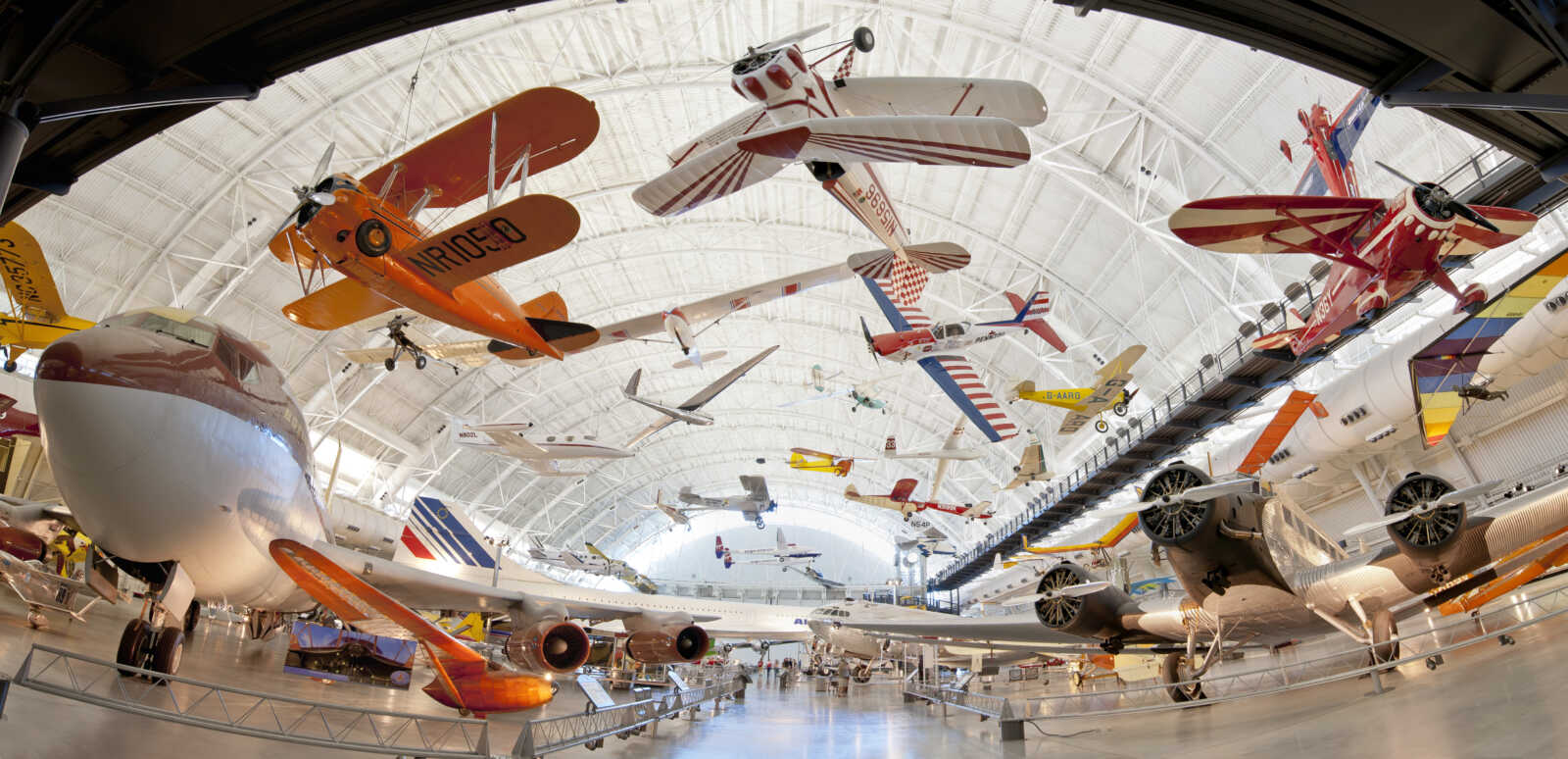
The airplanes at the Smithsonian’s Udvar-Hazy Center need a bigger hangar.
The extension of the National Air and Space Museum is embarking on the first major expansion of its public space since opening in Chantilly more than two decades ago, the Smithsonian Institution announced today (Tuesday).
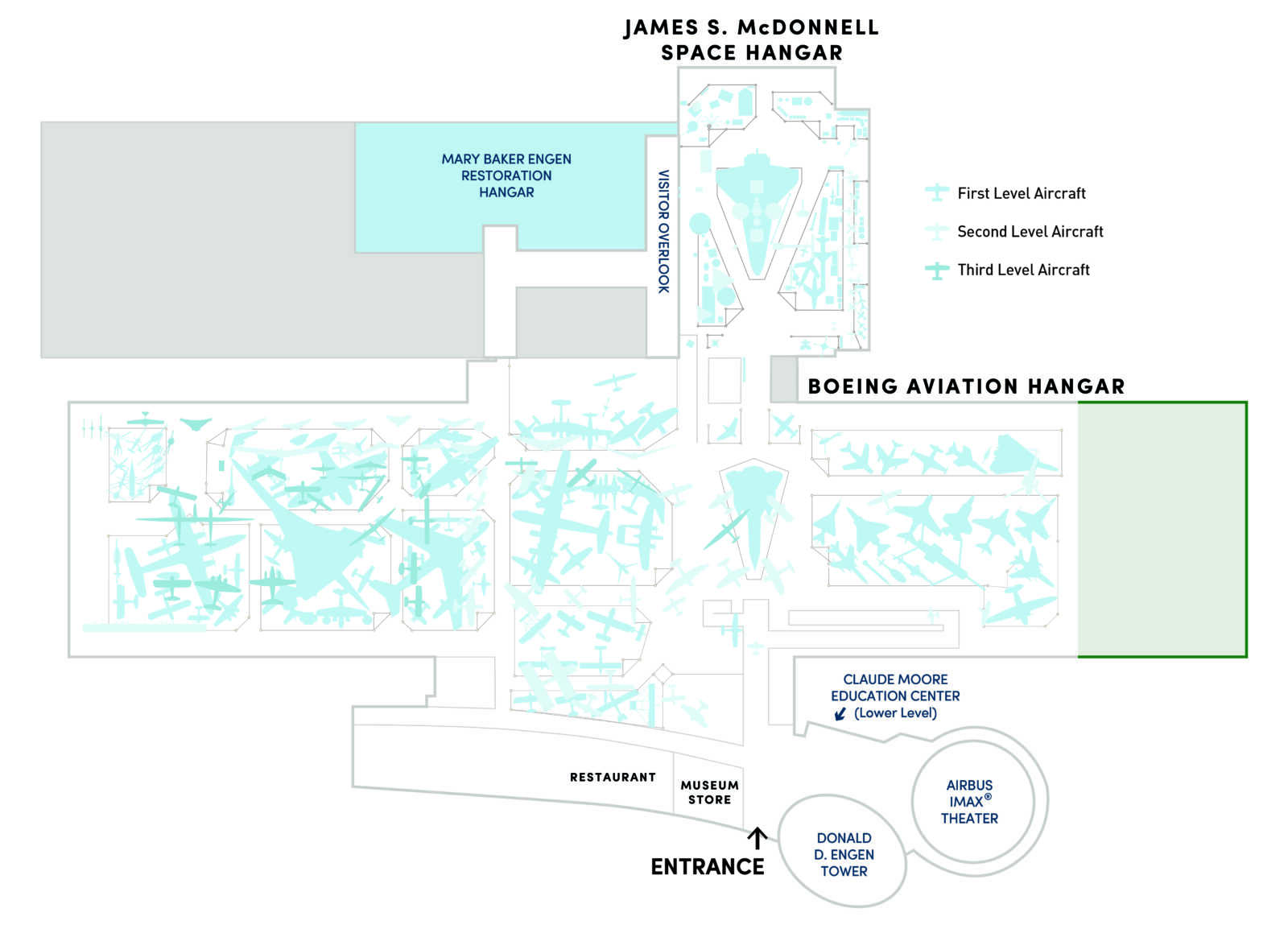
Expected to start in 2027 and finish at the end of 2028, the construction project will add 44,000 square feet of display space on the north end of the museum’s main Boeing Aviation Hangar, enabling it “to bring artifacts out of storage and display new acquisitions,” according to a press release.
“We are excited for this expansion of our world-class facility in Virginia,” Chris Browne, the museum’s John and Adrienne Mars director, said in the release. “Adding on to the Udvar-Hazy Center will allow us to offer even more to the public and will give us a chance to make major changes to the arrangement of artifacts in the entire center, enhancing the experience for our visitors.”
The construction schedule hasn’t been finalized yet, but the initial impact on visitors will be limited, since a majority of the building work will occur outside.
“We will update the public on any potential impacts to exhibition spaces once the schedule is defined,” an Air and Space Museum spokesperson told FFXnow.
To fund the addition, the Air and Space Museum is campaigning to raise $60 million in private contributions. Donors so far have included Steven and Christine Udvar-Hazy, Charles and Lisa Simonyi, Sarah and Ross Perot Jr., the Thomas W. Haas Foundation and the Air Lease Corp, according to the press release.
More on the planned expansion:
The expansion of the Udvar-Hazy Center creates an opportunity to rearrange the current configuration of aircraft in the Aviation Hangar; this will start before construction is complete and continue for several years after. The increased square footage of the building will not only display new artifacts once the space is constructed, but it will also be part of a larger rearrangement of the current artifacts in the hangar. This will allow display of new acquisitions and artifacts from storage in the corresponding subject areas. For example, the Martin B-26 Marauder “Flak-Bait” will be installed in the World War II section, which is located in the center of the hangar.
While plans are still being finalized, some of the artifacts from the museum’s collection that are planned for display after the expansion are the Boeing B-17 Flying Fortress “Shoo Shoo Shoo Baby” and the previously mentioned “Flak-Bait,” both of which have never been displayed at the center fully assembled. Others will include the restored Sikorsky JRS-1, a Pearl Harbor survivor; the De Havilland DH-98B Mosquito; and the Franklin “Texaco Eaglet.” The museum expects to receive new acquisitions that will also go on display prior to construction completion. The Udvar-Hazy Center will remain open during construction.
Located at 14390 Air and Space Museum Parkway just south of Dulles International Airport, the Steven F. Udvar-Hazy Center was created by Congress in 1992 and opened to the public on Dec. 15, 2003 — just two days before the 100th anniversary of the Wright brothers’ groundbreaking first flight in Kitty Hawk, North Carolina.
However, construction on the facility’s collections spaces didn’t wrap up until 2011. In addition to the main aviation hangar, which is 10 stories tall and as long as three football fields, the museum features a space hangar, a restoration hangar that’s partially visible to the public, Northern Virginia’s largest IMAX theater and an observation tower.
Now one of the most visited museums in North America, attracting more than 1 million visitors annually, the Udvar-Hazy Center houses the Lockheed SR-71 Blackbird, the Enola Gay and — to the apparent chagrin of Texas’ current senators — the Space Shuttle Discovery, among other objects.
President Donald Trump signed a federal budget reconciliation bill in July allocating $80 million to the relocation of a space vehicle and directing acting NASA administrator Sean Duffy to identify the vehicle to be transferred within 30 days. While the bill didn’t name a specific vehicle, Texas Sens. Ted Cruz and John Coryn had lobbied for the Discovery — NASA’s longest-flying orbiter — to be moved to the Johnson Space Center in Houston.
NASA confirmed last month that Duffy has selected a vehicle but hasn’t publicly announced which one. The Space Shuttle Atlantis, which is housed at the Kennedy Space Center in Florida, and the Endeavour at the California Science Center in Los Angeles both also meet the criteria in the bill.
The Air and Space Museum didn’t comment on the current status of the Discovery, but it has maintained that it has no plans to let the shuttle go. The Smithsonian has had full ownership of the space shuttle since it was first transferred to the Udvar-Hazy Center in 2012.
