


Fairfax County officials say they will be ready when the first installment of the new prepared meals tax comes due in early 2026.
“We are on track — prepared and ready to go,” Robert Barr, division director for revenue systems at the county’s Department of Information Technology, told the Fairfax County Board of Supervisors at a Nov. 25 meeting of its Information Technology Committee.
Supervisors in May authorized the 4% tax on prepared meals, delaying implementation until Jan. 1, 2026. Since then, staff across a number of departments have been working to get the necessary registration and payment infrastructure in place.
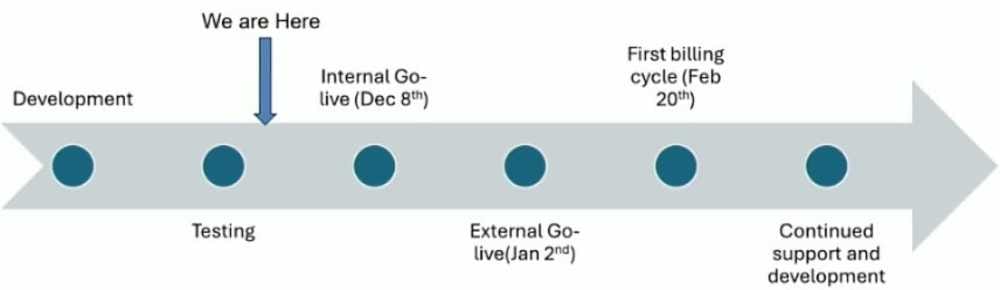
Most establishments will have to file and make payments on a monthly basis, giving them until late February to understand the requirements and how to navigate the payment portal.
County officials say they are trying to make the process as smooth as possible.

“We have been working very hard on this,” Fairfax County Department of Tax Administration Director Jay Doshi said, telling the board that the goal is to “do our very best to ensure no one is left behind.”
Internal processes to administer the tax are slated to go online next Monday, Dec. 8, with the public side going live on Jan. 2.
When that happens, those responsible for the system say it will be ready for what Board Chair Jeff McKay predicted could be a “potential tsunami” of questions from businesses that owe the new tax.
“I’m hoping we’re ready and have the resources and people” to help businesses through the process, McKay said.
Doshi said that’s the plan.
“The important part is that we communicate and resolve issues,” he said.
Workshops for businesses will continue to be held through early January to explain details regarding the county’s administration of the new tax. There are also online resources providing background information, including on what food and beverage items are considered taxable under the new ordinance.
The 4% tax is expected to generate about $140 million per year in revenue for the county government. The impact is expected to be about $200 on a family of four across the county, based on estimates when supervisors discussed the matter in March.
Supporters say adding a meals tax to the county’s revenue arsenal will allow less of the tax burden to be shouldered by homeowners through real estate taxes. Critics say it’ll further burden both residents and businesses that often operate along razor-thin profit margins.

Fairfax voters rejected bond referendums that would have allowed a meals tax twice in earlier years — in 1992 and 2016. The General Assembly in 2020 removed the referendum requirement, allowing supervisors to impose one without first securing voter approval.
The body did just that, voting 9-1 this spring to approve the tax. The board’s lone Republican, Pat Herrity of Springfield, voted against the new levy.
The 4% meals tax will be imposed on top of the 6% state sales tax. When Fairfax’s meals tax goes into effect, it will leave Loudoun County as the last major Northern Virginia jurisdiction without one.
