




The Fairfax County delegation to the General Assembly heads to Richmond this week with plenty of requests from constituents.
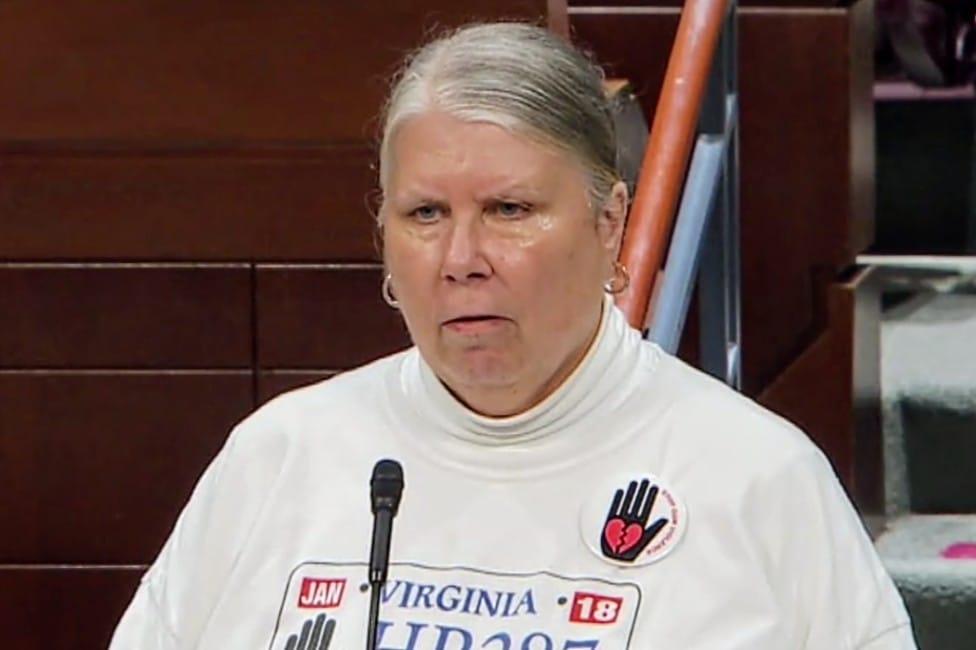
Nearly 100 of them descended on the Fairfax County Government Center Saturday morning (Jan. 10) to make their case on issues ranging from social services to economic development.
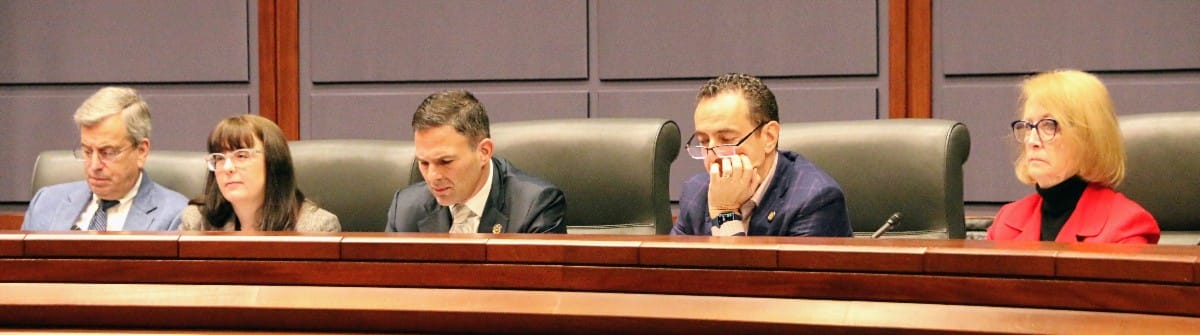
Seated on the dais normally occupied by county supervisors, nearly 20 members of the legislature from Fairfax — all Democrats — absorbed the requests as they prepare for a 60-day legislative session starting Wednesday (Jan. 14).
Del. Vivian Watts (D-14), who chaired the hearing, said the event was “one of the highlights of the year” for legislators.
For advocates, it provided the opportunity to fit their wish lists into three-minute increments.
Among them was David Broder, executive director of the Virginia State Council of SEIU, a union representing those in the service industry. The union’s chapters includes one for Fairfax County government employees.
Like many speakers, who typically skewed Democratic in the policies being supported, he raised concerns about the impacts of the Trump administration on the local economy and community.
“Something feels a little different this year — the challenges feel harder,” Broder said.
Current conditions are making it “nearly impossible for working families to survive,” Broder said, urging legislators to expand collective bargaining for public-sector workers, raise the minimum wage, and extend paid family and medical leave.
“Use your power,” he said. “Let’s seize the moment.”
Michelle Jefferson, chair of the Fairfax County Community Action Advisory Board, sought additional support for education, child care and food insecurity, but said there was one overriding issue for the state legislature to tackle in 2026.
“Housing must be our starting point,” Jefferson said.
Given the cost of housing in the local area, “families are forced into impossible choices,” she said.
Strengthening the social safety net would deliver significant dividends, Jefferson said.
“When families are stable, Virginia’s economy is strong,” she said.
The most audience applause may have gone to sisters Victoria and Oliva Wyche, both fourth-graders.
Victoria Wyche testified in support of maintaining support for after-school programs in middle schools. Fairfax County leaders have discussed requiring families to pay fees to fund the currently free programs after averting proposed budget cuts.
“These programs are crucial for many students who lack alternatives,” Victoria told legislators.
Olivia Wyche followed with a plea for maintaining early education programming such as Head Start.
The programs “greatly improve my abilities” and provided a safe environment that boosted her social skills, Olivia Wyche said.
“My sister and I serve as living proof of their effectiveness,” she said, noting they both were reading at a high-school level as shown by their remarks.
There was a small contingent of anti-casino advocates, a number that might have been lower than previous years now that Fairfax County supervisors have taken a slightly stronger stand against the possibility of a casino in Tysons.
Larry Zaragoza touched on another hot-button topic: data centers.
“We don’t need to necessarily put them next to people,” Zaragoza said. “We are suffering … because of a lack of planning.”
A large corps of speakers supported increased funding on social services, with many seeking additional assistance for residents with developmental disabilities.
Carol Skelly was among those seeking legislative approval of higher Medicaid reimbursements to support those relying on institutional care.
The network of providers “faces major challenges” due to low wages paid to employees, she said.
Nicole Zupan, the next to speak, added that “family lives are disrupted” as a result of turnover in staff at group homes.
Residents of those facilities “depend on having individuals around that they can trust,” Zupan said.
Kasey McNamara, Providence District representative to the Fairfax-Falls Church Community Services Board, pressed for additional and predictable funding for behavioral-health initiatives.
“I know first-hand what a difference they make,” she said, voicing concern that “Northern Virginia remains critically short on crisis beds.”
Abigail Quinn, a University of Virginia graduate and Fairfax County Public Schools teacher, urged legislators to look into the university’s governance.
“Academic independence matters,” she said, decrying the departure of the university’s president last year following pressure from the Trump administration.
Pressing for more K-12 education support, Quinn said legislators need to provide smart investments to make teachers more productive.
“We might be good at our jobs, but we aren’t miracle workers,” she said.
On the subject of Trump, speaker Elizabeth Lower-Basch said state leaders need to “be ready and be prepared” for whatever might come next.
Patrick Hampel of Lionheart Aviation Services said the state government needs to do more to promote an employment pipeline to fill jobs in the aviation and aerospace industry.
“These high-paying jobs should belong to Virginia students” but other states are “actively targeting” both employees and firms they work to consider relocating, he said.
Hampel praised Superintendent Michelle Reid, Rep. James Walkinshaw (D-11) and Braddock District Supervisor Rachna Sizemore-Heizer for their efforts to promote a career track for the aviation industry. But without statewide attention, he said, Virginia would only be able to “watch the next generation of aerospace jobs flee.”
The 2026 legislative session is expected to run 60 days, but could run over if the commonwealth’s biennial budget requires more work to secure approval.
Democrats will hold a narrow majority in the Senate, but a more substantial one in the House of Delegates following last year’s Nov. 4 general election. The election of Democratic Abigail Spanberger as governor means many measures that passed the Democratic legislature last year, only to be vetoed by Republican Gov. Glenn Youngkin, have a strong likelihood of getting signed into law this time.
