

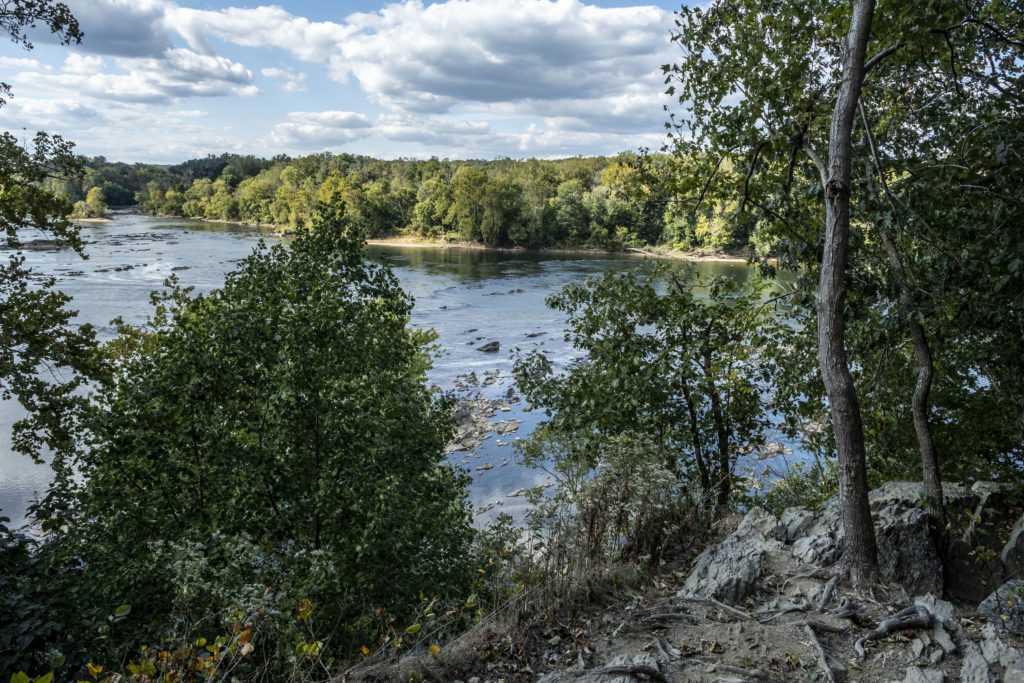
Scott’s Run Nature Preserve will be off limits to visitors for a third consecutive spring to allow more sewer upgrades.
The park at 7400 Georgetown Pike in McLean is scheduled to close on Monday, Feb. 16 for an “urgent” project to rehabilitate a siphon facility that carries wastewater across the Potomac River to D.C. Water’s Potomac Interceptor in Maryland, according to the Fairfax County Park Authority.
“This project is essential to maintaining uninterrupted service and preventing potential wastewater overflow into the Potomac River,” the park authority said in a press release.
A Fairfax County Department of Public Works and Environmental Services (DPWES) contractor is expected to take about three months to complete the project, if the weather allows. All trails and parking areas will be closed for the duration of the rehabilitation work.
The goal is to finish work before Memorial Day, which is typically when Scott’s Run’s peak season kicks off, DPWES spokesperson Sharon North says.
“The project site is very weather dependent so [we’re] hoping to get in and out and reopen the park as quickly as possible,” North told FFXnow.
Scott’s Run Nature Preserve previously closed for about six weeks in spring 2024 for an “emergency” project to clear approximately 80 tons of sediment and repair three wastewater pipes, or siphons, that run through the park to the Potomac River.
After pausing for the park’s peak season, which usually runs from summer into late fall, the cleaning and repair work resumed in December 2024. A “critical blockage” required the park to shut down again on Feb. 17, 2025.
According to DPWES, the new siphon rehabilitation project isn’t a direct extension of the previous emergency cleaning and repair work, which was ultimately completed in July 2025. But the need to update the lining of the siphons was identified during that process.
“During the emergency work the siphons were cleaned and inspected. The inspection results revealed a need for rehabilitation of the siphons,” North said. “DPWES is being proactive with our project efforts to avoid an emergency in the future.”
Focused on approximately 1,200 linear feet of pipeline, the rehabilitation will involve inserting new lining into the siphons with a cured-in-place pipe method that DPWES says is more cost-effective, faster and limited in its impact on both residents and the environment than other approaches.
A second phase of the project that will renew the lining of pipes under the Potomac River is currently being designed. That work, which extends into Maryland’s Carderock National Park, is anticipated to begin in fall 2027, though the schedule will be updated as the design is further refined.
The rehab project is being funded with revenue from sewer service fees paid by customers.
The importance of maintaining and updating local sewers was driven home last month by the rupture of a DC Water pipe in Montgomery County, resulting in millions of gallons of raw sewage spilling into the Potomac River. Fairfax County’s drinking water was not affected, since the break occurred downstream, but community members are advised to avoid touching the contaminated river water.
As of press time, a timeline for D.C. to repair the broken pipeline remains unknown.
