

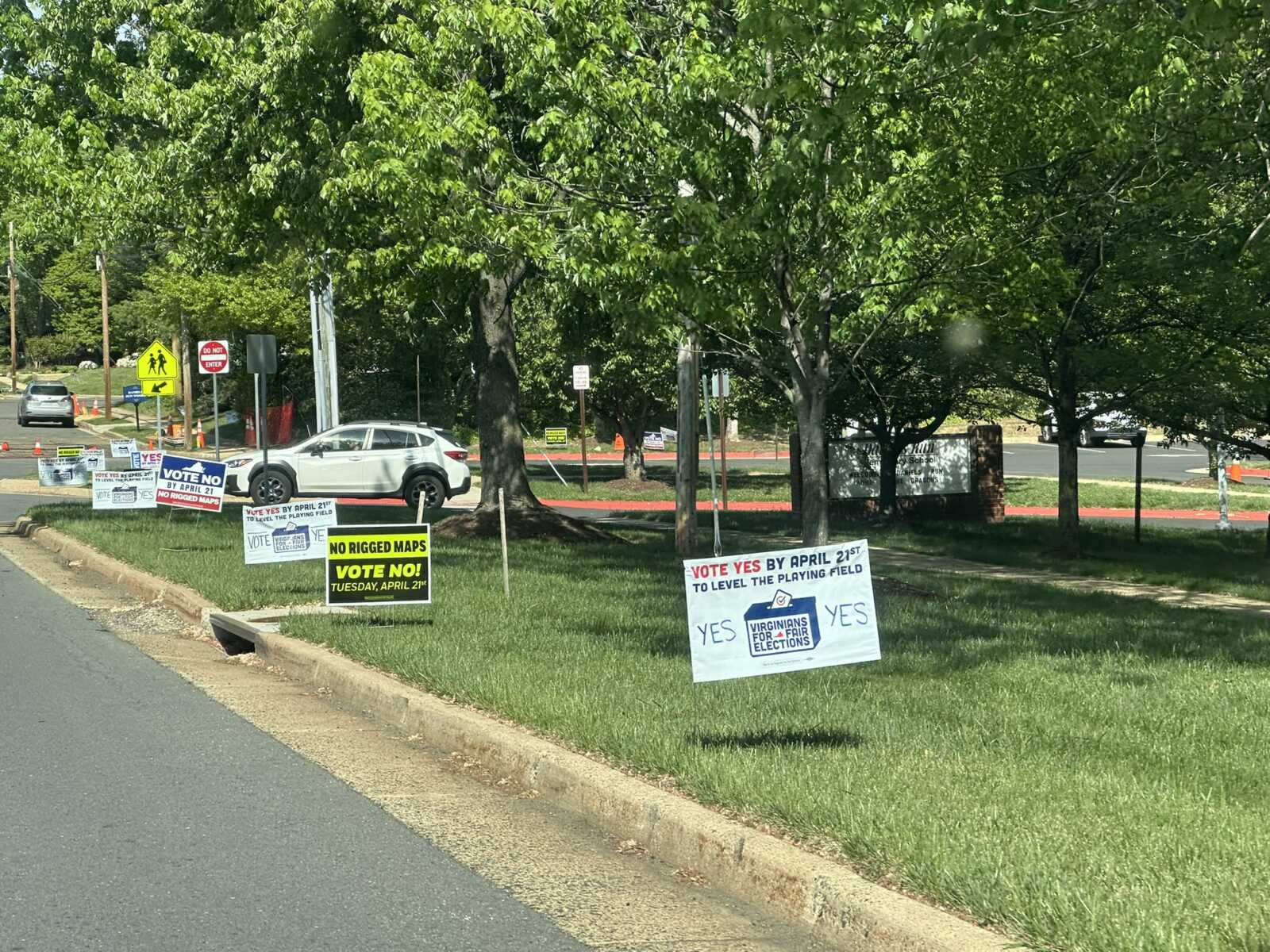
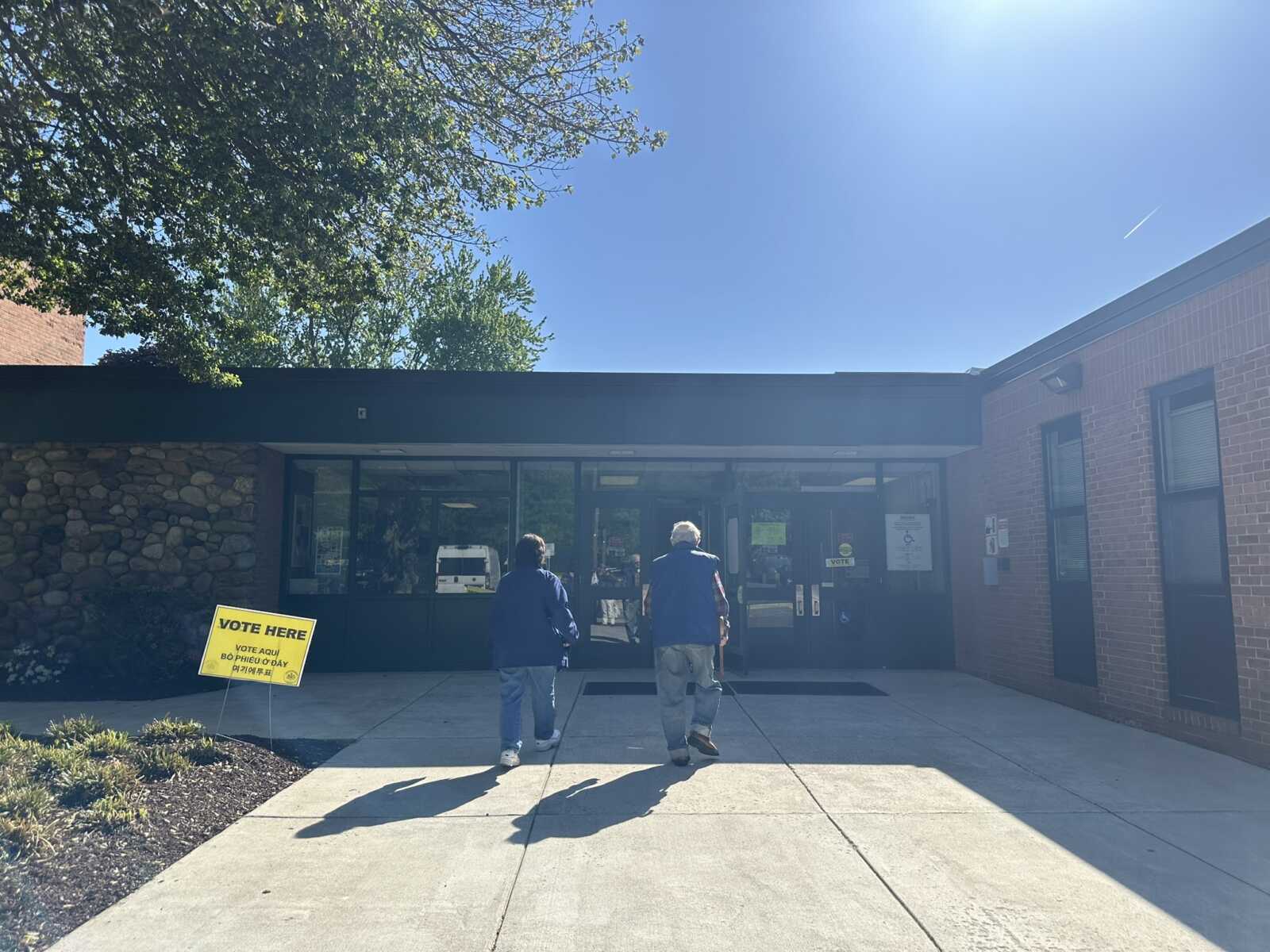
Fairfax County is poised to be split up into five Congressional districts after Virginia voters narrowly passed a constitutional amendment yesterday (Tuesday) that will let the General Assembly adopt a new map outside the standard once-a-decade redistricting cycle.
Statewide, it was a tight race, with about 51.5% of voters backing the referendum and 48.4% opposing it — a difference of approximately 97,600 votes out of the more than 3.1 million ballots cast, according to preliminary results from the Virginia Department of Elections.
However, the “yes” campaign enjoyed a more comfortable margin of victory in Fairfax County, where 69.5% of voters supported the measure compared to just 30.49% who didn’t. Based on the unofficial results, which must be certified by the State Board of Elections, a majority of voters in all but four of the county’s 265 precincts marked “yes” on their ballot.
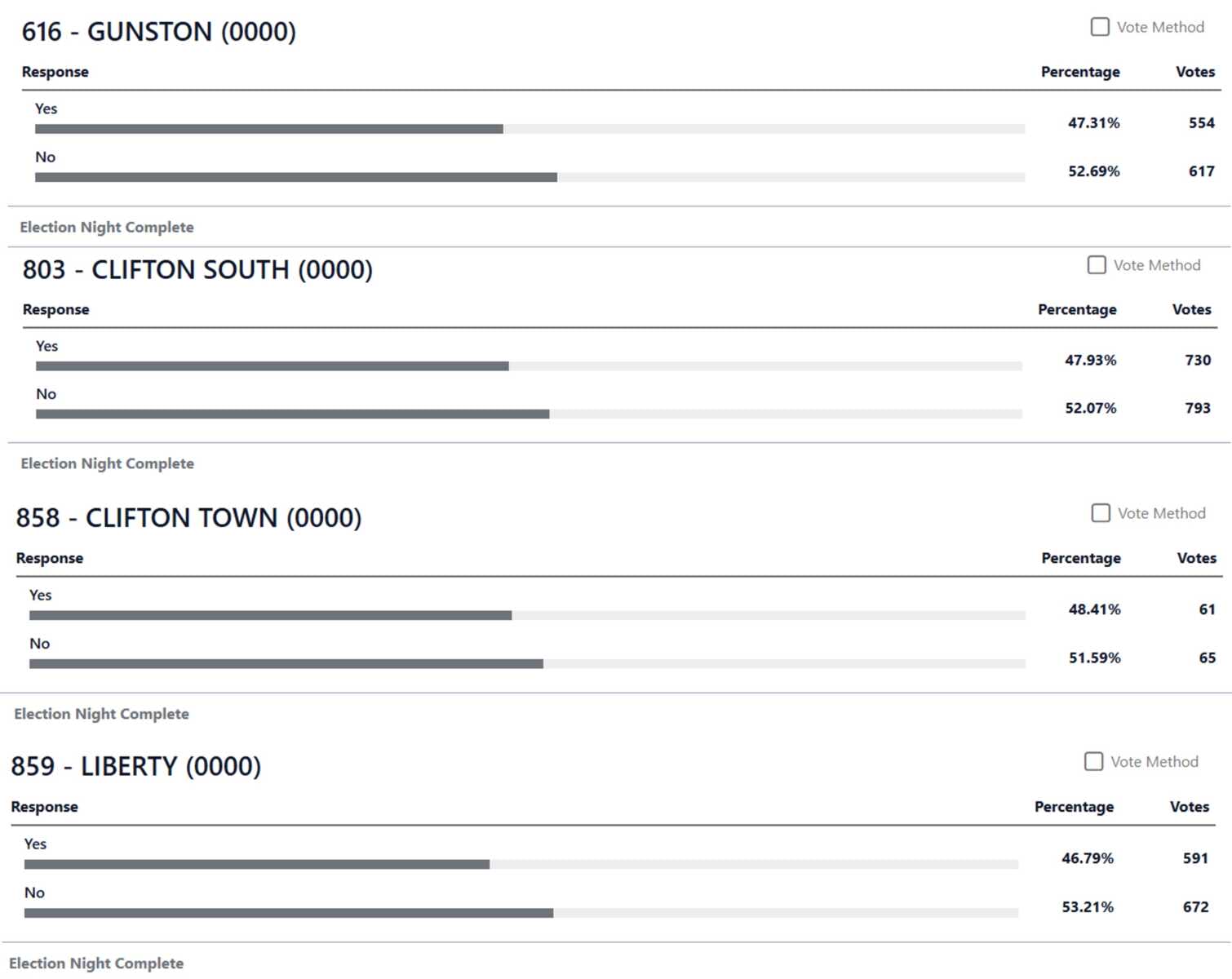
Three Clifton precincts — Clifton South at Clifton Presbyterian Church, Clifton Town at the town hall and Liberty at Liberty Middle School — were joined by Gunston voters at Gunston Elementary School in Lorton as the outliers, though in all four cases, “no” had an edge of fewer than 100 votes.
In county’s other precincts where “yes” votes prevailed, the extent of support ranged from 90% at George Mason University’s Fairfax campus to a single vote (352 “yes” votes to 351 “no” votes) making up the difference in the Sandy Run precinct, which is based at Christ Church in Fairfax Station.
Overall, Fairfax County saw a turnout of 46.48%, with 378,245 of its 813,762 registered voters casting a ballot in the special election by the time polls closed last night at 7 p.m. Provisional and mail ballots postmarked by the day of the election will still be counted if they arrive at the Fairfax County Office of Elections by noon on Friday (April 24).
Reactions to referendum results split along party lines
The Fairfax County Democratic Committee (FCDC), which joined the statewide Democratic Party in campaigning for the referendum’s passage, celebrated the turnout as on par with a general election.
While last November’s gubernatorial election saw a 55.5% turnout rate, leading to decisive victories for Democrats, participation in the redistricting referendum did exceed the 41% turnout for the 2023 general election, when local and state legislature races were on the ballot, per the county’s past results.
“These historic numbers are a testament to the countless hours FCDC members and volunteers put into this campaign,” the committee said in a statement released this morning. “These numbers also reflect that Virginians recognize the moment we are in and that this was an opportunity to stand up to President Trump as he tries to rig the system to benefit himself.”
Virginia Democrats, who hold the governor’s office and majorities in both chambers of the General Assembly after last November’s elections, pushed for an unusual mid-decade overhaul of the state’s Congressional districts to counter Republican-led redistricting in other states.
The open embrace of partisan gerrymandering began last year in Texas, where Republican lawmakers redrew their districts to potentially give their party five additional seats in the House of Representatives at President Donald Trump’s urging. A map approved by the legislature and signed by Gov. Greg Abbott in August was upheld by the U.S. Supreme Court despite arguments of racial discrimination.
Since then, lawmakers have implemented new districts favoring the GOP in Missouri, North Carolina, Ohio and Utah, while California voters approved a constitutional amendment in November that Democrats hope will net them five more House seats. Florida Gov. Ron DeSantis, a Republican, has called for a special session starting April 28 to consider congressional redistricting.
Virginia Gov. Abigail Spanberger (D) noted in a statement on yesterday’s special election results that the Republican-led states that have adopted new, gerrymandered congressional maps did so without seeking voters’ approval.
“Virginians watched other states go along with those demands without voter input — and we refused to let that stand,” she said. “We responded the right way: at the ballot box.”
Spanberger called the current redistricting plan a necessary “check” on President Trump but added that she’s “committed to ensuring Virginia’s bipartisan redistricting commission gets back to work after the 2030 census.”
Leading Democratic legislators in Virginia proposed a map in February intended to give their party an advantage in 10 of 11 new districts. The General Assembly approved the redistricting constitutional amendment twice — first in a special session last October and again during its regular 2026 legislative session — before the referendum went to voters.
Virginia Senate Majority Leader Scott Surovell (D-34), who represents southeastern Fairfax County, lauded the special election results as an affirmation of the Commonwealth’s historical influence on the country’s democratic ideals.
“Faced with unprecedented gerrymandering in other states, naked attempts to decide elections before a single vote is cast, Virginians refused to stand idle,” Surovell wrote in a statement. “They voted to reclaim the founding principle that maps should reflect communities, not protect incumbents, and that Congress should be chosen by voters, not the other way around.”
Republicans quickly blasted the referendum as a “power grab” by Democrats, with former attorney general Jason Miyares predicting that a “conservative comeback” will turn the special election into a “pyrrhic victory.”
Fairfax County Republican Committee Chair Katherine Gorka noted that the referendum was decided by just three points, even though the main pro-redistricting campaign, Virginians for Fair Elections, raised more than three times as much funding as the anti-redistricting Virginians for Fair Maps.
“That is not a resounding victory. 48.5% of Virginians believe this referendum was unfair, and in the long run, this will hurt Virginia,” Gorka said in a statement to FFXnow. “It will particularly hurt rural and minority voters, whose interests will now be overridden by residents of Fairfax County.”
She expressed hope that legal challenges to the constitutional amendment will prevail. Republicans have argued that the language of the referendum was biased, and that the process Democrats used to get it on the ballot violated the state constitution.
The Virginia Supreme Court allowed the referendum to proceed while it considers lawsuits challenging it from the Republican National Committee. Oral arguments in one case are set for next Monday (April 27), while another was sent back to Tazewell County Circuit Court, which held a hearing today, according to the Republican Party of Virginia.
“In the meantime, the Fairfax GOP will continue to fight hard for candidates who support the rights and interests of all Virginians, for fiscal responsibility, affordability and growth,” Gorka said.
The FCDC is similarly turning its attention to the upcoming midterm elections, with Virginia’s primaries coming up on Aug. 4.
“Despite our strong showing, we are clear-eyed about the work ahead to support great Democratic candidates to victory in November,” FCDC Chair Debra Linick said. “… FCDC will fight hard and smart to ensure exceptional Democrats are elected in those districts. We were the base that brought change to Richmond with Abigail Spanberger and a new General Assembly delivering results for our Commonwealth. We’re ready to do it again in November for our Congress and country.”
