

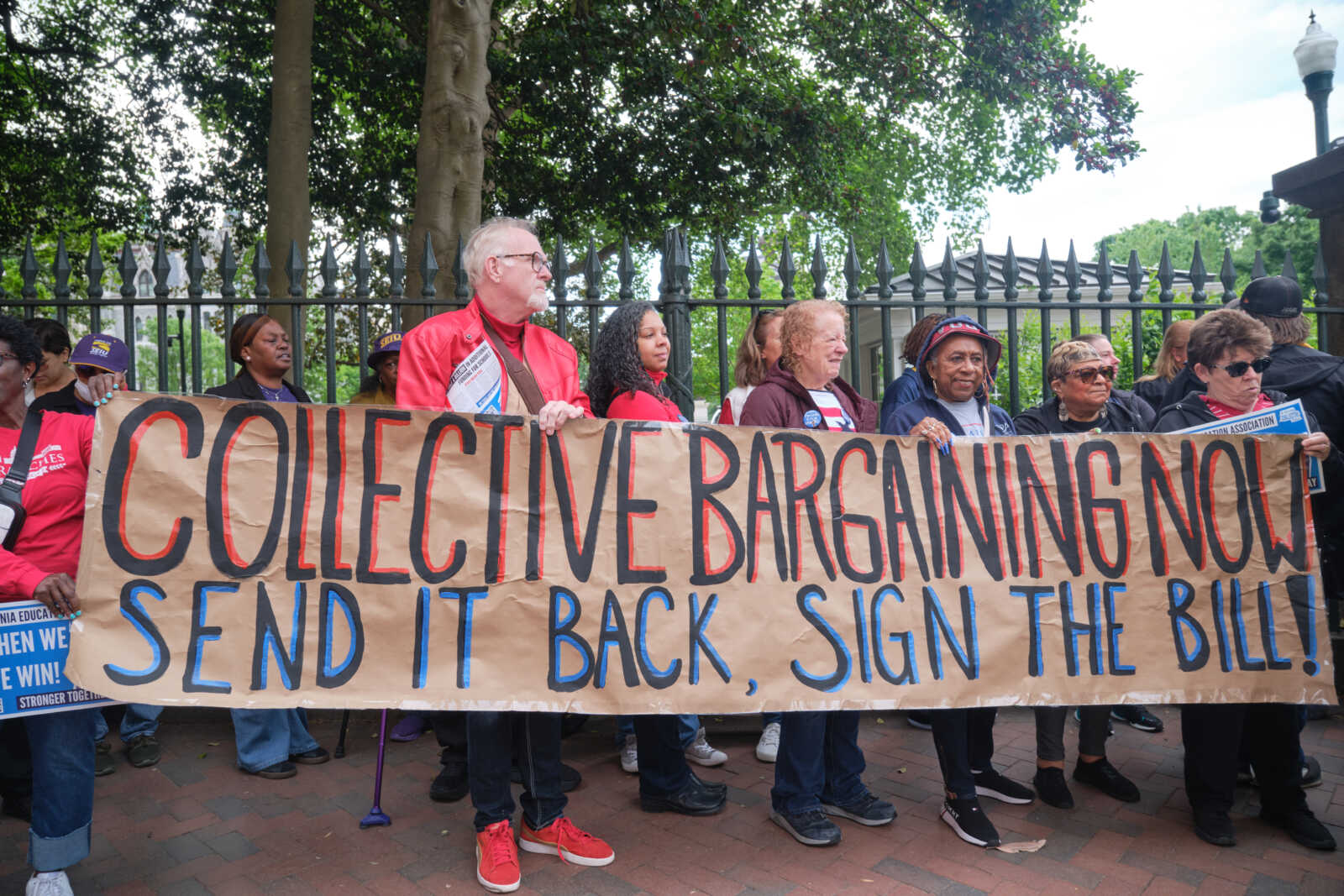
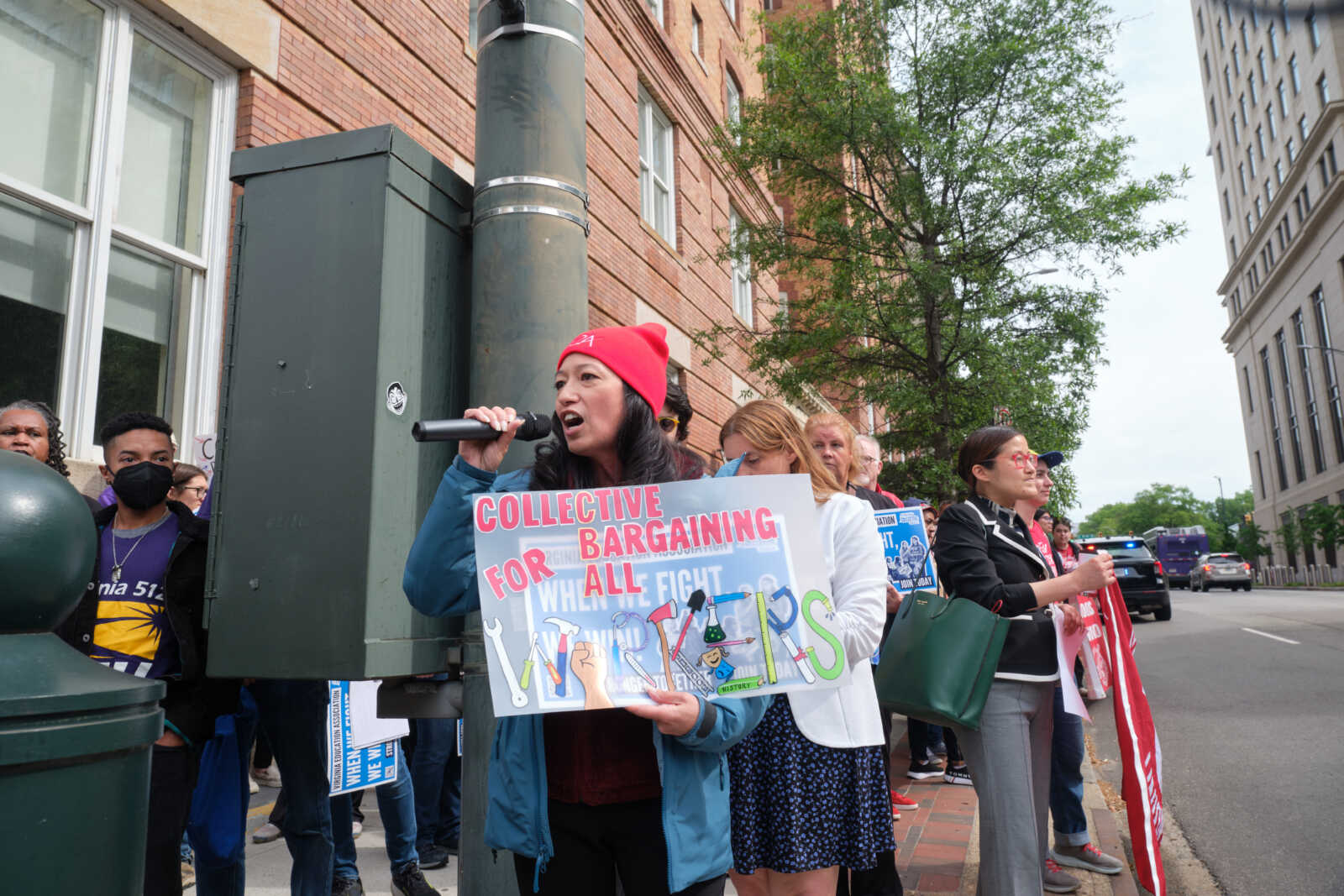
Gov. Abigail Spanberger (D)’s substitute to Fairfax County legislators’ collective bargaining bill has been rejected by the Virginia General Assembly.
The General Assembly is holding a reconvened session to consider the governor’s amended and vetoed bills, including SB 378 and HB 1263 from Senate Majority Leader Scott Surovell (D-34) and Del. Kathy Tran (D-18). The General Assembly did not take up Spanberger’s substitute to the legislation yesterday or today (Thursday).
The General Assembly-passed legislation expands upon a 2020 Virginia law that gave localities the choice to adopt ordinances to collectively bargain with public employees for the first time since 1977. Fairfax County is among the jurisdictions to subsequently authorize collective bargaining, approving contractors for general county government employees as well as police and firefighters.
The new pair of laws would repeal any bans on collective bargaining, mandating the contract negotiations process when public employees form a union.
The bills provide a framework for the collective bargaining process between public employees and their employers on wages, hours, and other terms of employment. They would create a Public Employee Relations Board to determine bargaining units and certify elections for exclusive bargaining representatives of state and local government employees.
Spanberger’s substitute called for localities to have flexibility to work with the Public Employee Relations Board on bargaining and clarified that agreements are subject to approval by local governments with budgeting authority.
One of the major changes would have delayed collective bargaining for local employees without a current agreement until 2030. Unions also took issue with the legislation moving worker protections to the Public Employee Relations Board’s purview. Because the governor can appoint who is on that board, an anti-collective bargaining governor could have an impact on the process.
The governor’s substitute also redefined decisions made through arbitration — the legal process used to resolve differences during an impasse in contract negotiations — as “advisory.” Union advocates said that would allow employers to retain much of the power to resolve an impasse.
In a call with reporters last week, Spanberger said the amendment incorporated feedback from localities, including those that have already adopted their own collective bargaining ordinances to negotiate with their employees.
On the proposed delay of collective bargaining for local government employees, she explained that getting the Public Employee Relations Board up and running would take until 2028. Allowing state employees to go through collective bargaining first would ensure “we have a process that works, giving ourselves time for any level of adjustments,” she said.
“Then 18 months later would be the point in time when local public sector employees could begin their own process by which to form and a union and begin the collective bargaining process,” Spanberger said. “And I think that lead time matters, because we’re going to have an entirely new process here in the Commonwealth of Virginia, and all of a sudden bringing in state and local employees across bargaining units, from law enforcement to local employees to teachers to firefighters, across every locality in Virginia.”
Union members thanked the General Assembly for rejecting Spanberger’s amended collective bargaining guidelines.
“The time to return collective bargaining to all workers is now,” said Carla Okouchi, president of the Fairfax Education Association. “As a union member and public school employee, maintaining the original language of the Collective Bargaining bill is the correct course of action taken by members of both the Senate and House and we thank them. All workers deserve a seat at the table to bargain better salaries, working conditions, and benefits.”
Bethany Letiecq, president of the George Mason University chapter of the American Association of University Professors, noted that faculty and graduate students at public universities and colleges were left out of the bills passed in March by the General Assembly — an exclusion she finds “hard to understand.”
“But it is equally hard to understand why the Governor wants to weaken worker rights at a time when so many are facing really bad working conditions,” Letiecq said. “The Governor needs to keep her campaign promises, stand up for working Virginians, and sign the General Assembly’s bill.”
With the General Assembly rejecting her recommendations, Spanberger can sign the legislation as approved, veto it or allow it to become law without her signature.
If it takes effect, the bill would require the Virginia Department of Labor to establish any regulations needed for implementation by July 1, 2028.
The Public Employee Relations Board must identify the collective bargaining units most appropriate for state employees, independent agencies, higher education institutions, and local school boards and report its findings to the governor and General Assembly by Sept. 1, 2027. Virginia’s education secretary would face a Nov. 15, 2026 deadline for making recommendations on how to introduce collective bargaining in public universities and colleges.
