

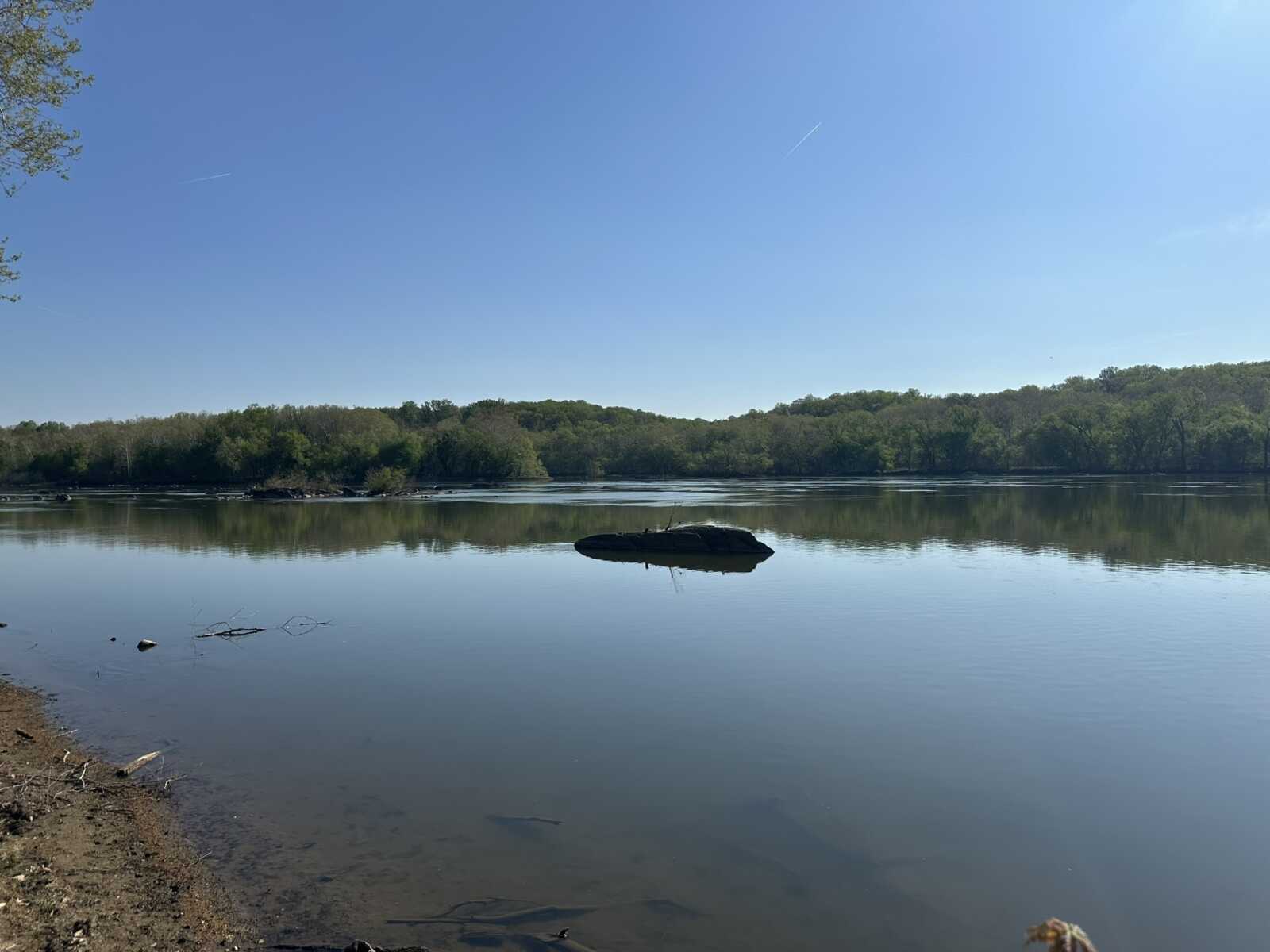
With the D.C. metro area now back under a regional drought watch, local officials have raised concerns about the ability of the Potomac River to meet the region’s long-term water needs.
An increasing population, proliferation of data centers, climate change and the possibility of accidents closing access to the river’s water are all threats, according to the general manager of Fairfax Water.
“These issues are real,” Jamie Bain Hedges told the Fairfax County Board of Supervisors yesterday (Tuesday) at a joint meeting with the Fairfax Water Board.
Events that could disrupt water supplies from the Potomac are “kind of a matter of when, not if,” Hedges said. “We need to continue planning for this.”
Residents across the region were reminded of threats to the river earlier this year, after millions of gallons of raw sewage were inadvertently discharged into it.
A mid-January collapse along the 54-mile-long Potomac Interceptor caused the sewage spill. It took weeks to triage the situation, and complete rehabilitation of the pipeline is likely to continue for months.
Though problematic, this year’s spill paled in comparison to an incident in March 1993, when a break in the Colonial Pipeline spilled more than 400,000 gallons of fuel into Sugarland Run, a Potomac River tributary.
The incident required Fairfax Water to close its Potomac River intake system for two weeks, forcing the system to rely on water from the Occoquan Watershed.
Add in the impacts of a changing climate, and risks to a secure flow of safe water in the Potomac multiply, Hedges told supervisors.
“Events like these are going to continue,” she said.
“We’re well-positioned, but we’re kind of working on the fly,” Hedges added. “… The backup solutions we’re looking at all come with significant price tags — in excess of a billion dollars.”
Those costs will fall on the 2.2 million Northern Virginia residents who receive water service directly or indirectly from the Fairfax system.
Failing to plan for every eventuality could be more devastating, Hedges said.
“A loss of the Potomac would have significant economic impacts,” she told supervisors.
At the meeting, Hedges also expressed concern about some recent actions by DC Water, another major regional system. That agency is making an unsolicited bid to acquire the Washington Aqueduct from the Army Corps of Engineers.
Officials in Fairfax and Arlington counties have been wary of the proposal, fearing it might upend the status quo in who gets access to water supplies.
Unlike Arlington, which receives most of its water via the aqueduct, Fairfax Water obtains only about 6% of its supply from that source. But access to that supply “provides insurance” to the Fairfax system, according to Hedges, who said her agency has “serious concerns” about the DC Water proposal.
Fairfax Water had joined the Washington Aqueduct and WSCC Water in Maryland in commissioning a study of the region’s water supply last year from the Interstate Commission on the Potomac River Basin (ICPRB), which manages area water resources. Released in December, the report found that the risk of shortages is rising, with some reservoirs potentially running out of water as early as 2030.
Regional drought watch declared
The June 2 Board of Supervisors’ discussion came a day before the Drought Coordination Committee of the Metropolitan Washington Council of Governments (COG) issued a regional drought watch.
A response to unusually dry conditions that have persisted in recent months despite winter storms and a few days of rain in late May, the action impacts nearly 6 million residents across Northern Virginia, Maryland and the District.
It is the first drought watch for the local area since an earlier one was cancelled in June 2025, nearly a year after it was imposed. Before that, the most recent drought watch occurred for one month in 2010.
Local residents and business are being asked to take prudent, voluntary steps to conserve water, rather than risk drought conditions intensifying as summer arrives.
“Our region hasn’t seen extremely dry conditions like this in about two decades,” COG Executive Director Clark Mercer said. “We’re asking the public to help by incorporating simple, water-saving actions into their daily routines.”
The weather in May across the metro area was unusual — a string of extremely hot, dry days followed by a week of moderate but extended rainfall.
Unfortunately, “the recent rains didn’t make much of a dent” in drought conditions, Fairfax Water General Manager Jamie Bain Hedges told Fairfax County supervisors on June 2.
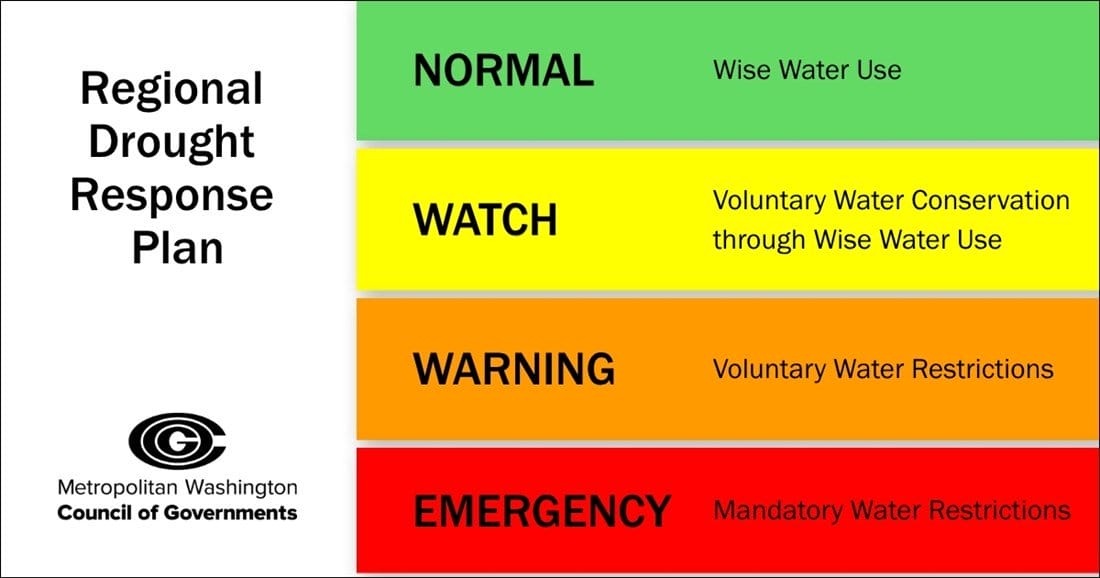
COG’s Regional Drought Response Plan has four levels: normal conditions, drought watch, drought warning and drought emergency. Since the adoption of the region’s coordinated drought plan in 2000, the region has not entered the drought-warning stage.
That phase would bring voluntary water restrictions across the region. Mandatory water restrictions would follow should a regional drought emergency be called.
“Due to years of planning and preparation, our water-supply infrastructure is well-equipped to handle drought. Nevertheless, it makes sense for all of us to use water wisely,” ICPRB Executive Director Michael Nardolilli said.
Among ways to reduce water consumption, COG suggested the following:
- Limit showers to less than five minutes
- Fix plumbing leaks
- Wash only full loads of dishes and clothes
- Use commercial car washes that recycle water rather than washing at home
- Turn off water while brushing teeth/shaving
- Sweep rather than hose down sidewalks and driveways
- Take care not to excessively water lawns, plants and shrubs
Mount Vernon District Supervisor Dan Storck said those tips should be put into practice on a year-round basis.
“Water is life, and I take that very seriously,” he said.
The Virginia Department of Environmental Quality (DEQ) currently places all of Virginia under a drought warning designation except for the far southeastern portion of the commonwealth, which is in drought watch status.
