

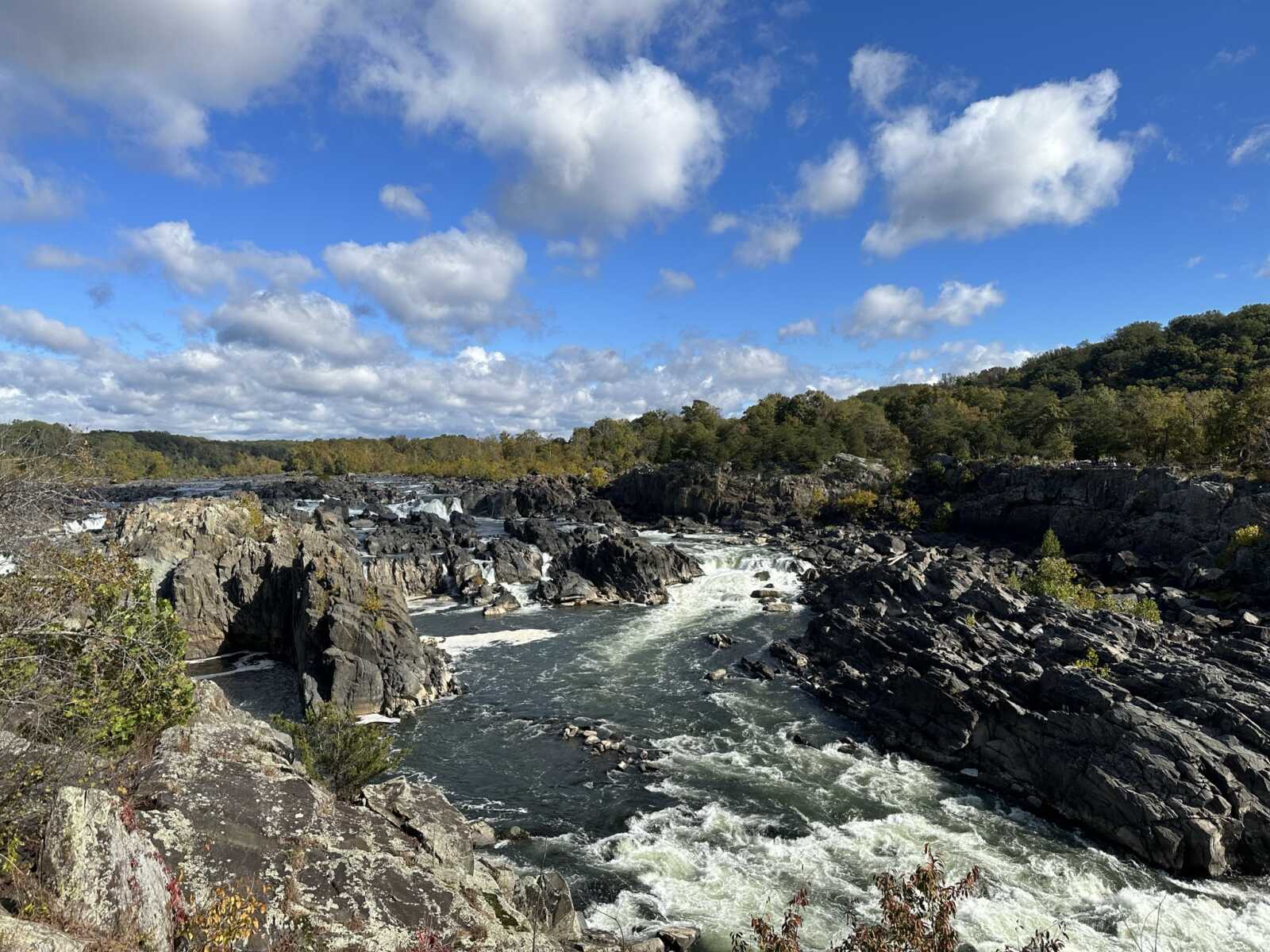
Fairfax County’s drinking water utility is joining several D.C.-area organizations in a regional study to evaluate backup water supply alternatives to the Potomac River.
Fairfax Water is joining Maryland’s WSSC Water and the U.S. Army Corps of Engineers on a $25 million “Secure the Source” study to explore potential large-scale alternatives that could provide several weeks of emergency backup water supply for over 5 million residents in the D.C. region currently served by the Potomac.
“The goal is to ensure resiliency in the face of a loss of the Potomac River due to contamination and the increasing risks of drought,” Fairfax Water spokesperson Susan Miller told FFXnow. “The study’s collaborative approach helps Fairfax Water and other utilities assess and plan for long-term threats beyond the availability of the Potomac River for water supply.”
The two-year study seeks to provide regional leaders with the “technical, environmental and engineering information needed to determine the most viable path forward for long-term water security,” according to a release.
It will include evaluations of pre-screened alternatives developed by the U.S. Army Corps of Engineers: the Travilah Quarry in Maryland, Blue Plains Advanced Wastewater Treatment Plant-Advanced Water Reuse in D.C. and Luck Stone’s quarries B and C in Virginia. Regional leaders would have to coordinate to seek federal, state and local funds to design and construct the preferred option.
The study comes after the latest regional drought watch raised concerns in Fairfax County about the Potomac River’s ability to meet long-term water needs.
Serving approximately 2.2 million customers across Northern Virginia, Fairfax Water draws its supply from the Potomac River and Occoquan Reservoir, the latter of which is fed by Occoquan River. The region also relies on backup water storage like the Jennings Randolph Reservoir during drought events affecting the Potomac Watershed.
“Fairfax Water also wants to ensure that we are ready for the growing unpredictability of future weather patterns,” Miller said. “Climate variability makes it harder to rely on historic trends to predict river flows, drought timing, or the severity of dry periods. This unpredictability reinforces the importance of having a strong, reliable secondary water supply.”
In addition to the ongoing drought conditions, concerns about the region’s water supply have been heightened by recent fuel spills and sewage system failures, including the January collapse of DC Water’s Potomac Interceptor pipe.
A report released in December by the Interstate Commission on the Potomac River Basin (ICPRB), which is dedicated to preserving the basin’s water and other resources, warned that there’s a growing likelihood that the Potomac will eventually lack enough water to meet demand while also protecting aquatic life.
Fairfax Water is independently pursuing another water supply project: turning a quarry on Fairfax County’s southern border into a future water supply reservoir.
Named the Steven T. Edgemon Reservoir after Fairfax Water’s former general manager, the site in Lorton will start to be filled with water by 2040 after quarry operations end on part of the property. The rest of the quarry will be filled at the end of 2085 when the remainder of quarry operations cease.
According to Fairfax Water, the reservoir will hold up to 17 billion gallons of water when completed in 2085.
“This additional water supply will allow the region to adapt to growth in water demand and possible prolonged drought,” Miller said.
