

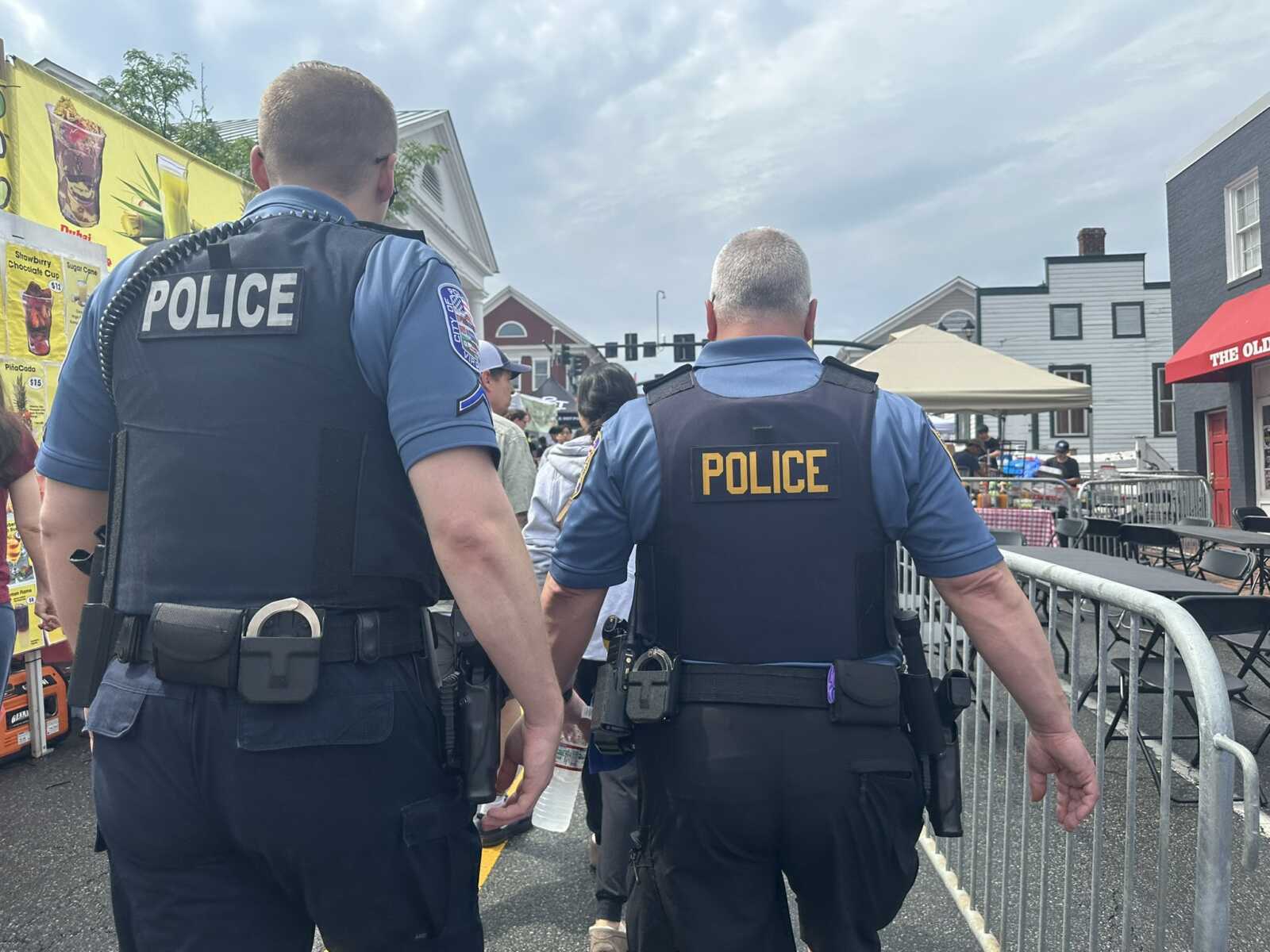
Residents, reporters and other interested members of the public now have one less option for keeping track of police activity in Fairfax County and Fairfax City.
The City of Fairfax Police Department announced Friday (July 10) that it is encrypting its primary police dispatch radio channel, so the feed will no longer available through public scanners or online radio streaming services, such as Open MHz.
In effect as of yesterday (Monday), the move aligns Fairfax City police with the Fairfax County Police Department (FCPD), whose leaders told the Board of Supervisors in March that they planned to encrypt eight “main channels” used by dispatchers to communicate with officers responding to a reported crime or other public safety incidents.
The FCPD confirmed to FFXnow that its eight dispatch channels — which loosely correspond to its district stations — became encrypted yesterday “at the same time as Fairfax City.”
In addition to the FCPD and Fairfax City police, the county’s public safety radio system hosts the Fairfax County Fire and Rescue Department, public school security, the Fairfax County Adult Detention Center and the Town of Herndon Police Department.
An automated dispatch that sends out preliminary information based on 911 calls and response requests has not been affected.
The Fairfax County Fire and Rescue frequencies remain available, and the department does “not have any plans in the future to encrypt our primary radio channels,” a spokesperson said.
Encryption of radio communications has become increasingly common among law enforcement agencies across the D.C. region. The Arlington County and Prince William County police departments, Virginia State Police and D.C.’s Metropolitan Police Department all have fully or partially encrypted their channels, meaning they can only be heard by individuals with police-issued radios or a cryptographic key.
Law enforcement agencies in Loudoun County also began encrypting radio traffic yesterday, a process expected to be completed this fall.
Fairfax County police had already encrypted some side channels used for specialized units, “elevated events” and informal coordination.
“Encryption helps protect sensitive information that is routinely communicated by radio, such as names, home addresses, dates of birth, medical information, details involving victims, and individuals experiencing a crisis,” the City of Fairfax Police said in a press release.
“Additionally, encryption helps protect the safety of community members and officers by reducing the potential for real-time monitoring and redistribution of sensitive police communications through scanner applications and online streaming services to individuals seeking to misuse the information,” the department continued.
The FCPD has similarly said increased encryption is necessary to limit the exposure of personal information to a wide audience and more safely manage critical incidents that are unfolding in real time.
However, for local news outlets like FFXnow as well as amateur public safety watchers and the general public, the scanner, particularly the dispatch channels, can be a useful source of information about developing incidents and events that aren’t officially reported by the police.
For instance, the Virginia State Police didn’t publicly report a June 2025 road rage-related shooting on I-395 in the Springfield area that sent one driver to the hospital until a month after it occurred. The state agency has encrypted all radio traffic, though some communications get picked up by Fairfax County’s system when they’re coordinating with local responders.
“I do believe that encryption absolutely hurts transparency from the police agencies to the public,” said Larry Calhoun, an independent reporter who covers public safety news in the D.C. region and is known by his social media screen name News From the Concrete.
Emergency communications give real-time insight into how critical incidents are handled — including by exposing possible lapses in procedure, Calhoun told FFXnow.
Transcripts and recordings of 911 calls and dispatches have revealed delays in police responses to mass shootings, for example, whether it’s due to an error, as in a 2023 shooting in Philadelphia, or widespread miscommunication and confusion, as in the 2022 Robb Elementary School shooting in Uvalde, Texas.
City of Fairfax Police says the encryption won’t affect its communications with other local and regional public safety agencies or its “commitment to transparency.” Like Fairfax County, the city has an alert system that sends out emergency notifications, and news is regularly shared through its website and social media pages.
“While the method of radio communications is changing, we remain committed to transparency and balancing the responsibility to protect sensitive personal information and the safety of the community,” the department said.
Fairfax City police also releases weekly briefings with brief summaries of incidents deemed noteworthy.
The FCPD discontinued a similar practice in 2022, providing incident data instead through downloadable spreadsheets with dates, addresses and the type of event but few details to distinguish a routine call from a potentially more unusual or urgent case.
Calhoun argues there are ways police can protect sensitive information without cutting off the public from a valuable resource that can serve as an alternative to official narratives.
“When we as the media can’t properly hold the agencies accountable, all the power goes to one side. And ultimately the public is losing,” Calhoun said. “If this is about officers’ safety, then just delay the dispatches if anything. That way, the public and media can still hear the calls that come out. I truly believe it is irresponsible across the board for any police to have encrypted radios. It hurts the public trust in the police.”
