

President Donald Trump officially unveiled his sought-after plan to renovate Dulles International Airport this afternoon (Wednesday) at an Oval Office event with U.S. Transportation Secretary Sean Duffy.
A presentation of the proposal, which is expected to cost approximately $22 billion and eliminate the airport’s polarizing mobile lounges or “people movers,” was shared this spring by the newsletter Airport Architecture.
The Metropolitan Washington Airports Authority (MWAA), the airport’s operator, had earlier declined to comment on it in detail, deferring to the Trump administration for a formal announcement. But MWAA President and CEO Jack Potter has expressed support for the federal push to modernize Dulles and indicated at a board meeting earlier this month that the airlines it serves are on board as well.
Under the announced plan, Dulles Airport would replace its people movers with a new U-shaped passenger train, a central walking tunnel, more moving walkways and new concourses. An above-ground parking garage closer to the main terminal with space for 32,000 vehicles is also in the offing, according to Trump and Duffy.
The airport makeover would add to a long list of renovation projects the Republican president is pursuing to leave a lasting mark on the Washington region after his term ends in January 2029. Among other undertakings, he has plans to build a new White House ballroom along with a towering triumphal arch near the Lincoln Memorial.
“This transformation is another step in our ongoing efforts to make Washington, D.C., safe and beautiful again,” Trump said of the airport renovation plan. “We’re doing something with Dulles that’s going to make it the top anywhere in the world.”
Trump says Dulles modernization is ‘sorely needed’
Trump, who used a laser pointer to explain the renovations displayed on renderings, said the “crazy distances” travelers must walk to get from place to place make Dulles “the worst airport.”
Congress would need to approve some aspects of the renovation plan, Trump said. Construction could start next spring, Duffy said.
Officials said the airlines and the airport authority that operates Dulles would pay for the project with municipal bonds, but they did not spell out how much of the cost might be passed on to travelers through higher fees or ticket prices when flying out of the airport.
John Potter, president and CEO of the Metropolitan Washington Airports Authority, which operates Dulles, said his agency, United Airlines and other airlines operating there have agreed “to fund this thing.” Dulles is one of United’s hubs.
“So this is not requiring federal dollars,” Potter said at the Oval Office event. “This is going to be airport-generated dollars, airline contributions, which is phenomenal.”
The president, a former real estate developer, said in December that Dulles was “incorrectly designed.” He nonetheless praised Eero Saarinen, the Finnish-American architect and designer of the airport’s main terminal. Trump and Duffy said the president reviewed presentations from about 30 architects before Trump settled on the redesign he announced Wednesday.
Prior to the announcement, a White House official said the project would be financed by the airports authority and the airlines serving Dulles.
Some costs might eventually be shared by taxpayers and travelers
Even if the project is largely paid for by the airlines, industry analyst Henry Harteveldt said taxpayers might be asked to cover upgrades to the runways and safety measures as well as new customs and security facilities. The president of Atmosphere Research Group said he also wouldn’t be surprised to see a passenger facility fee added eventually.
“I’m not taking the statement that they are not going to use taxpayer money at face value,” Harteveldt said.
The reason United and other airlines are willing to invest in Dulles, he said, is that they believe it will help them expand by adding more flights and passengers, boosting their revenue. But this could also contribute to higher ticket prices.
“United is going to try to charge as much for its tickets as it can. Other airlines will do the same,” Harteveldt said. “I think part of the statement that no tax money will be used could be something to placate the public right now.”
Dulles has relied on people movers since it opened in 1962
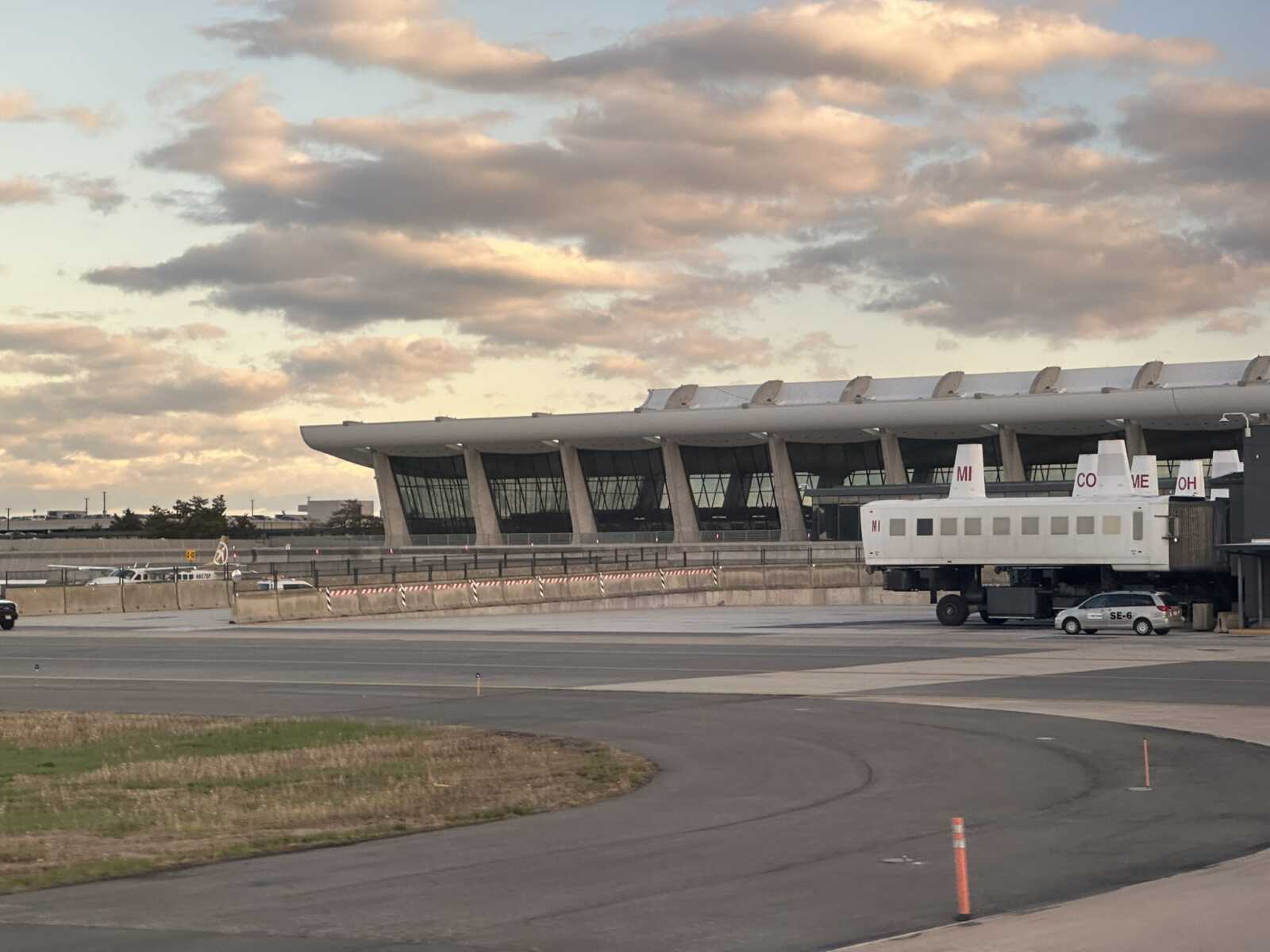
Designed by Chrysler Corp., the vehicles shuttle passengers between the terminal and aircraft. The airport operates a fleet of 19 mobile lounges, each capable of carrying up to 102 passengers, according to its website.
When Dulles debuted, the airport touted the system as a major convenience. Passengers, it said, “had to walk only 200 feet once they entered the terminal until they were seated in a mobile lounge for the short trip directly to their aircraft,” a service it described as unique to Dulles.
However, safety issues have cropped up over the years, including one crash last November that injured 18 people.
Some travelers have also bemoaned the vehicles as inconvenient and outdated with an AeroTrain now connecting the main terminal and the A and B gates. The automated train system will expand this fall with the opening of a new, 14-gate Concourse E that has been under construction since November 2023.
The new concourse is part of a master plan for Dulles Airport that the MWAA board adopted last year. Expected to guide renovations over the next 25 years, the plan anticipates that the airport will serve more than 90 million passengers annually before the end of this century.

