

Fairfax County leaders are setting the stage to become more aggressive and nimble in competing for economic development deals.
That could include new financial incentives for businesses seeking to relocate to or within the D.C. region.
“If we want to be a player, if we want to be successful, we’ve got to be able to put dollars on the table,” Franconia District Supervisor Rodney Lusk said at a Sept. 22 meeting of the Board of Supervisors’ Economic Initiatives Committee.
Lusk, who worked for the Fairfax County Economic Development Authority before winning elected office in 2019, said the proposals discussed at the meeting represented a “sea change” in the county’s approach to economic development.
“We have never provided dollars of investment into projects,” he said. “We have only provided infrastructure.”
While no final decisions were made at the meeting, supervisors reacted generally favorably to staff proposals on how to reconfigure and fund economic development initiatives.
It was time to “think different,” County Executive Bryan Hill said.
“We need to be more competitive,” he said. “If we do it right, we will reap the benefits.”
Earlier this month, as part of a carryover review process to allocate unspent funds from the end of the county’s last fiscal year budget, the Board of Supervisors agreed to move $15 million into what will be known as the Economic Growth Fund.
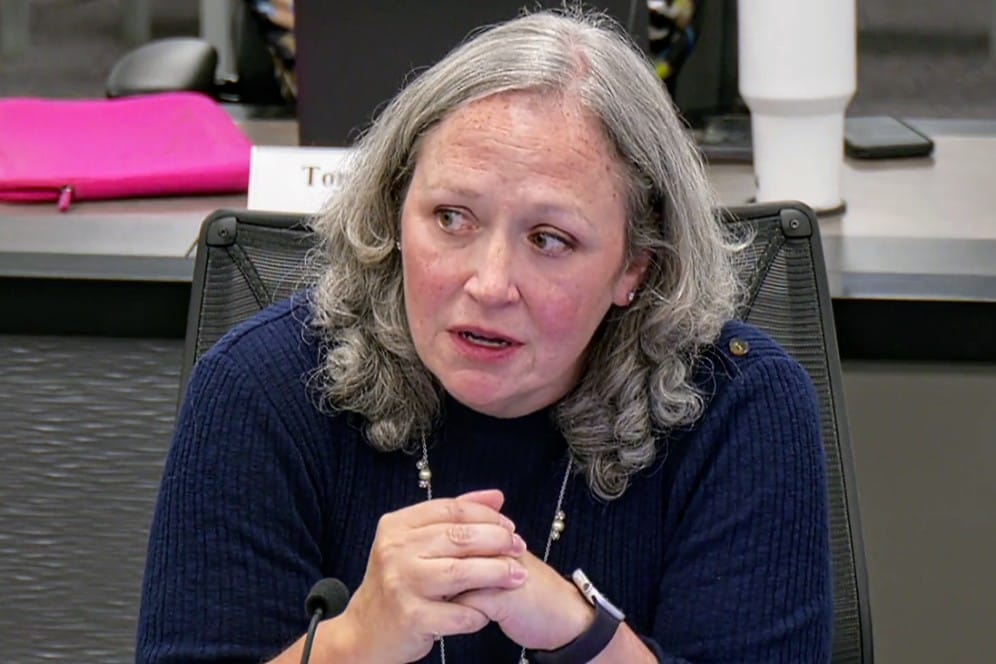
The new fund will be a more flexible tool than the existing Economic Opportunity Reserve (EOR) Fund, said Christina Jackson, the county’s chief financial officer.
Established in 2019, the EOR provided one-time seed money to projects identified as having a potential economic benefit to the county. Recipients included the nonprofit McLean Project for the Arts for its new Berlage Arts & Education Center in downtown McLean and the Tysons Partnership to assist with its transition into the Tysons Community Alliance.
The initiative was also used to establish a Fairfax Founders Fund that provides up to $50,000 in grant funding to startups.
The new Economic Growth Fund will have two primary focuses, staff said:
- Supporting a number of current and potential economic-development programs
- Providing rapid-response funding to address specific development proposals
Review by the Board of Supervisors would be required to spend the funding, which would provide “both speed and accountability,” said Rebecca Moudry, director of the county’s Department of Economic Initiatives.
A final proposal for what county leaders call the Economic Development Framework will likely come to the Board of Supervisors in early 2027. At the Sept. 22 meeting, the concepts met with a largely favorable response.
The goal is “coming up with a unified vision on moving forward,” Board Chair Jeff McKay said.
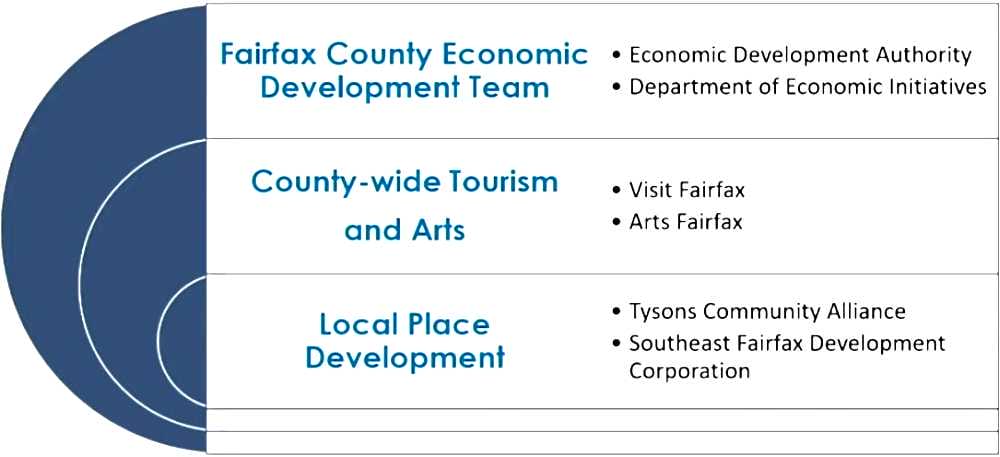
The new framework likely will redefine and coordinate efforts of the Department of Economic Initiatives and the quasi-independent Fairfax County Economic Development Authority.
It also will consider the roles of nonprofit organizations like Visit Fairfax, ArtsFairfax, the Tysons Community Alliance and Southeast Fairfax Development Corp. in the overall economic development picture.
The result, McKay said, needs to be a “more spry” approach to economic growth.
“We had a system in place that became very stale,” he said.
While embracing the concept, a number of supervisors urged their colleagues to avoid a pedal-to-the-metal rush into their new environment.
“We need to be careful and think this through,” Hunter Mill District Supervisor Walter Alcorn said.
Alcorn, Springfield District Supervisor Pat Herrity and others said county leaders need to establish and adhere to measurable benchmarks as they begin handing out money.
“The key here is going to be on the goals, criteria and the metrics,” Herrity said.
Providence District Supervisor Dalia Palchik, who also urged a cautious approach to moving forward, said the local government would “learn a lot” if it takes steps incrementally and with purpose.
“This is absolutely the right approach,” she said.
