

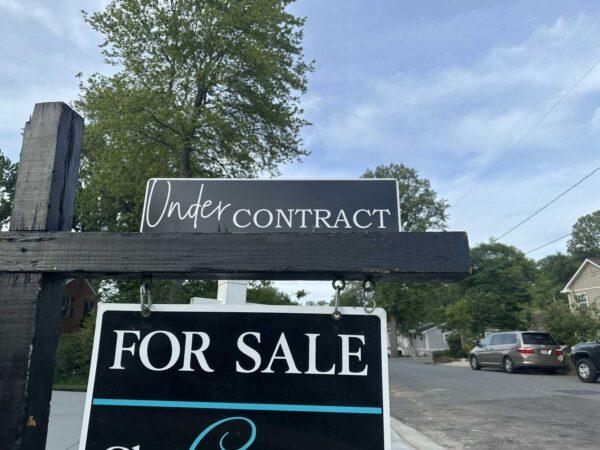
Median sales prices of single-family homes across the Washington metropolitan area declined slightly year-over-year in new data, even as the national sales price rose.
The region’s median sales price of $656,200 for the third quarter of 2026 was down 0.2% from a year before, according to preliminary figures reported by the National Association of Realtors (NAR).
The D.C. region was in the minority: home prices of existing single-family homes rose year-over-year in 78% of the nation’s metro areas during the quarter despite economic headwinds, NAR officials said.
The national median price for existing single-family homes rose 1.7% year-over-year to $432,900.
“Even with affordability challenges causing the housing market to stagnate, home prices continue to set record highs in most parts of the country,” said Lawrence Yun, NAR’s chief economist. “Over the past seven years, the average house has appreciated by $146,000.”
The national growth rate was buoyed by sales prices in much of Florida, which were in positive territory after being negative for the first half of the year.
“In a similar vein, price declines in other markets may also be brief — if the local job market and economy are solid,” Yun said.
Among the four main geographic areas of the nation during the third quarter:
- Northeast: The median single-family sales price of $561,500 was up 4%
- Midwest: The median sales price of $342,500 was up 3.6%
- South: The median sales price of $374,900 was up 1%
- West: The median sales price of $629,000 was down 0.6%
Eight of the 10 most expensive metro-area markets in the nation during the quarter were in California:
- San Jose-Sunnyvale-Santa Clara, California ($1,920,000; +0.3%)
- Anaheim-Santa Ana-Irvine ($1,470,000; +5.0%)
- San Francisco-Oakland-Hayward ($1,350,900; +2.7%)
- Urban Honolulu, Hawaii ($1,199,700; +6.4%)
- San Diego-Carlsbad ($1,075,000; +6.5%)
- Los Angeles-Long Beach-Glendale ($958,500; +0.5%)
- San Luis Obispo-Paso Robles ($956,300; +2.6%)
- Salinas-Monterey ($948,900; -7.0%)
- Oxnard-Thousand Oaks-Ventura ($940,000; +0.5%)
- Bridgeport-Stamford-Norwalk, Connecticut ($874,200; +3.5%)
“The artificial intelligence technology boom continues to push Bay Area home prices higher, keeping the region the most expensive in the country,” Yun said.
In contrast, he noted that “many markets in the Midwest offer exceptional value with more affordable homes, making homeownership more attainable.”
Markets with the highest percentage increase year-over-year in the third quarter were Gulfport-Biloxi-Pascagoula, Mississippi (+11%); Rochester, New York (+10.9%); Jackson, Mississippi (+10.1%); Beaumont-Port Arthur, Texas (+9.9%); and York-Hanover, Pennsylvania (+9.2%).
Fourth-quarter price data is slated for release in early February.
Va. homes market seeing low buyer activity
Homebuyer activity across Virginia is cooling in sync with air temperatures, according to a new survey of real estate professionals.
The monthly Realtor Confidence Survey recorded September buyer activity at 24 on a scale of 0-to-100, the lowest Buyer Activity Index level of the year and nearly half the 2026 peak of 54 in April.
Conducted Sept. 23-30 by the Virginia Realtors trade group, the survey pointed to higher interest rates as a prime culprit keeping some prospective purchasers on the sidelines.
A total of 511 Virginia Realtors took part in the survey, including 373 who participated in at least one transaction in the preceding 30 days.
While buyers were in short supply, more seller activity was reported. The Seller Activity Index score of 45 was on the high end of the 37-46 range recorded during the first nine months of 2026.
As the market moves toward winter, survey respondents expect a degree of dormancy. Only 4% of them expect buyer activity to be strong in December, which typically is among the slowest times of year in real estate. A total of 13% expect seller activity to be strong then.
Asked where prices would be in three months’ time, only 12% expect them to be higher than in September, while 58% anticipate they will be lower and 24% expect little change. That forecast is in line with typical seasonal norms in the market.
While not a scientific survey, “the number of responses and the geographic coverage of respondents make it possible to draw conclusions about the opinions and expectations of Virginia Realtors,” officials with the trade organization said.
