

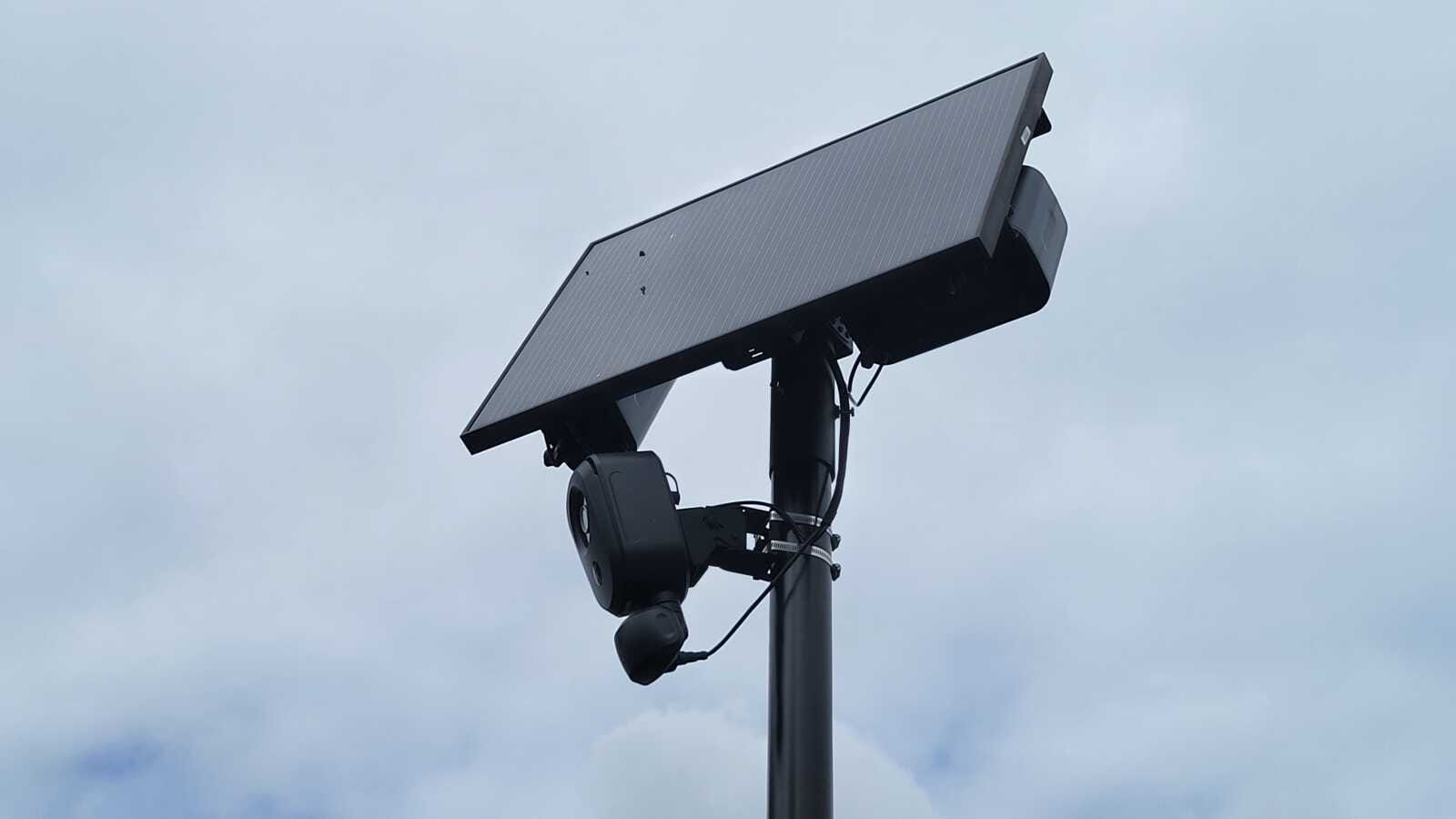
A deeply divided Fairfax County Board of Supervisors this morning (Tuesday) placed more guardrails on the use of Flock Safety automated license plate readers, but rejected desires of a near-majority to end the local government’s Flock relationship entirely.
On a 6-4 vote, supervisors adopted a resolution sponsored by Board Chair Jeff McKay making a series of changes to how the Fairfax County Police Department handles images and data obtained from the pole-mounted cameras.
“I think this strikes the right balance,” McKay said when introducing his proposal, which was crafted in the wake of a lengthy work session between supervisors and public safety leaders in October.
He called it “a compromise … that reflects where most people in Fairfax County are” on the issue of license-plate readers.
McKay was backed by Supervisors Kathy Smith (Sully), Pat Herrity (Springfield), Dan Storck (Mount Vernon), Walter Alcorn (Hunter Mill) and Rodney Lusk (Franconia).
McKay’s changes would take a strong public safety tool and “make it a lot stronger,” Lusk said.
But four supervisors pushed to instead temporarily suspend or cancel entirely the FCPD’s Flock contract: Dalia Palchik (Providence), Rachna Sizemore Heizer (Braddock), Jimmy Bierman (Dranesville) and Andres Jimenez (Mason).
McKay’s package of changes fell short of addressing “the deep concerns I have,” Sizemore Heizer said.
“A better path is to pause,” she said.
“We all recognize the usefulness” of the technology, Palchik said, but “the core issue is trust.”
Though it was promoted as a compromise, McKay’s measure “falls short of where we need to go,” Bierman agreed, pushing for a cessation of any relationship with Flock, as some advocates have sought.
The swing vote ended up being Smith, who said she respected the views of those on both sides of the issue.
“I totally understand the concerns about people’s safety and privacy,” Smith said.
But in the end, she determined that immediately ending the use of the cameras would not serve the greater good.
“I just can’t say ‘stop’ until we have better things in place,” Smith said. “Right now, I want to give us a chance to put some things in place and see where we need to go.”
“We will never make everybody happy,” Smith added. “There really is no right answer. We make the best decision we can at the time.”
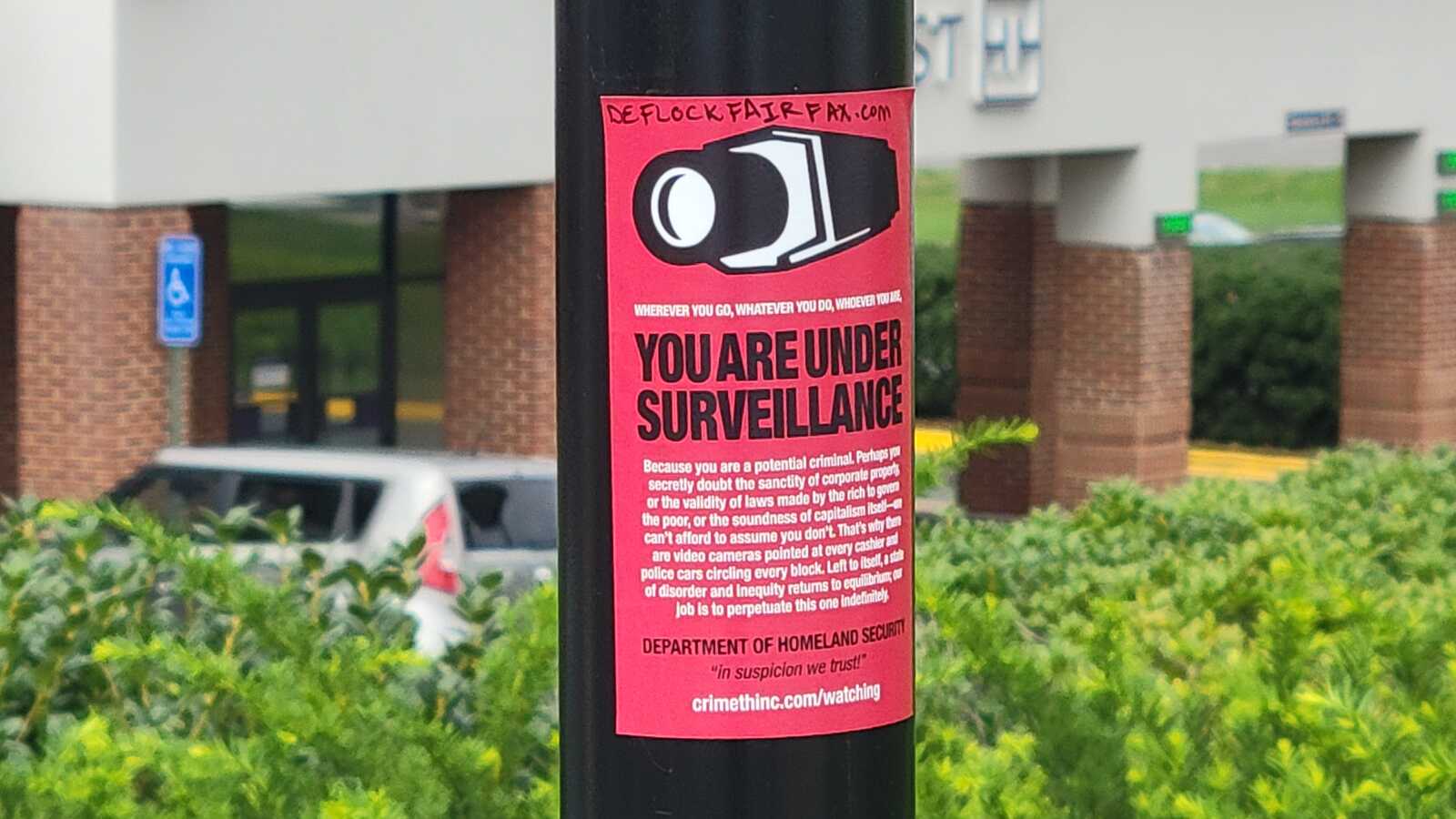
The county’s police department currently operates 84 Flock cameras, a number frozen by supervisors in September.
With the passage of McKay’s resolution, the county will now:
- Continue the prohibition enacted on Sept. 15 on any expansion of public Flock cameras
- Limit retention of data to seven days, compared to the state maximum and previous limit of 21 days
- Restrict data access to those assigned to the FCPD’s Real Time Crime Center, totaling about 50 sworn officers
- Refuse to share data with other law enforcement agencies unless required by law, pending creation of a regional data-sharing policy
- Begin moving data currently housed on the Amazon Web Cloud to servers owned and controlled by the county government
- Publicly identify Flock camera locations and the criteria used for their placement
- Encourage private owners of Flock Safety readers or similar equipment to follow the county government’s guidelines
- Evaluate options in an effort to “transition away from Flock Safety technology”
“We have tightened it substantially,” McKay said of the license plate reader policy, which would allow police to continue using the cameras and “deploy them in communities that want them and need them.”
“This is a program that has provided some benefits to our residents,” McKay said, noting that camera use has contributed to arrests of individuals on 1,776 felony and 921 misdemeanor charges, the recovery of 68 guns and resolutions of 60 missing-people cases.
Fairfax County police have not been accused of misusing the Flock system or data gleaned from it, the Board chair said.
“We will use the technology we have responsibly,” he said.
Like Smith, Jimenez said there were valid views on both sides of the issue, as reflected in the split vote.
“We have a pretty torn Board,” he said. “We’re all trying to do the best we can. For the folks in Mason District — we are the most diverse district in Fairfax County — for my residents, I’m voting no. I have to vote no.”
Storck said critics of Flock were conflating improper usage of its technology in other areas of the country with proper use by the county’s police department.
“I don’t see what the devastating consequences have been” in Fairfax, he said.
The directive approved Tuesday requires county staff to implement the policy changes as quickly as feasible. Supervisors will get an update at a special meeting of their Safety & Security Committee on Dec. 15.
Lusk, who chairs the committee, said he’s open to hearing all points of view and alternatives to the use of Flock technology.
“Let’s see where we are [in December],” he said. “Then decide what we do.”
While backing McKay’s measure, Herrity, the Board’s lone Republican, said he wasn’t enchanted with every piece of it.
“I don’t like all of this necessarily, but we’re doing the best we can,” he said.
Like McKay, Herrity said fears of misuse aren’t reflected in the local experience. County police don’t have the interest or the manpower to wantonly search through Flock photos without a legitimate reason, he said.
“We are looking for very bad actors after a very specific crime,” Herrity said.
Several supervisors on both sides of the issue noted that Fairfax County ultimately could see its policies change based on potential future court rulings or actions by the Virginia General Assembly. Just last week, the Virginia Crime Commission issued recommendations for updating state laws governing license plate readers.
“This is a rapidly changing industry,” McKay acknowledged.
State law already prohibits Virginia localities from sharing Flock data with law enforcement outside the commonwealth, except under court order. Several supervisors have pressed for a change in the law so agencies across the D.C. metropolitan region, including those in the District and Maryland, can create a compact to govern shared usage.
The county government has no power to regulate the hundreds of Flock cameras operated by private entities in the county. Private property owners provide imagery from an estimated 120 cameras to the FCPD to assist with investigations.
